Bulletin
Journey Clinical closes Series A - 2,500+ therapists on network - 21 states - collaborative care model - Barthes at SXSW: "The barrier was the prescriber, not the patient" - Swiss-trained mathematician builds US telehealth infrastructure - Juilliard voice program while founding a startup - $11.5M raised - New York, NY - est. 2020 -  Journey Clinical closes Series A - 2,500+ therapists on network - 21 states - collaborative care model - Barthes at SXSW: "The barrier was the prescriber, not the patient" - Swiss-trained mathematician builds US telehealth infrastructure - Juilliard voice program while founding a startup - $11.5M raised - New York, NY - est. 2020 - 
Profile / Founders / Mental Health

Myriam
Barthes

She did not train as a doctor, a therapist, or a pharmacologist. She trained as a management consultant, and then she built the medical rails under American ketamine therapy.

RoleCo-Founder & CEO
CompanyJourney Clinical
BaseNew York, NY
StageSeries A
FounderOperatorExecutiveTelehealthPsychedelic Medicine
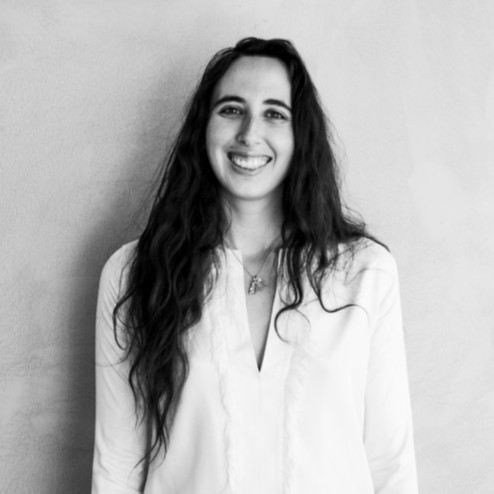
Portrait of Myriam Barthes
Myriam Barthes, photographed for Journey Clinical. The CEO photographs slightly off-square, jacket collar half-turned, as if the shutter caught her mid-thought about state-by-state prescriber licensing.

The Lede

Journey Clinical is not the company you think it is. It does not run clinics. It does not pour ketamine into IV drips in strip-mall storefronts. It does not employ the therapist who sits with you during a session. What it does is more boring, and considerably more useful: it is the medical layer - screening, prescribing, monitoring - that sits behind the 2,500-plus licensed psychotherapists who now offer ketamine-assisted psychotherapy to their own existing clients. Myriam Barthes, the Swiss-educated economist who runs the company, built that layer on purpose. If you can name the thing that is missing, you can build a company around it. What was missing, she decided, was not the therapy and not the science. It was the prescriber relationship.

Barthes is a co-founder and, as of the current filing on the company org chart, the CEO. She started Journey Clinical in 2020 with Jonathan Sabbagh, who is also her husband. Sabbagh is the co-founder whose personal experience with psychedelic therapy - relief from burnout and PTSD - supplied the origin story. Barthes is the co-founder who translated that origin story into a national network with roughly $11.5 million in disclosed funding and a footprint that now touches around 21 states.

The division of labor is legible in the archival record. Sabbagh appears in Business Insider talking about his personal journey with psychedelic medicine. Barthes appears at Horizons Perspectives in Psychedelics explaining the collaborative care model, and at SXSW on a panel called The Business of Psychedelics, walking founders through why a network of licensed therapists - not a chain of owned clinics - was the model that made the unit economics work. One of them lived the problem. The other built the operating system for the problem.

The core problem was understanding why trained therapists weren't offering evidence-backed legal ketamine therapy. The barrier was forming and maintaining relationships with prescribers. - Myriam Barthes, SXSW panel, The Business of Psychedelics

The Route Through

A consultant walks into psychedelics.

The biographical arc reads like a résumé written by someone who kept getting curious. Barthes finished her Maturité fédérale in mathematics and applied physics at the Gymnase de Chamblandes in Switzerland in 2005. She left for Brandeis University, took a Bachelor of Arts in economics with minors in business and legal studies, and finished in 2009. From there she went to Ernst & Young, where she worked through the consultant-to-manager ladder, focusing on strategic growth and operational problems at global financial institutions.

The interesting move is the one after EY. She joined SparkBeyond as an AI Impact Strategist and Client Partner, which is the sort of title that sounds invented by a marketing team but in practice means she spent her days translating between machine learning teams and the executives who were supposed to be paying for them. This is not a bad training program for someone about to build a two-sided healthcare marketplace. If you can get a bank to buy an AI product, you can probably get a therapist to trust a telehealth prescriber.

There is one more line on the résumé worth flagging, because it is the sort of detail that gets left out of the pitch deck. In 2020 and 2021, while Journey Clinical was being founded, Barthes was also enrolled in the evening division of The Juilliard School, studying voice and opera. A founder taking evening voice lessons at Juilliard during the launch year is not a fact you need for the pitch memo, but it is a fact worth holding onto. It is the sort of biographical texture that suggests a founder who does not treat her time as a scarce resource to be optimized against a single objective function.

By the time Journey Clinical launched, Barthes had trained in mathematics, economics, management consulting, applied artificial intelligence, and classical voice. She had also, by all accounts, watched her husband recover from a mental health crisis using a therapy that most of the country did not know was legal.

The Bet

What Journey Clinical actually is.

The pitch for Journey Clinical is easier if you first name the pitches it is not. It is not a clinic chain. It is not a wellness brand. It is not a direct-to-consumer ketamine lozenge company selling monthly subscriptions to whoever fills out the intake form. Barthes has been careful about this in interviews.

The company sits inside the therapist's practice. A patient sees their own psychotherapist. The therapist, if they are in Journey's network, uses Journey Clinical's medical team to handle the parts of ketamine-assisted psychotherapy that require a prescriber - eligibility screening, the actual prescription of sublingual ketamine lozenges, medical monitoring, safety protocols, and follow-up. The therapist keeps doing the therapy. The medical piece gets abstracted away.

This is what Barthes calls the collaborative care model, and it is the intellectual center of the company. She talked through it at length at the Horizons conference in 2022. The pitch, in her framing, is simple: therapists want to offer this. Patients want their existing therapist to offer this. Prescribers are hard to find and harder to maintain a relationship with. Build the prescriber layer once, correctly, and every therapist in the country can use it.

That framing is why the SXSW quote lands. The problem, she said, was never patient demand. It was the plumbing.

Growth in Bars

Four numbers, one company.

2020Founded
$11.5MTotal raised
21States
2,500+Therapists

Bar heights are illustrative; values are the published data points Journey Clinical uses to describe its footprint. Precise annual revenue and headcount figures are estimated by third-party data providers and should be treated as approximate.

Timeline

Résumé, chronologically.

2005Completes Maturité fédérale in mathematics and applied physics at the Gymnase de Chamblandes, Switzerland.
2006-2009Reads economics at Brandeis University with minors in business and legal studies.
2009-2010sConsultant, senior consultant, and manager at Ernst & Young, working with global financial institutions.
Mid-2010sAI Impact Strategist and Client Partner at SparkBeyond.
2020Co-founds Journey Clinical with Jonathan Sabbagh. Serves initially as COO.
2020-2021Enrolls at The Juilliard School, evening division, voice and opera.
2022Speaks at Horizons: Perspectives in Psychedelics on collaborative care.
2023Appears on SXSW panel "The Business of Psychedelics."
2024Journey Clinical reaches Series A stage. Barthes listed as Co-Founder & CEO.
Details You Can Keep

Small facts that keep coming back.

The math kid

Her Swiss school-leaving credential is in mathematics and applied physics. The first serious intellectual instrument on the résumé is a slide rule, not a stethoscope.

The Juilliard year

2020-2021, at Juilliard's evening division, voice and opera. Which is to say: while she was launching a healthcare company, she was also learning to sing.

Co-founded with her spouse

Jonathan Sabbagh is her husband and her co-founder. His experience with psychedelic therapy is the origin story. She is the one who turned it into infrastructure.

No clinics, on purpose

The company has grown to 21 states without opening a single storefront. The therapists were already there. Journey supplies what wasn't.

From EY to KAP

The starting salary was probably paid in strategic-growth PowerPoints. The current output is tens of thousands of hours of KAP sessions.

New York, still

Journey Clinical is headquartered in New York City and Barthes runs it from there. The company's roughly 100-person team is coordinated remotely.

Myriam is passionate about expanding access to clinical mental health treatment and empowering therapists to offer this treatment to their clients. - Journey Clinical author bio

Reading Barthes

What she talks about when she talks about the model.

The consistent through-line in Barthes's public appearances is a preference for boring architecture. When she talks about Journey Clinical, she does not lead with neuroplasticity or the mystical properties of the compound. She leads with prescribing, licensure, and the operational reason therapists were not able to offer this treatment on their own before her company existed.

This is a stylistic choice worth noticing in a field that has a well-documented weakness for evangelism. At Horizons in 2022, she used her airtime to describe the collaborative care model - a phrase borrowed, more or less, from mainstream integrated behavioral health - and to argue that psychedelic medicine would scale the way primary care scales: by embedding a specialist function inside a generalist's workflow, not by building a parallel specialist industry.

At SXSW, on the "Business of Psychedelics" panel, the phrasing sharpened. Trained therapists, she said, were not offering evidence-backed legal ketamine therapy because the prescriber relationship was too hard to form and maintain. The observation is unsexy. It also happens to be the reason the company works.

Barthes is not a big-quote founder. She does not have a Twitter feed full of aphorisms - the @journeyclinical handle is the company's. If you want to find her, she is on LinkedIn, in interview transcripts, on stage at industry conferences, and in the "about" copy of her own website. Which is, arguably, the correct place for a CEO whose job is to make the boring parts run.

FAQ

Frequently, briefly.

Who is Myriam Barthes?

Co-founder and CEO of Journey Clinical, a New York telehealth platform for ketamine-assisted psychotherapy. She previously worked at Ernst & Young and SparkBeyond.

What does Journey Clinical do?

It provides the medical layer - eligibility screening, prescribing sublingual ketamine, safety monitoring - so licensed psychotherapists can offer ketamine-assisted psychotherapy to their existing clients without running the clinical operation themselves.

Where did she study?

Secondary school in Switzerland with a Maturité fédérale in mathematics and applied physics; a BA in economics from Brandeis University; and voice and opera at The Juilliard School's evening division.

Who co-founded the company with her?

Jonathan Sabbagh, who is also her spouse. His personal experience with psychedelic therapy for burnout and PTSD supplied the founding story.

How big is Journey Clinical now?

The company reports a network of more than 2,500 licensed therapists across roughly 21 US states, with about $11.5 million in disclosed funding through Series A.

Share

Send this page.

LinkedIn Twitter / X Facebook Instagram

Where to find her

Links.