The unit economics of shooting down a drone
Story - By The Editors
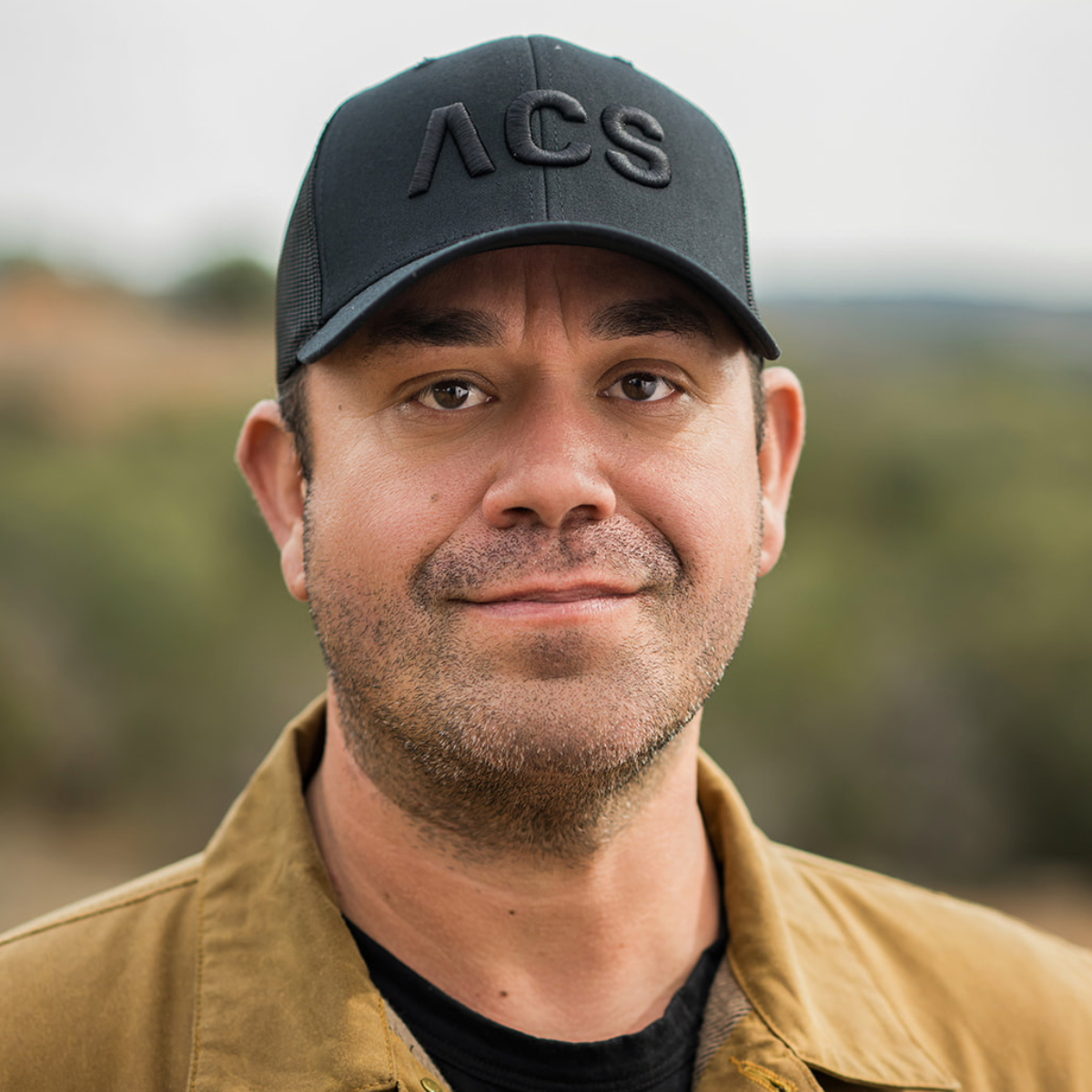
Mike Wior is not, by training, a person you would expect to be running a defense company. He built restaurant point-of-sale integrations for a living. He co-founded Omnivore, a network that eventually connected 37,000 restaurants to a menagerie of incompatible POS systems, and sold it to Olo in 2022. The kind of company that is boring in a specific and lucrative way. Then he became the CEO of Allen Control Systems, which builds a robot that fires a machine gun at drones, and in June 2026 he raised $200 million at a $2.2 billion valuation.
The product is called Bullfrog. Structurally it is an autonomous weapon station: a mount, a standard-issue M240 machine gun, cameras, and a stack of AI and control software that does the aiming. Bullfrog watches the sky, identifies a Group 1-3 unmanned aerial system, tracks it, and hits it with rifle rounds. The pitch, delivered by Wior and echoed on stage by the Secretary of the Army, is largely a spreadsheet. A missile that can shoot down a $20,000 Iranian Shahed costs somewhere in the six figures. A 7.62mm round costs about fifty cents.
The line reads like an engineering understatement because it is one. What Wior is describing, in the polite language of a founder briefing a reporter, is the ability to put a bullet through the motor housing of a quadcopter while it is moving, from a truck, in the field, with a human authorizing the shot. What T-REX 26-1 - the Pentagon's premier counter-drone experiment - confirmed is that Bullfrog does this at a 100 percent success rate under the conditions the Department of War chose to test. The Army has already bought twelve units. The Navy is deploying more. Joint Interagency Task Force 401 is a customer.
The nuclear engineers and the restaurateur
Allen Control Systems has three founders. Steve Simoni and Luke Allen are former U.S. Navy nuclear engineers. They served together as instrumentation and control specialists on Navy reactors, which is the kind of resume that sounds invented but is not. When they left the service they built a restaurant technology company called Bbot, which was acquired by DoorDash. Around the same time, Wior's Omnivore was acquired by Olo. In the odd cross-pollination of hospitality tech that produced ACS, the three founders were already in each other's orbit before they decided to point control-systems engineering at a machine gun.
The origin story that circulates in interviews, which Wior does not really try to embellish, is that radio jamming works fine on hobbyist drones and does not work on military ones. Military drones are hardened against RF disruption. To stop them you have to physically break them. Historically the way to physically break a small flying object with intent is a missile, which is expensive, or a laser, which is temperamental, or a human with a rifle, which is imprecise and dangerous. Simoni, Allen, and Wior looked at that list and asked whether a robot with a rifle, if the robot were good enough, would be the cheapest and most scalable option. The answer, per the Series B, is $2.2 billion.
What Wior actually did before this
To understand why Wior is CEO of a defense unicorn in 2026, it helps to sketch the resume in order. Six years at Wells Fargo, in cloud and security. VP of Engineering at Solid Instance, a small consultancy in Palo Alto, where he worked on things ranging from live streaming surveillance drone feeds for the National Geospatial-Intelligence Agency to early Adobe Creative Cloud prototypes. The surveillance drone detail, in hindsight, is the tell. In 2011 he became CTO of Menupad, a tabletop ordering platform out of Australia that Chris Sullivan had bought. Menupad's fundamental problem was that connecting to any given restaurant's POS was hard, and connecting to all of them was harder, and everyone was reinventing the same integration in three different languages in three different states.
Omnivore was Wior's answer: turn the integration itself into a platform. It grew to more than 37,000 locations. Olo bought it. Wior also co-founded Nanos Health, which developed a nano-fiber strip that dissolves under the tongue to deliver pharmaceuticals. He was Chief Strategy Officer at Branded Venture Partners in between. The pattern, if you squint, is consistent. He identifies the boring part of a hard problem, builds a platform for it, and lets other people layer on top. Bullfrog is the same trick with worse consequences for the target.
Series B math
The financing history is quick to relay. April 2024: $12 million seed. March 2025: $30 million Series A led by Craft Ventures. June 2026: $200 million Series B led by Smash Capital, with Craft, Rally Ventures, Inspired Capital, and Wisconsin's state pension fund among the returning names. Two hundred and forty two million total, or roughly one Predator drone's worth of capital, deployed to build a system that is meant to make Predator-class economics obsolete for a very specific slice of the threat curve.
Sometime between the Series A announcement and the Series B, Simoni moved from CEO to president to focus on strategy and revenue pipelines, and Wior stepped into the CEO chair. This is the sort of executive re-shuffle that would normally be a signal of internal drama; here it appears to be the mundane truth that in a company that manufactures physical hardware for the Pentagon, the founder who scaled a global platform business is the one you want owning the operating rhythm.
What Bullfrog can, and cannot, do
Bullfrog handles Group 1-3 UAS, meaning the small quadcopters and fixed-wing threats that have been the story of drone warfare since 2022. It does not shoot down cruise missiles. It does not intercept hypersonics. It is a defense against the specific, cheap, proliferating category of unmanned system that has been the actual problem in the actual wars of the mid-2020s. Wior has been consistent about this framing in public comments: the point is battlefield economics, not battlefield glamour. It should be cheaper to defeat a drone than to launch one. That inequality, which has been embarrassingly reversed for most of the century so far, is what the Bullfrog is designed to fix.
What the company also does, less discussed but implied by the tech stack listing that has been picked over by industry analysts, is generate a lot of synthetic training data for its computer vision models. Passive drone detection algorithms need examples. Real-world examples of every drone in every lighting condition against every terrain do not exist. So ACS makes them. Unreal Engine, NVIDIA Jetson hardware, TensorRT for inference, and a manufacturing floor in Austin that ships turrets. The company profile reads like a fintech in some ways - Terraform, Kubernetes, GitHub Actions - and like a defense prime in others - Ansys, Solidworks, Altium, Mastercam.
The person
Wior is not a loud CEO. His public interviews are technical. His LinkedIn posts, when he writes them, tend to be operational: hiring, contracts, the mechanics of building a hardware company in Texas. In one from 2025 he opens with a line about how building a startup is never simple, which is either a platitude or the only truthful thing anyone has ever said about it. He does not describe himself as a warrior or a patriot in the public materials. He describes himself, essentially, as a person who has spent his career making complicated things talk to each other, and who is now doing that on a bigger stage.
The company has 230 employees at last public count, an Austin address, and a growing set of allied-military customers that ACS has been careful not to name. Wior's job, as best he has described it, is to keep the production line moving and the software stack improving faster than the threat evolves. It is a job with an unusually clear scoreboard. The Bullfrog either hits the drone or it does not.