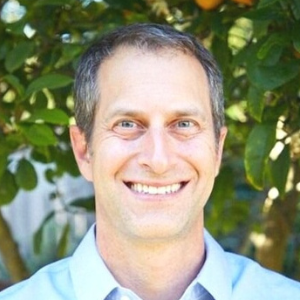
The PROSPER-FM trial enrolled more subjects than any fibromyalgia medical device study in history. The data ran for 12 weeks. The primary endpoint: patient global impression of change. When the results came back, 70.6% of people using the Stanza app reported improvement. In the control group: 22.2%. No adverse events. The paper landed in The Lancet in July 2024. The drug that delivered those numbers was not a drug at all - it was a smartphone app built by a 22-person company in San Francisco, led by a man who spent six years studying cell mechanics at UC Berkeley.
Mike Rosenbluth started as a mechanical engineer at Stanford. Two degrees - BS and MS - in a field that trains people to see systems, constraints, and forces. Then Berkeley, where he joined the lab of Daniel Fletcher, a biophysicist studying the architecture of cell membranes and the way mechanical forces shape cellular behavior. The PhD took six years and produced work at the intersection of biology, physics, and engineering. It also produced a habit of thinking: if you want to change a system, you need to understand its mechanics at the most fundamental level.
That habit carried him through four years at McKinsey, where he worked as an Engagement Manager across global healthcare clients. Then to Versant Ventures, one of the more rigorous life science VC firms on the West Coast, where he spent two years learning to evaluate evidence, management teams, and the distance between a scientific paper and a commercial product. Then to Veracyte, a cancer diagnostics company, where he ran pulmonology strategy and then business development for five years.
"I've always believed that to really change the standard of care, you need to lead with evidence."
- Mike Rosenbluth, Founder & CEO, Swing TherapeuticsBy 2019, Rosenbluth had a decade of watching healthcare from the inside - the science, the capital, the operations, the clinical translation. He had watched digital health companies raise enormous rounds and ship apps built on consumer UX intuition rather than clinical data. He had watched pharma fail fibromyalgia patients with drugs that worked for a fraction of users and came with side-effect profiles that were often harder to tolerate than the condition itself. Acceptance and Commitment Therapy (ACT), a well-documented behavioral approach with Level 1A clinical evidence, was recommended by international fibromyalgia guidelines - and almost nobody could access it. Too few trained clinicians. Geographic barriers. Cost. He founded Swing to close that gap.
The strategy was deliberately old-fashioned for a digital health startup: run the trial, publish the data, earn the designation. Swing secured FDA Breakthrough Device Designation for Stanza before it had FDA authorization - a signal that the agency recognized an unmet clinical need. The company then ran PROSPER-FM, the pivotal Phase 3 multicenter randomized controlled trial, which closed with the results that would become The Lancet paper. In May 2023, Stanza received FDA De Novo marketing authorization - the first prescription digital therapeutic ever cleared for fibromyalgia symptoms.
"At the end of the day, we're trying to help patients change their relationship with pain. The overarching idea of ACT is to help people accept what's going on in your body and to separate your thoughts and feelings from yourself, so you can let those feelings pass."
- Mike RosenbluthThe timing put Swing in an interesting position. Pear Therapeutics - once the flagship of the prescription digital therapeutics category, carrying hundreds of millions in venture funding - filed for bankruptcy in January 2023, just months before Swing's FDA clearance. The narrative around DTx had curdled. Rosenbluth's response to the sector's collapse was essentially to keep going. His argument: Pear's failure was a reimbursement and scale problem, not a clinical problem. Stanza had the evidence. What it needed was payers, and payers needed evidence. He kept making the case.
The evidence argument started working. Highmark, one of the largest Blue Cross Blue Shield plans in the US, announced coverage for Stanza in early 2025. Swing Care, the company's virtual specialty clinic, expanded to Illinois, Tennessee, and Texas. The September 2025 Series B - $11 million, led by Jazz Venture Partners with former Pear Therapeutics CEO Corey McCann joining the board - was a signal that the category's best survivors were being distinguished from its failures.
Rosenbluth's approach to this space is grounded in a frank view of what fibromyalgia patients have been offered. "Fibromyalgia options are typically limited to a handful of pharmacological interventions that have limited efficacy and that can come with difficult to manage side effects," he said when the Lancet paper was released. "This publication validates Stanza as a guideline-directed, non-drug approach that many patients previously couldn't access." The clinical case is not just that Stanza works - it's that it works for people who have exhausted most of what conventional medicine offers, at zero adverse event risk.
The Swing of 2026 is a 22-person company with $30 million in lifetime funding, a Phase 3 publication in one of the world's most rigorous journals, insurance coverage expanding, and a virtual clinic operating in multiple states. It is also a proof of concept for something the digital therapeutics sector argued about for years: whether the pharma-grade evidence pathway was worth the time and cost for a software-based intervention. For Rosenbluth, it always was - and the data is now making that argument for him.