The story
One CFO. One hundred doctors. Three hundred people chasing the bills.
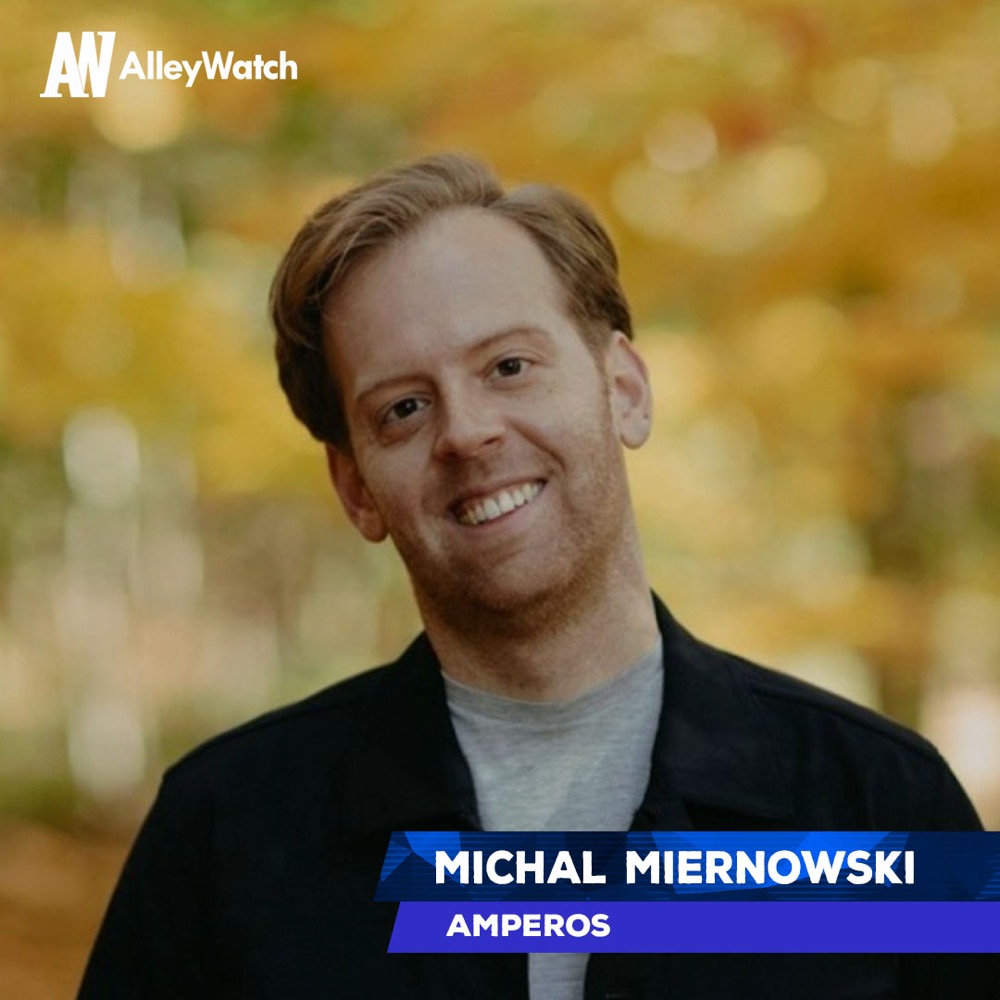
The math is the pitch. A healthcare CFO told Michal Miernowski, some years back, that his clinic employed roughly one hundred doctors and three hundred people to collect the bills those doctors generated. This is either a joke about American healthcare or a business plan, and Miernowski, who had spent the years before at Ardea Partners, Onex and Goldman Sachs looking at healthcare services companies as an investor, decided it was a business plan.
Amperos Health is what he built. The company started in 2023 in New York, with Alvin Wu, formerly at Samsara and Fitbit, as chief product officer, and Wilson Wang, an early large-language-model engineer at Amazon, as CTO. Their flagship is called Amanda. Amanda is not a chatbot. Amanda is an AI biller that logs into insurance portals, dials payer call centers, refiles corrected claims, requests medical records, files appeals, and generally does the work that the three hundred humans used to do, only she does not stop at five p.m. and does not need a two-week onboarding.
"AI doesn't get tired, doesn't quit, and doesn't need to be retrained." This is a line Miernowski uses often. It is also, per the company's own materials, the first stated value at Amperos, which tells you something about the founder: the culture document opens by pointing out that the software does not have feelings. Read it as ruthless if you want. Read it as honest.
The pitch to hospitals is straightforward and, importantly, boring. Hand us your denied claims. We will handle the follow-up, the calls, the paperwork. You go back to being a clinic. Boring pitches are how you get to $700 million in annual recovered revenue across roughly 3,000 clinical sites in all fifty states, which is where Amperos is now. DOCS Dermatology, one of its customers, reports recovering 24% more claims without hiring a single additional biller. Bessemer Venture Partners led the $16 million Series A in April 2026, following a $4.2 million seed the prior June. Uncork Capital and Neo came along. Sofia Guerra at Bessemer described Amperos as "the first truly agentic AI platform we've seen to automate this workflow end-to-end," which is the kind of thing venture investors say and, occasionally, mean.
Complexity in healthcare revenue cycle management should not be the norm, and that's why our mission at Amperos is to streamline the denial and collections process so providers can focus on what matters most.
— Michal Miernowski, CEO, Amperos Health
The former investor problem
There is a small genre of founder in which someone spent five to eight years in private equity or investment banking and then decided the thing they had been evaluating from the outside was worth building from the inside. Miernowski is one of these. He studied economics, with a mathematical emphasis, and French at the University of Wisconsin-Madison from 2011 to 2015, worked at Goldman Sachs, moved to Onex to look at healthcare services investments, spent time at Ardea Partners, and, some time around 2023, walked out of the meeting rooms and into a New York startup office.
"I realized," he told AlleyWatch when Amperos raised its seed round in 2025, "that instead of discussing how we can serve more patients and provide more treatments, we were spending hours just trying to figure out how we can get enough cash in the door to pay staff and keep operating." Claims, he added, take so long to pay that a lot of clinics are forced to shut down or pull back services. The insurance denial rate in American healthcare is a real number and the collections shortfall it produces is roughly $26 billion. Amperos' seed pitch was that this was a software problem.
Amanda inside the billing software
The design choice worth noting is that Amperos does not replace anything. Amanda lives inside the provider's existing billing system, which is how Miernowski describes it: "The AI that Amperos uses works directly within the provider's existing billing software, acting like a member of their team." Healthcare software procurement is, famously, an act of masochism, and any pitch that requires ripping out an EHR or an RCM system is a pitch that takes eighteen months to close and eight months to implement. Amperos avoids the whole thing.
The metrics the company publishes are the kind that get the attention of a CFO who has been staring at his aging AR report for six months. Claims are resolved five times faster than traditional approaches. Recovery per claim runs 20 to 22 percent higher than an outsourced vendor. Cost to collect drops by as much as half. Denial rates, over time, come down roughly 70 percent, because Amanda notices patterns and Amperos is starting to build the upstream layer that prevents denials in the first place. Miernowski's stated aspiration is to make Amperos the "AI-native infrastructure layer between providers and payers," which is a large-sounding phrase for what is, in practice, a piece of software that sits between the person who ordered the MRI and the person who is refusing to pay for it.