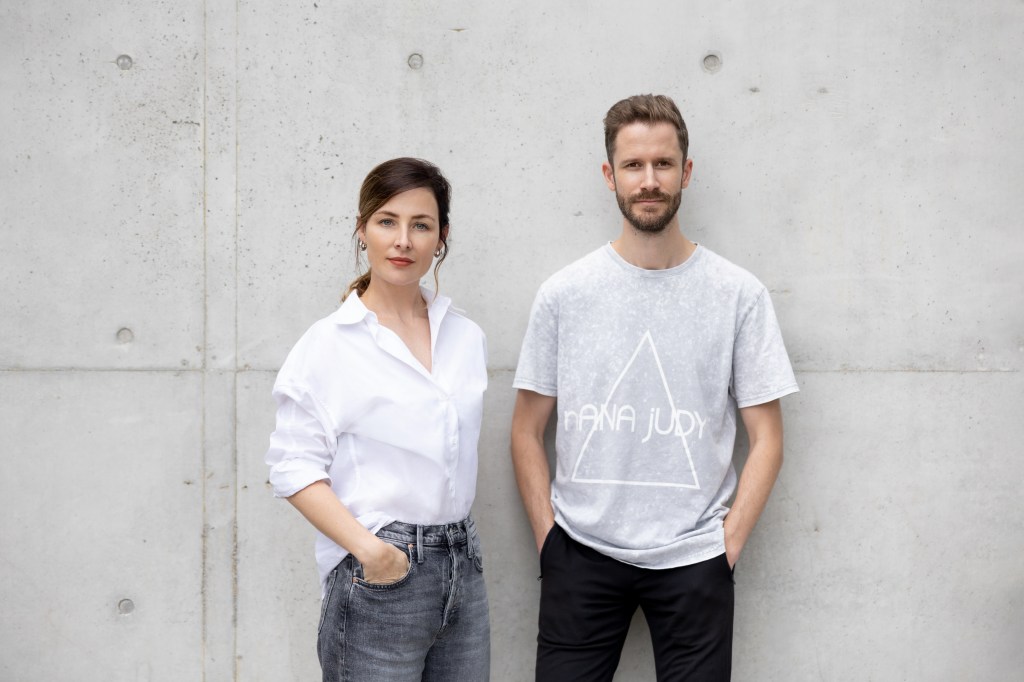
Michaela Wessels runs Style Arcade, a Sydney-based analytics platform that fashion brands use to decide what to buy, how much of it, and in which sizes. The company was co-founded in 2018 with Tristan Hoy, its CTO. It is now used by roughly 6,000 merchandise buyers and planners across 28 countries, has raised $8 million in a Series A led by Acadian Software, and counts a curious mix of ecommerce operators and cult designers as customers: The Iconic, Princess Polly, White Fox, Aje, Christopher Esber, Dion Lee.
You can construct a familiar founder narrative from those facts: Australian SaaS, vertical software, AI-adjacent, quiet US expansion. The narrative is technically accurate and mostly beside the point. The point is that Wessels used to be the customer. She spent more than a decade in finance and merchandise planning at Truworths in South Africa, at Lacoste, and finally at The Iconic. Her recurring line about that decade is direct in the way industry-native founders' lines tend to be: "Everything was manual - everything was spreadsheets. I was buried under paper and Excel."
The buying job, if you have not done it, is a job of guessing under constraints. A buyer for a mid-sized fashion brand picks thousands of SKUs per season, across sizes, colours, price points, and delivery windows, and then tries to reason about what a customer she has never met will actually buy in eight months. She does this in Excel because Excel is the only tool flexible enough to hold the mess, and she does it badly because Excel is not flexible enough to hold the mess. Every over-order becomes markdown. Every under-order becomes a stockout, which becomes a customer who buys the black instead of the hot pink. "There is a saying in retail," Wessels has said, "that she comes for the hot pink but she stays for the black." Style Arcade is a piece of software about the black.
The mechanics: connect Style Arcade to a brand's ecommerce and inventory systems and it reconstructs the entire buying and planning cycle - product forecasting, assortment planning, size-curve optimization, margin math, returns analytics, campaign performance - inside one visual environment. The interface leans hard into images because fashion buyers reason about images, not SKU numbers. "Gone are the days of looking at SKU number, it doesn't tell you anything," Wessels says. "The retail customer buys products based on the look of it first and foremost. If we're unable to draw the link between data and the visual elements of the product then we're not seeing our range from the customer's eyes."
That the whole thing is now marketed as AI-driven is true enough - the platform makes recommendations, forecasts styles at SKU depth, and quietly optimizes size curves toward what the company claims is 95%+ accuracy inside twelve months - but Wessels talks about it less like an AI product than like a well-designed merchandising floor with better instruments. Forbes called it "first of its kind." Style Arcade puts the phrase in press quotes. The truer description is that it is the first piece of buying software that looks like it was designed by a buyer, which it was.
Style Arcade's first pilot was not a pilot in the venture sense but a soft insurgency. Wessels rolled it into The Iconic, where she had been on the buying team, and it picked up three hundred users inside the buying department before the company had a proper go-to-market. She has described it as her "secret weapon." The word to notice in that sentence is "weapon." She was still competing with peers in her old job while selling them a way to do it better.
What she did next, in retrospect, is the more interesting decision. Between 2018 and 2022 Style Arcade did not take a conventional seed round. Wessels went to Lighter Capital for three tranches of revenue-based financing - about $670,000 AUD in total - and used it to hire in sales and engineering while the platform grew 180% in a single year. She then, in November 2022, raised the $8 million Series A led by Acadian Software, a US firm that specifically underwrites vertical SaaS businesses it can plausibly call "first of its kind." Roughly 63% of Style Arcade's revenue at the time was arriving through word of mouth inside the fashion industry, which is a hard number to fake and an even harder one to explain to a growth investor without smiling.
Wessels relocated to New York in the wake of the raise, and Style Arcade opened offices there and in London. The New York move is worth noting because it is the founder's move, not a hire's. The company's US expansion is being sold, market by market, by the person who built the product and used to buy the product. That is unusual. In most Australian SaaS stories the founder ships a Head of NA out of Sydney; here she went herself.
She is a Bachelor of Commerce from Nelson Mandela Metropolitan University, in the Eastern Cape of South Africa. She keeps her public persona restrained. Podcasts, panels, a Style Arcade Instagram reel now and then. The interviews are all variations on the same story, told without ornament: I was a planner, planning was broken, so I fixed it.