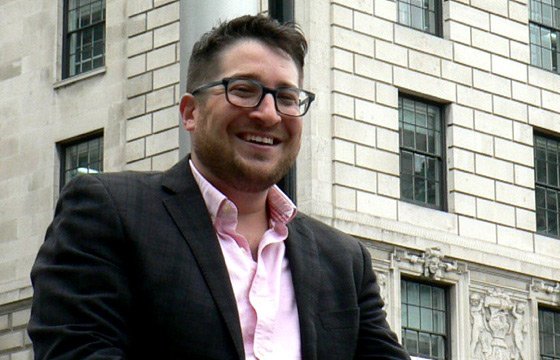
He was a commercial broker who spent Monday mornings in a conference room trading lease comps on printed sheets of paper. The database he built to replace those meetings is now used by landlords, lenders, and investors in every U.S. market.
In commercial real estate, a "comp" is the record of a deal - who signed for how much, on what terms, in which building. It is the closest thing the industry has to price transparency, and for decades it was traded the way middle-schoolers trade Pokémon cards. Brokers hoarded their own comps and swapped them at recurring meetings, in bars, over email attachments. The trade was social, unreliable, and slow.
Michael Mandel used to be one of those brokers. He ran the New York metro data center practice for Grubb & Ellis, was named National Rookie of the Year, and sat through the Monday sessions where his colleagues would fan out printed sheets of numbers. He noticed two things. First, everyone was doing this. Second, no one liked doing this. The information was valuable, but the exchange method wasted the parts of the workweek most brokers wanted to spend closing deals.
The obvious solution - build a website - had an obvious problem. The website only works if the brokers upload their comps, and brokers had no reason to. Their comps were the source of their edge. Selling them to a competitor felt like ammunition, not commerce.
Mandel's insight, which sounds simple in the retelling and was not, was to pay brokers in something other than money. He offered credits. You upload a comp; you earn credits; you spend credits pulling comps from other brokers. Nobody hands cash to a rival. Everyone hands over a comp when the return is a comp they don't have. The trade Mandel was replacing already existed. He just made it fast, verifiable, and asynchronous.
The buyers - the people who actually pay CompStak - are the landlords, lenders, appraisers, and investors on the other side of the market. They subscribe. They get the data set the brokers built. This is a market design problem dressed up as a software company, which is why it took a broker to solve it.
CompStak launched in early 2012 with Vadim Belobrovka. It now has roughly 130 employees, offices across five cities including Belgrade, and about $89M in cumulative funding through a $50M Series C in late 2021. The 35,000-plus contributors on the platform continue to trade credits for comps. This is not a hobby. It is the plumbing of commercial real estate underwriting.
"Whenever people say something is dead, that's usually when you should be investing." - Michael Mandel
Mandel is the youngest of five, from Cherry Hill, New Jersey. His father was a lawyer and an entrepreneur, which is the kind of combination that produces kids who read contracts for fun and then argue with the person who wrote them. He went to Babson College and lived in eTower, the world's first live-in student business incubator - a dorm for people who wanted to skip the part of college where you pretend not to be building a company.
He tried commercial music production briefly after graduating. He wanted to build a startup right away, but it was 2005 and the pre-cloud costs of trying were high enough to be a deterrent. Real estate brokerage found him instead, via relationships, which is how brokerage always finds people.
His personal site, michaelmandel.com, hosts a playable version of Dr. Mario with the original NES soundtrack. It is presented without explanation. If you are looking for a founder who takes himself seriously in exactly the ways that matter and not in the ways that don't, this is a data point.
He is a Philadelphia Eagles fan, an active pickleball player, and the owner of two dogs whose names - Squeakers, a Maltipoo, and Kugel, a Cavapoo - carry the correct amount of embarrassment for household pets. He is married to Jenna and has two daughters, Alice and Rosie. Family vacations skew toward Nantucket. He bakes chocolate chip cookies. Nothing in this paragraph is what you would put on a pitch deck, which is the point.
Colleagues describe him as intellectually restless. He has said, more or less directly, that he has a problem with authority. This is a good trait in a founder and a difficult one in an employee, which is why he became the first and stopped being the second.
Mandel speaks regularly at MIT, Wharton, and Columbia about data and CRE transparency. He was named 30 Under 30 by Real Estate New York and Rising Star by The Real Deal. He shows up on podcasts about proptech and, occasionally, about the future of the office - a subject on which he has taken the contrarian view. When most of the market was calling the office dead, he said the opposite. Cycles, he likes to point out, are cycles.
A broker submits a lease or sale comp - the deal, the terms, the tenant, the concessions. Verification kicks in immediately.
Contributors earn credits weighted by uniqueness, accuracy, and completeness. Better data, more credit.
Brokers, appraisers, and researchers redeem credits for other people's comps. Everyone gets what they came for.
Landlords, lenders, and investors subscribe to the analytics layer built on top of the exchange. This is where CompStak makes its money.
Analyst-reviewed transactions, anomaly detection, and community verification tighten the data over time.
Market benchmarking, heat maps, portfolio analysis, API integrations - the modern outputs of an old-fashioned trade.
Michaelmandel.com opens with a playable Dr. Mario cartridge. NES music included.
He briefly worked in commercial music production before switching to brokerage.
He lived in the world's first live-in college business incubator at Babson.
He spent roughly twelve months pitching CompStak before the first check cleared.
CompStak has a Belgrade office - a distributed engineering setup uncommon among NYC proptech companies of this stage.
He publicly called the return to office in a 2023 Commercial Observer profile, at a moment when the consensus was moving the other way.
Co-founder and CEO of CompStak, a commercial real estate data platform he launched with Vadim Belobrovka in 2012.
A New York-based platform that crowdsources CRE lease and sale comparables from brokers, appraisers, and researchers, and sells verified data and analytics to landlords, lenders, and investors.
Babson College, class of 2005. He was a member of eTower, the world's first live-in student business incubator.
Approximately $89M across multiple rounds, including a $50M Series C in November 2021.
He was a commercial real estate broker at Grubb & Ellis, running the New York metro data center practice, and was named National Rookie of the Year.