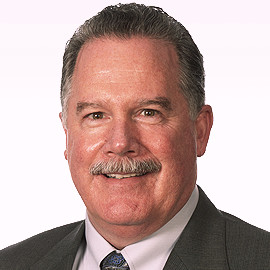
Most CEO profiles open with a founder's myth. There isn't one here. Harrington didn't bootstrap a company in a garage and he didn't parachute in from private equity. He joined a group of doctors and stayed long enough to watch the group grow into a national partnership. The interesting part is the staying.
Vituity describes itself as physician-owned and multispecialty. Translated: the doctors who deliver the care also own the business that delivers it. That structure is unusual at scale. It is also a managerial nightmare without somebody who can run the operating spine. That somebody, since 2002, has been Harrington.
Where he sits on the org chart
Vituity is built around two executive functions. One leads the clinical and physician-facing partnership. The other - Harrington's seat - runs practice management: revenue cycle, billing services, finance, contracting, the boring, indispensable infrastructure that lets clinicians treat patients without simultaneously running a small business each.
Read the public material and a pattern shows up. The clinical side talks about acute care, telemedicine, emergency medicine, neurology, psychiatry, hospital medicine, anesthesiology, urgent care. The practice management side talks about cost efficiency, operational performance, data analytics, partnership economics. Harrington owns the second column.
The training that shaped the operator
The biography is short and unfussy. Saint Mary's College of California, accounting, 1976-1980. Ernst & Young for three years. InfoMed Systems for five. Then Vituity, first as CFO and financial advisor to medical group clients, then as Practice Management CEO from 2002 forward.
You can read that as a slow career. You can also read it as a deliberate one. Public accounting taught him how to look at a number and ask, gently, whether anyone believes it. Health information work taught him what doctors actually need from a back office. Then he spent the next two decades putting those two skills together inside a single partnership.
What he teaches in public
Harrington is on the speakers list at American College of Emergency Physicians management conferences year after year. He does not lecture about charisma. He lectures about how to run a medical group: governance, finance, partnership models, the things that decide whether a practice survives a contracting cycle. It is the kind of teaching that other CEOs hire consultants to deliver.
He holds memberships, still, at the Healthcare Financial Management Association, the Medical Group Management Association, and the American College of Healthcare Executives. Three organizations almost no one outside the field has heard of. Three organizations that hold the trade knowledge of his entire industry.
The cultural posture
For an accountant, Harrington spends a notable amount of time talking about culture. Vituity uses the phrase "culture of brilliance" to describe a team-first operating mode where the partnership's collective performance outranks individual stardom. Harrington's contribution to that conversation is characteristically dry. He says culture change takes a lot of commitment from the leadership. He says part of creating a positive culture is letting people know how important they are. Then he goes back to the operating review.
The scale he runs
The numbers do not whisper. Roughly 4,200 clinicians. About $1.3 billion in annual revenue. A national footprint of hospital and health system partnerships. A technology stack that runs from Epic on the clinical side to Salesforce, Workday-adjacent systems, Microsoft Power Platform, ServiceNow and Tableau across operations. Most of that complexity sits underneath the practice management CEO's desk.
Healthcare is not kind to organizations of that size. Reimbursement contracts change. Staffing markets crack. Public payors shift their rules. Surviving inside that turbulence for twenty-plus years, while compounding the partnership's scale, is the headline that the resume understates.
Why this profile exists
Because the loudest people in healthcare get covered. The quiet operators do not. Harrington is the second category. He represents a class of executive that the industry runs on and rarely puts in front of a microphone: career-long, finance-trained, partnership-minded, allergic to spectacle.
If you want to understand how a physician-owned multispecialty partnership actually functions at national scale, you can read the press releases. Or you can study the person who has been signing the operational documents for two decades.
The understatement
There is a temptation in profiles like this to inflate the subject. To call him a visionary or a transformer or a builder. Harrington's record does not need the adjectives. He took a CFO role inside a California medical group, became its practice management CEO, and stayed long enough to watch it grow into a national partnership with thousands of clinicians and a billion-plus in revenue. The work speaks. He, in keeping with his trade, lets it.