The woman who moved from Indonesia to Cornell, spent a decade inside Oracle, then built the platform that dares sales teams to stop wasting Tuesday mornings.
She gave sales reps back 6 hours a week - not with a motivational poster, but with a product. That's the whole thesis.
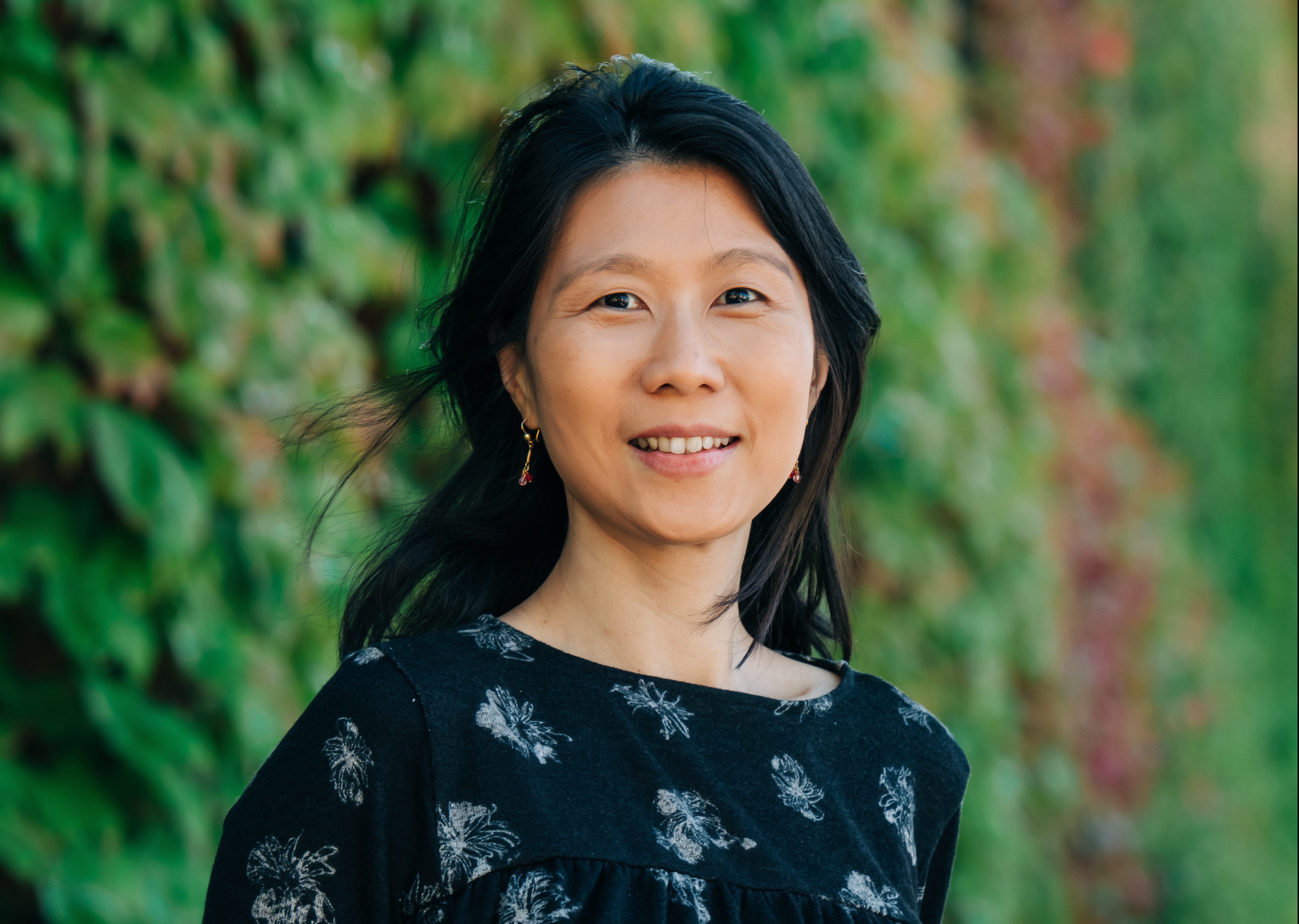
Mei Siauw did not stumble into sales technology. She watched, for ten years at Oracle, exactly how broken the prospecting loop was: reps copying contact data from one screen into another, chasing stale emails, building lists that were obsolete by the time they loaded. When she left Oracle in 2014, she had a very specific problem in mind.
LeadIQ launched in 2015. The pitch was deceptively plain - capture lead data from LinkedIn with a click, sync it to Salesforce without the copy-paste ritual. But the product that shipped in 2015 looks nothing like what exists today. Today, LeadIQ does account-based prospecting, real-time job-change tracking, AI-generated personalized outreach, CRM enrichment, and mobile number sourcing. Siauw spent a decade at Oracle learning what enterprise buyers actually need before they'd confess it to a salesperson.
Under her leadership, LeadIQ has raised $42M across four funding rounds, including a $30M Series B in October 2021 led by Cathay Innovation. The team operates fully remotely from 33+ countries. There is no headquarters, no central office, no Monday all-hands with bad lighting. The culture has to work on Slack and async video or it doesn't work at all - and 20,000+ sales professionals are evidence it works.
Buyers aren't looking to be sold to. They're looking to be understood.
- Mei Siauw, Co-founder & CEO, LeadIQWhat makes Siauw unusual in the crowded sales-tech landscape is the discipline she brings to data. The category is littered with platforms selling contact databases that are 60% wrong. LeadIQ bets on freshness and verification - real-time signal tracking, job-change alerts, and multi-source enrichment. That's not a feature. It's a philosophical stance: garbage data wastes everyone's time, especially the buyer's.
Her original investor was Jason Calacanis, who hosts This Week in Startups and has a habit of backing founders before they have much to show. Calacanis appeared on his own podcast with Siauw in 2021 to dissect LeadIQ's approach to inside sales. By that point, the company had quietly grown to a point where Cathay Innovation led a $30M round - not because LeadIQ had the loudest PR, but because the growth metrics were hard to argue with.
Oracle product management in the 2000s and early 2010s was a specific kind of training. Enterprise software moved in cycles measured in quarters, not sprints. Customer feedback arrived through thick requirement documents. The gap between what buyers said they needed and what they actually did in the product was wide enough to drive a truck through.
Siauw watched that gap for ten years. She watched sales reps log into four different tools to complete a single prospecting task. She watched data hygiene get treated as someone else's problem. She watched personalization mean "change the first name in the template." When she finally left to start TotSpot in 2013 - a children's fashion marketplace that would later sell to Poshmark - it was her first test of building from scratch, not inside an institution.
LeadIQ was the real thing. Founded in 2015 with Angelo Huang as CTO, the early product was a Chrome extension that pulled contact data from LinkedIn and dropped it directly into Salesforce. Simple, fast, actually useful. The kind of tool a salesperson would pay for out of their own pocket if the company didn't.
The deeper bet was on workflow. Siauw kept asking: what slows reps down before the first call? Data lookup. Email formatting. CRM entry. Figuring out who changed jobs last month at a target account. LeadIQ started eating those minutes one by one. By the time Cathay Innovation led the $30M Series B, the platform was doing real-time job-change tracking, multi-source contact enrichment, AI-generated email personalization, and direct integrations with Salesforce, HubSpot, and Outreach.
The founder's journey is one of resiliency. Keep going especially when times are tough.
- Mei SiauwThe remote-first structure was not a pandemic pivot. LeadIQ had been building a globally distributed team from early on - partly because the talent Siauw wanted was not all in San Francisco, and partly because she understood that proximity is a weak substitute for process. The company operates across 33+ countries. The playbooks have to be written down. The culture has to survive a twelve-hour time zone gap.
Her management philosophy borrows from her own immigrant story: you do not get to assume that everyone around you shares your context. You have to over-communicate. You have to be specific. And you have to hire people who are motivated enough to figure things out without being in the same room.
The founder's journey is one of resiliency. Keep going especially when times are tough.
Buyers aren't looking to be sold to. They're looking to be understood.
Every company needs to train their sales team to find triggers and insights, to research, and then personalize.
Don't give up on outbound sales.