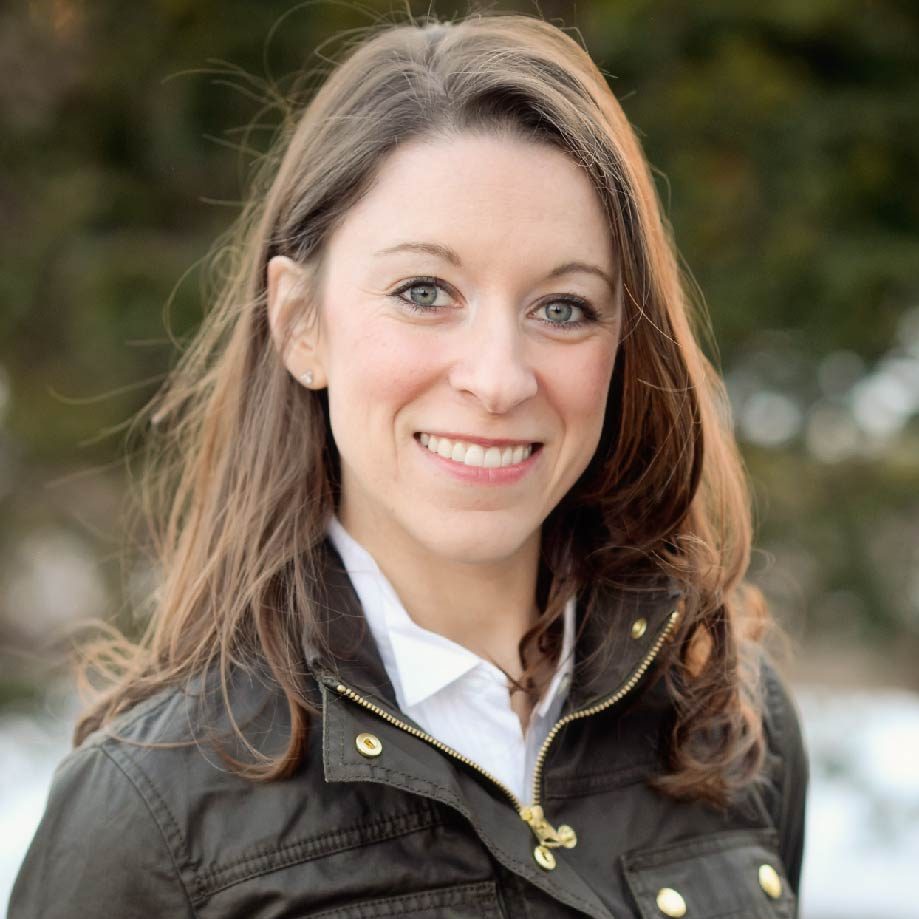
An executive assistant for everyone, not just executives
It started at a kitchen table. Meghan Joyce, who had managed thousands of drivers for Uber and an entire health-tech platform at Oscar, could not get her own doctor's appointment booked, her insurance claim filed, or the grocery list cleared.
The realization was less a lightning bolt than a slow leak. She watched friends and family drown in the same low-grade administrative tide - the forms, the holds-on-the-phone, the rebooking, the returns. The people most pressed for time had the least access to anyone who could buy it back. So in 2022 she founded Duckbill and gave it a deceptively domestic job: handle your life admin so you don't have to.
Duckbill bills itself as "an executive assistant for your personal life." The trick is what is under the hood. Rather than betting the company on a fully autonomous agent, Joyce wired Duckbill to pass work back and forth between generative AI and real human experts. The AI moves fast and never sleeps; the humans handle the messy, unscripted parts of the real world - the call center that won't pick up, the pharmacy that wants a fax, the judgment call no model should make alone.
Knowing that the world is not yet optimized for AI agents, we have the flexibility to hand the baton between the two - AI and humans.
That phrase - "hand the baton" - is the whole thesis in three words. It is also a quietly contrarian one. In a market hypnotized by the promise of agents that do everything by themselves, Joyce's pitch is that a human in the loop is a feature, not a flaw. The bet has been well funded: Duckbill has raised $33 million in seed and Series A capital, a round led by Forerunner Ventures with Greycroft, Inspired Capital, General Catalyst, G9 Ventures, Red Antler, Bain's Future Back Ventures, and Offline Ventures alongside.
A decade of running things that grew too fast
Joyce grew up on the South Shore of Massachusetts and studied the history of science at Harvard, focusing on how communities fold new technology into old policy. It was an academic interest that turned out to be a career map. She started at Bain & Company as a consultant - an early assignment had her inside a candy factory - then moved to investing at Bain Capital, then deferred her Harvard MBA to take a seat at the U.S. Treasury as a senior policy advisor on domestic finance during the recession.
In 2013 she joined Uber's Boston office when it had five employees. She grew it past fifty and, by 2015, was running the company's entire East Coast - Boston, Philadelphia, Pittsburgh, Washington, Baltimore, Nashville, Atlanta - before becoming regional general manager for the U.S. and Canada. In 2019 she crossed into healthcare as chief operating officer and EVP of platform at Oscar Health, overseeing technology, product, data, marketing, clinical, and operations for the publicly traded insurer.
Along the way she collected the kind of board seats that say more than a resume: a director at The Boston Beer Company, the maker of Samuel Adams, and at Guardant Health, an oncology company in Palo Alto. She is also a core LP at Underscore VC.
The people that I promoted were the ones who focused on building the business - not defending their turf.
Her management creed is compact: high standards, high support. She talks about running toward the unaddressed problem rather than guarding a title, and about doing the bigger job before anyone hands you the bigger title. It is advice that reads like a memo and behaves like a personality.
Quotable
Life is too short to be working on something that isn't connecting to our community.
I would never want to behave in a way that I wouldn't be proud to see replayed on the front page of a newspaper.
The people I promoted ran toward problems - not away from their job titles.
We have the flexibility to hand the baton between the two - AI and humans.
Why a human is the point
There is an irony in a former Uber and health-insurance executive - two industries that ran hard at automation - building a company that insists on keeping people in the workflow. But Joyce's whole career has been about the seam where new technology meets a stubborn, regulated, deeply human reality. She found that seam exciting at Treasury, exciting at Uber, and she found it again in the gap between what an AI can promise and what it can actually get done before lunch.
Motherhood reshaped the work too. A mom of three, Joyce talks openly about using AI without guilt and redefining founder success to include being present, not just being ambitious. Duckbill is, in a sense, a tool built by someone who needed it - and who suspects most people are quietly improvising the same overloaded life.
The name helps. A duckbill platypus is the animal that refuses to fit a category: part this, part that, entirely itself. A company that is part machine, part human, and entirely built to clear your to-do list could not have asked for a better mascot.