Brewing medicines, not beer $270M+ raised to read the planet's genomes Hexagon Bio - Menlo Park, California Ex-Stanford Genomes to Natural Products director Division I swimmer turned genome miner C&EN 10 Start-Ups to Watch, 2018 Brewing medicines, not beer $270M+ raised to read the planet's genomes Hexagon Bio - Menlo Park, California Ex-Stanford Genomes to Natural Products director Division I swimmer turned genome miner C&EN 10 Start-Ups to Watch, 2018
Founder · Scientist · CEO

Maureen
Hillenmeyer

She trains yeast to brew medicine instead of beer - and reads the DNA of fungi to find the recipes nobody knew were there.

$270M+Total raised
$77.3MSeries B, 2023
2Degrees: bio + informatics
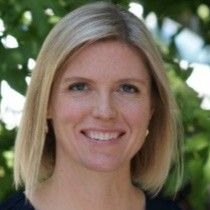
Maureen Hillenmeyer, founder and CEO of Hexagon Bio
The CEO who looks at a petri dish and sees a pharmacy.

A library no one had bothered to read

Somewhere in a refrigerator at Hexagon Bio sits a strain of engineered yeast that, given the right genetic instructions, will quietly manufacture a molecule a fungus first invented millions of years ago. That is the whole bet. Maureen Hillenmeyer founded the company on a simple, stubborn idea: the chemistry that could become tomorrow's cancer drug is already written down. It is just written in genomes nobody has read closely.

Today she runs that company as founder and CEO from an office on O'Brien Drive in Menlo Park. Hexagon Bio downloads the publicly available genome sequences of microbes and fungi, runs software across hundreds of thousands of them, and looks for the genetic fingerprints of small molecules with the shape and behavior of a drug. The promising ones get stitched into yeast on a platform the company calls HEx, short for heterologous expression, which coaxes the yeast to biosynthesize the molecule so chemists can finally hold the thing in their hands.

The targets are serious: cancer and infectious disease. The method is almost cheeky. Fungi spent eons evolving toxins to fight their neighbors, refining each compound under relentless pressure. Hexagon treats that long evolutionary contest as a research budget it never had to pay for, and reads the results off the page.

It is a contrarian place to plant a flag. For years the pharmaceutical industry drifted away from natural products toward synthetic libraries and designed molecules, partly because the old discovery process was so slow and so dependent on luck. Hillenmeyer's wager is that the slowness was a tooling problem, not a dead end - that the molecules were always worth having and the field simply lacked the computational means to find them efficiently. Hexagon is built to prove the molecules were never the bottleneck.

Instead of brewing alcohol, which a lot of people use yeast to do, we're brewing medicines.

Maureen Hillenmeyer, C&EN, 2018
Co-founder: Yi Tang Co-founder: Brian Naughton Co-founder: Colin Harvey

From sequence to substance

No foraging through soil samples. No luck. The pipeline starts with data that already exists and ends with a molecule that did not.

1🧬

Download

Pull hundreds of thousands of public microbial and fungal genome sequences.

2💻

Compute

Software sifts the DNA for gene clusters that encode drug-like small molecules.

3🧲

Express

Insert the genes into engineered yeast - the HEx platform - to biosynthesize the compound.

4💊

Develop

Turn the most promising, target-matched molecules into therapeutic candidates.

She arrived at biology by way of the swim lane

Hillenmeyer grew up near Indianapolis, in a household pointed at computers. The interest in technology arrived early and never quite left. What is less expected is how she got to the lab: the University of Notre Dame recruited her as a competitive swimmer. She majored in biology, took computer science on the side, and - in the kind of move that explains the rest of her career - started writing basic programs to analyze large piles of DNA sequencing data.

That was around the time the Human Genome Project was being completed. Sequence data was suddenly everywhere and largely unexamined. She had landed at the exact intersection where biology was becoming a data problem, and she had already taught herself both halves of the language.

She went on to Stanford for a Ph.D. in biomedical informatics, then stayed as a postdoc in a lab focused on discovering and engineering natural products. There the central idea of Hexagon crystallized: improve the centuries-old hunt for natural medicines by adding computation, downloading every genome you can find and letting software prioritize the ones most likely to encode something a patient could use.

Before the company, she directed the Genomes to Natural Products program at the Stanford Technology Genome Center, leading the bioinformatics and synthetic biology that would later become Hexagon's engine. In 2017 she and three co-founders spun the research out into a private company built to actually make drugs.

The jump from academic program to drug company is its own kind of athletic event. A university lab can publish a clever method and call it a win. A company has to turn that method into a pipeline, a payroll, and a pitch that institutional investors will fund through years of unglamorous bench work. Hillenmeyer made that jump and kept making it - growing the team, raising successive rounds, and holding the company to a goal measured not in papers but in molecules that might one day reach a clinic.

Undergrad

Recruited to Notre Dame as a competitive swimmer; majors in biology, codes on the side, analyzes DNA in an undergrad lab.

Stanford

Earns a Ph.D. in Biomedical Informatics; stays on as a postdoc working on natural products.

Pre-2017

Directs the Genomes to Natural Products program at the Stanford Technology Genome Center.

2017

Co-founds Hexagon Bio with Yi Tang, Brian Naughton, and Colin Harvey.

2018

Hexagon named one of C&EN's 10 Start-Ups to Watch.

2020

Raises $47M to mine fungal genomes for new drugs.

2023

Closes a $77.3M Series B to expand the computational discovery platform.

Nature has always been the best chemist

For most of pharmaceutical history, the great drugs were found, not designed. Penicillin came from a mold. Many of the world's antibiotics and cancer compounds trace back to microbes and fungi that evolved them as weapons and signals. The catch was always discovery: you had to grow the organism, hope it produced the molecule under lab conditions, and stumble onto the useful ones. Most of that chemistry stayed silent, locked in genes the organism never switched on in a dish.

Hillenmeyer's insight reframes the bottleneck. The genome holds the blueprint whether or not the organism ever expresses it. If you can read the DNA, you can predict the molecule, and if you can predict the molecule, you can build it in a friendlier host. That is why the fungal kingdom is the hunting ground - it is vast, ancient, and chemically inventive - and why yeast is the workhorse. Yeast is cheap, fast, and well understood, the lab equivalent of a reliable old truck.

It also explains the shape of the company she built. Hexagon Bio is deliberately interdisciplinary, blending data science, genomics, synthetic biology, and automation under one roof. Hillenmeyer's own resume - a biologist who codes, an informatician who runs a wet lab - is the company in miniature. The co-founding team reflects the same width: chemist and chemical-engineering professor Yi Tang, computational thinker Brian Naughton, and natural-products scientist Colin Harvey. Few drug-discovery efforts ask all of those people to share a hallway.

The payoff she is chasing is leverage. Instead of screening compounds one slow assay at a time, the platform lets computation do the first pass across a scale no human team could read by hand - hundreds of thousands of genomes - and reserve the expensive bench work for candidates the software already likes. It is drug discovery reorganized around the cheapest thing in modern biology: sequence data.
Role

Founder & CEO

Hexagon Bio, Menlo Park, California.

Trained

Stanford & Notre Dame

Ph.D. in Biomedical Informatics; B.A. in Biology.

Field

Natural products

Genomics-driven small-molecule drug discovery from fungi.

Before

Stanford program lead

Director, Genomes to Natural Products, Stanford Technology Genome Center.

Investors bought the thesis

Reported financing milestones on the way to more than $270 million in total funding.

2020 round
$47M
Series B · 2023
$77.3M
Total funding
$272.9M

The case for paying attention

01 / Platform

The HEx engine

Built a heterologous-expression platform that uses engineered yeast to biosynthesize fungal small molecules on demand.

02 / Spin-out

Lab to company

Turned the Stanford Genomes to Natural Products program she led into a venture-backed drug-discovery business.

03 / Recognition

One to watch

Hexagon Bio named one of C&EN's 10 Start-Ups to Watch in 2018, early in its life.

04 / Capital

$270M+ raised

Led financings that have pulled in more than a quarter-billion dollars to scale computational discovery.

05 / Method

Genome at scale

Pioneered sifting hundreds of thousands of microbial genomes by computation to prioritize therapeutic candidates.

06 / Aim

The global metagenome

Set the company's ambition on finding medicines across the planet's collective microbial DNA - and getting them to patients.

Our ambition is to identify medicines in the global metagenome and bring them to patients.

Maureen Hillenmeyer

It is a sentence with a planetary scope and a clinic-sized goal. The metagenome - every gene of every microbe out there - is the world's largest, least-organized pharmacy. Her job is the index.

Two Steps Forward

Two Sigma Ventures sat down with Hillenmeyer for its founder series, "Sequencing the Earth for Cures," released around the Series B.

Things you can drop at a dinner party

Fact 01

A Division I swimmer who became a genome miner. The discipline transferred; the chlorine did not.

Fact 02

Her drugs are brewed by yeast - the same microbe behind your bread and your beer.

Fact 03

She was already coding DNA analysis as an undergrad, right as the Human Genome Project wrapped.

Fact 04

She treats fungal evolution as free R&D - millions of years of molecule optimization, downloaded.