Founder // Adtech // London → NYC
Matthew Goldhill
He built an ad format that didn't exist, then convinced the open web it had been missing it all along.
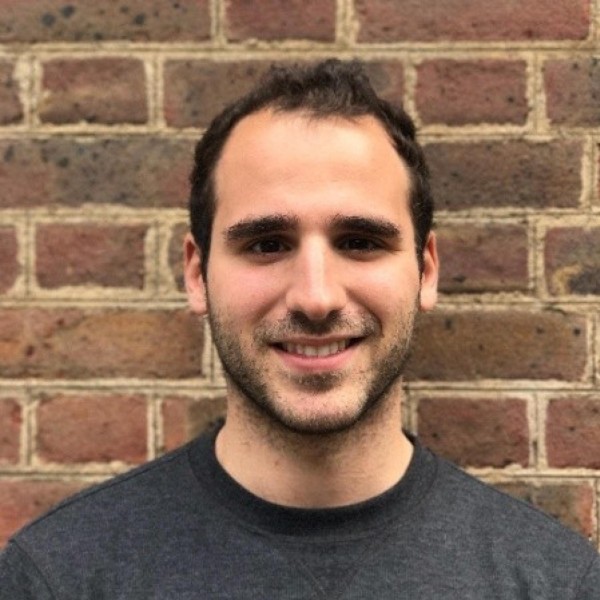
Matthew Goldhill. Trades in pixels, thinks in carbon.
He built an ad format that didn't exist, then convinced the open web it had been missing it all along.
Matthew Goldhill. Trades in pixels, thinks in carbon.
The desk that matters is in New York. Matthew Goldhill packed up a London adtech company that most of the industry already respected and moved across the Atlantic to do the unglamorous part: knock on doors, win the first American customer, prove the format travels. He won it.
The format is Picnic's whole reason for being. Stories. Posts. Carousels. The visual grammar your thumb already speaks - except dropped into the middle of an article on a Google AMP page rather than buried in a feed. When Goldhill started, that wasn't a small market. It wasn't a market at all. The slot did not exist until he decided it should.
Six hundred-plus campaigns later, brands you'd recognise on a high street - EE, L'Oreal, Amazon - have run inside it. Picnic calls itself "the social display ad marketplace," and the phrase only sounds obvious because Goldhill spent the better part of a decade making it true.
He is, by adtech standards, refreshingly bad at pretending the early years were a smooth climb. Ask him about the founder's journey and you'll get the bit where the team was convinced they were going to prison. More on that shortly.
Most adtech founders pick an existing pie and fight for a slice. Goldhill drew a new one. The insight was almost rude in its simplicity: people enjoy social content and tolerate display ads, so why not make the display ad behave like the social content?
Picnic's formats live mid-article on AMP pages - the fast, stripped-down mobile pages that big publishers lean on. A reader scrolls into a Story or a Carousel that looks and moves like something off their own phone, except it's premium publisher inventory and it loads without wrecking the page's Core Web Vitals. The early version of this single idea took the company from a stalled two-year grind to eight employees and a real product. Everything Picnic sells today grew out of that one slot.
Early Picnic ran a performance campaign for app installs. The team spotted a margin: they could buy inventory cheaper than they were selling it. So they bought more impressions to push the numbers up. Sensible - until you read the small print of their own setup.
They had wired up click tracking but not impression tracking. The dashboard divided clicks by a fraction of the real impressions and produced a click-through rate of 10%. The honest industry number is closer to 0.1%. To anyone watching, it looked less like a great campaign and more like an open-and-shut case of ad fraud.
The client never called. The number went unquestioned, the panic dissolved, and the story became the kind of thing a founder tells on a podcast years later - half cautionary tale, half proof that surviving the absurd is most of the job.
Lands at a mobile marketing startup called Mobile5 straight out of university. The role spans creative, technology and commercial - and he catches the entrepreneurial bug for good.
Leadership roles at Sharethrough and then AppNexus (later Xandr), learning the plumbing of programmatic from the inside.
Walks out of AppNexus at 25 to start Picnic with a co-founder who has deep adtech knowledge and, by his own account, plenty left to learn about building a business.
The user-first format clicks. Picnic narrows to social display on AMP and grows to its first proper team.
Closes a £1m round, opens a New York office, and lands Picnic's first US customer.
On the FPC Podcast dissecting adtech M&A and media quality - now a voice the industry calls for comment, not just for a pitch.
Goldhill's bet is that "user-first" and "low-carbon" aren't charity line items. They're the product. Picnic filters out high-carbon domains before a single impression serves, then offsets 100% of the emissions from what does run.
It's a simple stance with a hard edge: if the open web wants advertising it can live with, the advertising has to behave - for the reader, for the publisher's page speed, and for the carbon ledger.
Picnic's internal employee net promoter score sits at a level most companies would frame on the wall. Built remotely, deliberately.
An independent flexibility certification - proof the flexible-working talk is backed by how the company actually operates.
Goldhill leans on trust and psychological safety so the team can take real swings without fearing the dashboard that reads "going to jail."
The September 2023 round was led by FirstPartyCapital, with US fund AperiamVentures alongside. The angels are the tell.
Co-founder of AppNexus and Scope3, often called the father of programmatic advertising. He backed the format - and his old protege.
Global executive chairman and co-founder of MiQ - one of the most successful independent media businesses to come out of London.
He didn't drift into entrepreneurship. His very first job at Mobile5 handed him creative, tech and commercial all at once, and he never wanted to specialise away from it.
Most founders polish the origin story. Goldhill's favourite is the one where the whole team was sure they'd committed accidental fraud.
An adtech columnist on the side - including a piece titled "Why Facebook Is the Best Platform in the World - and You Shouldn't Spend Your Money There."
He relocated to New York not for the skyline but for a single milestone: the first US customer. Founder maths.
A slot that didn't exist. A near-jail panic. Six hundred campaigns. One transatlantic bet.
MATTHEW GOLDHILL // STILL BUILDING