He came for a non-compete. He stayed for a 22-year lesson in how to actually put a building up in California.
// Rossie, photographed by Webcor for the company record
Matt Rossie runs Webcor, which is the slightly unfair way of saying he runs the people who built the new SFMOMA, the SFPUC headquarters, the California Academy of Sciences, and the UC Merced 2020 Expansion. Webcor is the contractor Bay Area architects call when their drawings are interesting and difficult in roughly equal measure. As of January 1, 2023, the person reading those drawings from the corner office is Rossie.
He took the job during the kind of California construction year that comes with a warning label. Interest rates were biting. Office sublease markets were arguing with themselves. Life sciences was still hot enough to weld with. His response was to spend the first months of his tenure not talking, but listening - to clients, partners, and the roughly 950 people who already worked for him.
What he heard, mostly, was that Webcor was already a different kind of company. Not a national giant. Not a boutique. A super-regional player, by his own line, locked onto the very large, very complicated projects you mostly only get to build in California. He likes that posture. He plans to keep it.
To understand why that matters, it helps to know the first thing Rossie tells you when he tells the story of his career: he didn't actually want this job. Not at first. He came to Webcor more than two decades ago to wait out a non-compete from a previous employer. He had spent his earlier career on the client side of construction - the side that pays the bills, signs the change orders, and quietly resents the general contractor when the drywall arrives late. Then he crossed the table.
Twenty-two years later, he runs the table.
There's no real magic to it. It's really just all about transition. - Matt Rossie, on succeeding Jes Pedersen as CEO
Most construction CEOs grew up holding a tape measure. Rossie grew up holding the contract. Before Webcor, he was a partner at a firm on the owner's side of the construction business - the side that hires generals, not the side that bids on them. That experience is unusual for a contractor's CEO, and it shows up in the way Webcor approaches its clients today: less posturing about scope, more talking about risk.
The story of his arrival is, by his own telling, a procedural footnote. A non-compete needed parking. Webcor offered the cleanest spot. He intended to leave when the clock ran out. Then UC Merced needed building. Then SFMOMA needed an expansion that could survive the Bay Area's earthquakes, its architects, and its donors. Then the San Francisco Public Utilities Commission decided its new headquarters should be one of the most sustainable office buildings in the country. Then the California Academy of Sciences came along with a living roof.
He kept finding reasons to stay.
By April 2020, the board made him Executive Vice President and Chief Operating Officer. Two years later, in January 2022, he took the President title from Jes Pedersen. One year after that, he took the CEO title too. The succession was, in Pedersen's word, deliberate - a multi-year handoff designed so that no employee, no subcontractor, and no client would feel the floor move.
"He has reorganized the way we plan and execute work to drive even more consistency across all our groups," Pedersen said of Rossie, "and he has an innate ability to see the big picture yet still dive into details and tactics."
That dual focus is the thing Rossie's colleagues mention most. He reads the spreadsheet. He also reads the punch list.
Webcor's reputation rests on a small number of buildings most San Franciscans walk past without thinking about who built them. Rossie oversaw these.
The white, rippling Snohetta addition that gave the museum 10 stories and a new spine.
Renzo Piano's Golden Gate Park temple of sustainability, complete with its 2.5-acre living roof.
Among the most sustainable office buildings in North America when it opened. Built for the public.
A complete second campus, delivered under a public-private partnership, on a schedule that didn't blink.
Ask Rossie about Webcor's competitive position and he will not pretend to be Turner or Skanska. "We're a super-regional player," he has said, focused on "very large, very complicated projects, primarily throughout the state of California." That is a posture, not a hedge. He believes most national contractors are too broad to be good at the things California asks of a building - seismic, sustainability, public-private partnerships, neighborhood politics, and union labor at scale, all in one project. He believes specialization wins.
Ask him about diversity and he is just as direct. "When you look at the data, the data is there: more diversity in your workforce equals better returns. So, we really believe this is the right thing to do, but we also believe this makes business sense." He frames it as both, on purpose. Webcor has put time and capital into local-hire initiatives, mentorship programs, and craft trade pipelines because Rossie thinks the alternative - a homogeneous bench - is a business problem first.
Ask him about life sciences and he will laugh first. "You'd have to be without a pulse to not see that life sciences is on fire." Webcor has been quietly building lab space for years. He thinks the trend will outlast a few quarters of office uncertainty.
Ask him about the office market and he gets specific. He notices sublease space getting absorbed. He notices clients who are sophisticated enough to look past the California-exodus headline and expand. He likes those clients.
Ask him about the rest of the decade and he says he is "looking at 2023 through 2027." Webcor has substantial advance bookings. That, he has admitted, "sometimes keeps me up at night" - not because the work isn't there, but because staffing it with the right people is harder than winning it.
None of these are surprising positions. The surprising part is how plainly Rossie holds them. He does not speak in slogans. He speaks in trade-offs.
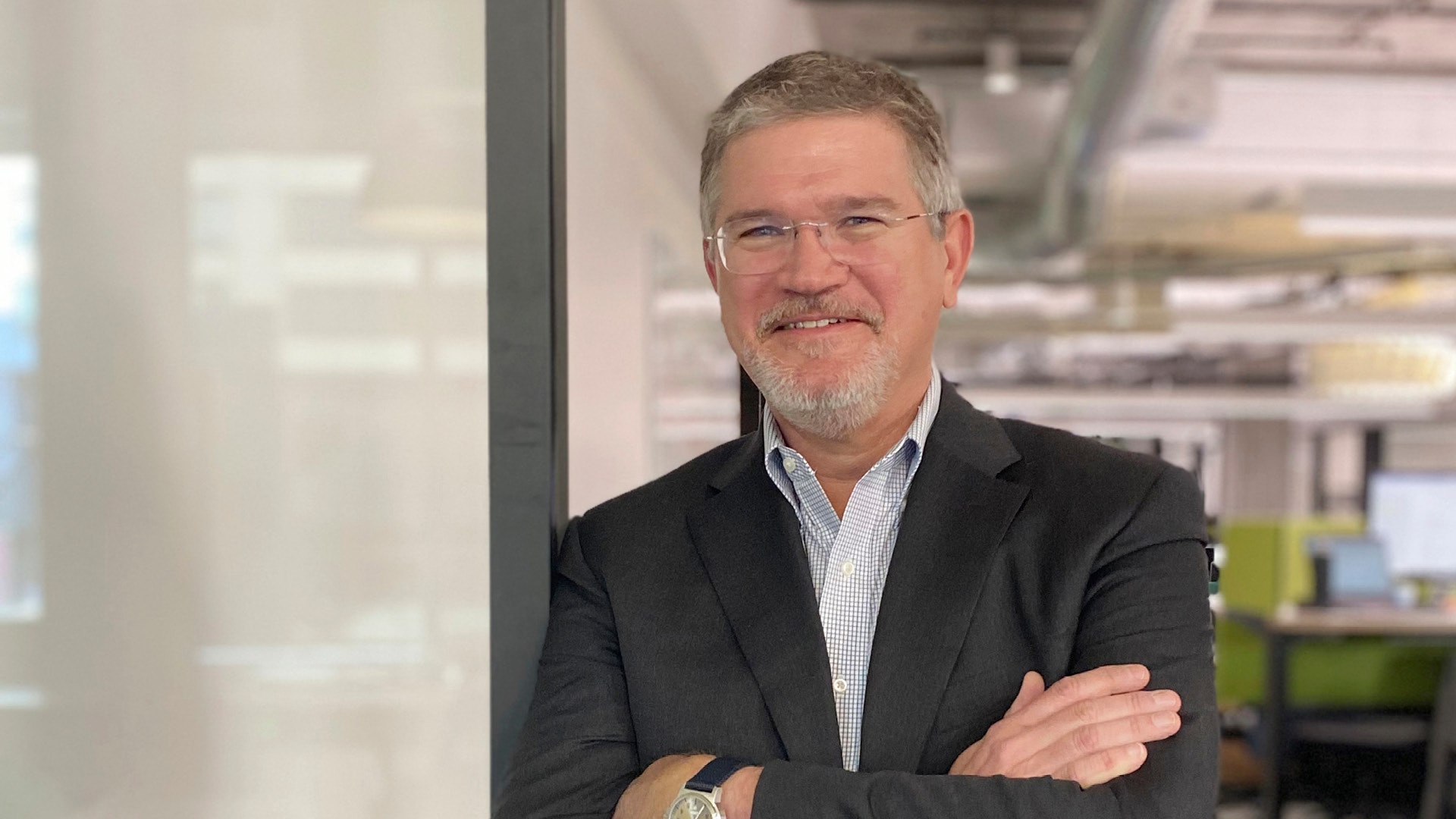
He arrived at Webcor on a stopwatch. The watch ran out. He didn't. That detail tells you most of what you need to know about how Rossie ends up running anything: he gets curious and then he stays.
Rossie sits on the Board of Directors at Monkey Tail Ranch, a small organization a long way from the King Street office. Construction CEOs are not contractually obligated to have non-construction interests. He has one anyway.
His first act as CEO was not an announcement. It was a listening tour. Employees, clients, partners. The strategic plan came after, not before. Most new CEOs do it the other way around.
More diversity in your workforce equals better returns. We really believe this is the right thing to do, but we also believe this makes business sense. - Matt Rossie
Rossie has said the thing that wakes him at 3 a.m. is not whether Webcor will win enough work. It is whether Webcor can staff it well. The backlog reaches into 2027. The market for senior superintendents does not. Construction has a labor pyramid problem, and the people who think hardest about it are usually the ones running general contractors. Rossie thinks about it constantly.
His answer is unsexy. Hire more people. Train them better. Mentor them earlier. Pull in craft trades that were historically locked out. Pay attention to who is rising and where they are stuck. Webcor's investments in employee training, in local hiring, and in diversity programs are not branding decisions. They are staffing decisions. The company has roughly $1.2 billion in annual revenue and roughly 950 people to put against it. The math only works if those 950 keep getting better at what they do.
Inside Webcor, his reputation is for the patient redesign of process. He reorganized how the company plans and executes work so that a project group in Los Angeles ships on a similar tempo to a project group in San Francisco. Consistency is boring. It is also expensive when you don't have it. Rossie spent years buying it back.
"There's no real magic to it. It's really just all about transition."
"Jes guided Webcor out of the 2008 recession. His leadership has been instrumental in shaping Webcor into the innovative, dynamic, client-focused company it is today."
"You'd have to be without a pulse to not see that life sciences is on fire."
"The plan will introduce the next set of company milestones to ensure we have the right culture to pursue those projects in the market sectors that will support profitable growth."
"More diversity in your workforce equals better returns. We really believe this is the right thing to do, but we also believe this makes business sense."
"We're looking at 2023 through 2027 - which sometimes keeps me up at night."
San Francisco builds in difficult conditions. The seismic code is unforgiving. The labor market is expensive. The clients are demanding. The politics around any large project are loud, and the time between a sketch and a ribbon-cutting can run a decade. It is the kind of place where the contractor either gets very good or quietly disappears.
Webcor has gotten very good. The roof at the California Academy of Sciences. The expansion at SFMOMA. The headquarters at SFPUC. A second campus at UC Merced. Each one is a sentence in a paragraph about what California construction can be when somebody takes it seriously.
Matt Rossie is now the person responsible for the next paragraph. He did not arrive at this point with a long speech queued up. He arrived because he stayed. He listened. He read the punch list. He believed the math on regional specialization and on diverse teams. He took the CEO seat the way a good superintendent takes a job site: by walking it first.
If the buildings keep getting better, that is the why. There is no magic. There is just transition. And the person now in charge of transitioning Webcor through the next decade has been quietly preparing for the role for 22 years - even back when he thought he was just waiting out a non-compete.