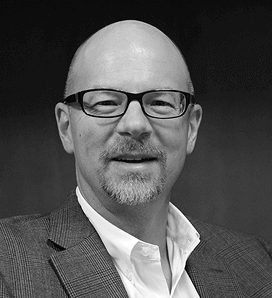
A startup that grows rock on demand
There is a leak under your feet, or near enough. Across the United States sit more than 120,000 documented oil and gas wells that won't stop seeping - pressure climbing in the steel casing, methane threading up through cracks in cement no wider than a strand of spider silk. The industry has a clinical name for it: sustained casing pressure. Mark Ranalli has a fix for it that sounds like it was lifted from a geology textbook and a petri dish at the same time. He grows limestone inside the well.
That is the elevator version of BioSqueeze, the Butte, Montana company Ranalli founded in 2021 and runs as president and CEO. The technology does something cement cannot. It pumps a thin, watery fluid carrying natural soil bacteria - the same microbes that build limestone in the ground - down into the wellbore. The bacteria do what they have done for a few hundred million years: they precipitate calcium carbonate. Crystal by crystal, the fluid hardens into a gas-tight barrier shaped exactly like the leak it filled. No jackhammer geometry. No guessing where the gap is. The bacteria find it.
The numbers make the case better than the metaphor. BioSqueeze fluids are low-viscosity and self-diverting, which is a polite way of saying they flow toward the leak on their own and seal cracks ranging from less than one micron - smaller than a human red blood cell - up to ten millimeters. The company has logged more than 400 treatments at a success rate north of 90 percent. For an industry that has spent a century pouring concrete and hoping, that is a different kind of promise.
Our technology provides the oil and gas industry with a desperately needed tool critical to reducing methane emissions.
Five companies, one habit
Ranalli did not arrive at oilfield services by the usual road. He is, by his own track record, a serial builder: five companies founded across publishing, telecommunications, and now biotechnology, with workforces that have topped 700. In the 2000s he ran Helium, Inc., an online publishing venture he led as CEO from 2005 to 2011, and founded OurStage, a music-discovery platform, in 2006. He has also held roles at BaseSix and sat on the board of the investment bank Weild & Co. The through-line is not an industry. It is the act of starting something and scaling it.
What he brought to BioSqueeze was rarer than capital. He is a Stanford-trained electrical engineer and computer scientist with an MBA from Dartmouth's Tuck School of Business - one of the few people fluent in both the venture pitch and the physics of what is actually happening a mile down. That bilingual fluency matters when your product is a decade of Department of Energy and Montana State University research that needed someone to turn it into a service a roughneck could deploy on a Tuesday.
The unglamorous problem he chose
Plenty of founders chase the bright lights. Ranalli chose bradenhead pressure and micro-annuli - terms that clear a dinner table fast. But the math underneath is enormous. Methane is roughly 80 times more potent than carbon dioxide as a greenhouse gas over a 20-year window, and leaking wells are a quiet, sprawling source of it. A tool that permanently seals those leaks, rather than buying a few years before the next costly intervention, is the kind of unsexy infrastructure that moves real numbers. BioSqueeze positions itself, without much hyperbole, as the world leader in commercial biomineralization.
The proof points keep widening. The same bacteria that seal a wellbore can harden soil and patch infrastructure. BioSqueeze won a DARPA Phase II SBIR award in 2022 to explore hardening beach sand, and an Air Force Phase II SBIR in 2023 for rapid airfield damage recovery. In January 2025 the company rolled out a full product line - MacroSeal for the big defects, MicroSeal for medium gaps, NanoSeal for anything under a micron - alongside an Advanced Cement Imaging system that gives a 360-degree read on the cement around a well before a drop of fluid goes in.
The teacher in the operator
There is another side to Ranalli that doesn't show up on a cap table. He has served as Dean at the Jake Jabs College of Business and Entrepreneurship at Montana State University and held a post at Tufts University's School of Engineering, mentoring hundreds of would-be founders. He is also a familiar face on Fox Business News, where the job is to explain, in ninety seconds, why a bucket of bacteria in Montana matters to anyone. He has had a lot of practice translating the technical into the obvious - which may be the most useful skill a deep-tech CEO can have.
It tells you something that a man who could be raising another consumer-internet round in San Francisco is instead in Bozeman, Montana, running a company whose core competency is making rock appear where it is needed and nowhere else. The internet ventures scaled attention. This one scales permanence. After a decade of lab work, several hundred treated wells, and a Series A from climate-focused investors, Ranalli has built something with a strange and durable promise: a leak, sealed by biology, that simply stays sealed.
The orphaned wells are still out there - tens of thousands of them, breathing methane into the sky. Ranalli's bet is that the cheapest, most permanent way to stop them was never going to be more concrete. It was going to be a microbe that knows how to build limestone, pointed in the right direction.