While most CEOs talk about sustainability, Housley has the kilowatt-hour receipts. Over 500 million of them.
Every time you stream a video, load a webpage, or ping a server, something in a building somewhere gets hot. Racks of servers generating heat around the clock - and someone has to keep them cold. Mark Housley runs the company that uses artificial intelligence to do it more efficiently than anyone else on the planet.
At Vigilent, Housley oversees an AI platform deployed across 1,500+ mission-critical facilities in 36 countries. The platform uses IoT sensors, machine learning, and real-time control software to dynamically optimize cooling - matching heat loads to airflow with a precision that static systems can't approach. The result: over 500 million kilowatt hours of energy saved and 351,000 tons of CO2 eliminated, across facilities on four continents. The math on those numbers is not trivial. It is the work of a decade.
Housley didn't arrive at this role by following a straight line. His career spans IBM, ROLM, optical networking startups, display technology companies, and projector manufacturers before landing at the intersection of AI and building infrastructure. Each stop involved a turnaround, a pivot, or a technical bet that wasn't obvious at the time. That pattern - serial opportunism with technical grounding - is the throughline.
Vigilent started life in 2004 as Federspiel Controls, founded by Dr. Clifford Federspiel. When Housley arrived as Chairman and CEO, he brought the commercial vision that turned a hardware startup into an AI-platform company. In May 2011, at the Uptime Institute Symposium, the company rebranded to Vigilent - a portmanteau of "vigilance" and "intelligence." The name was deliberate. The positioning was deliberate. The Oakland HQ, in the iconic I. Magnin Building on Broadway, with a ribbon-cutting by Mayor Jean Quan in 2013, was deliberate.
None of this is accidental. Housley has been at this long enough to know what deliberate looks like.
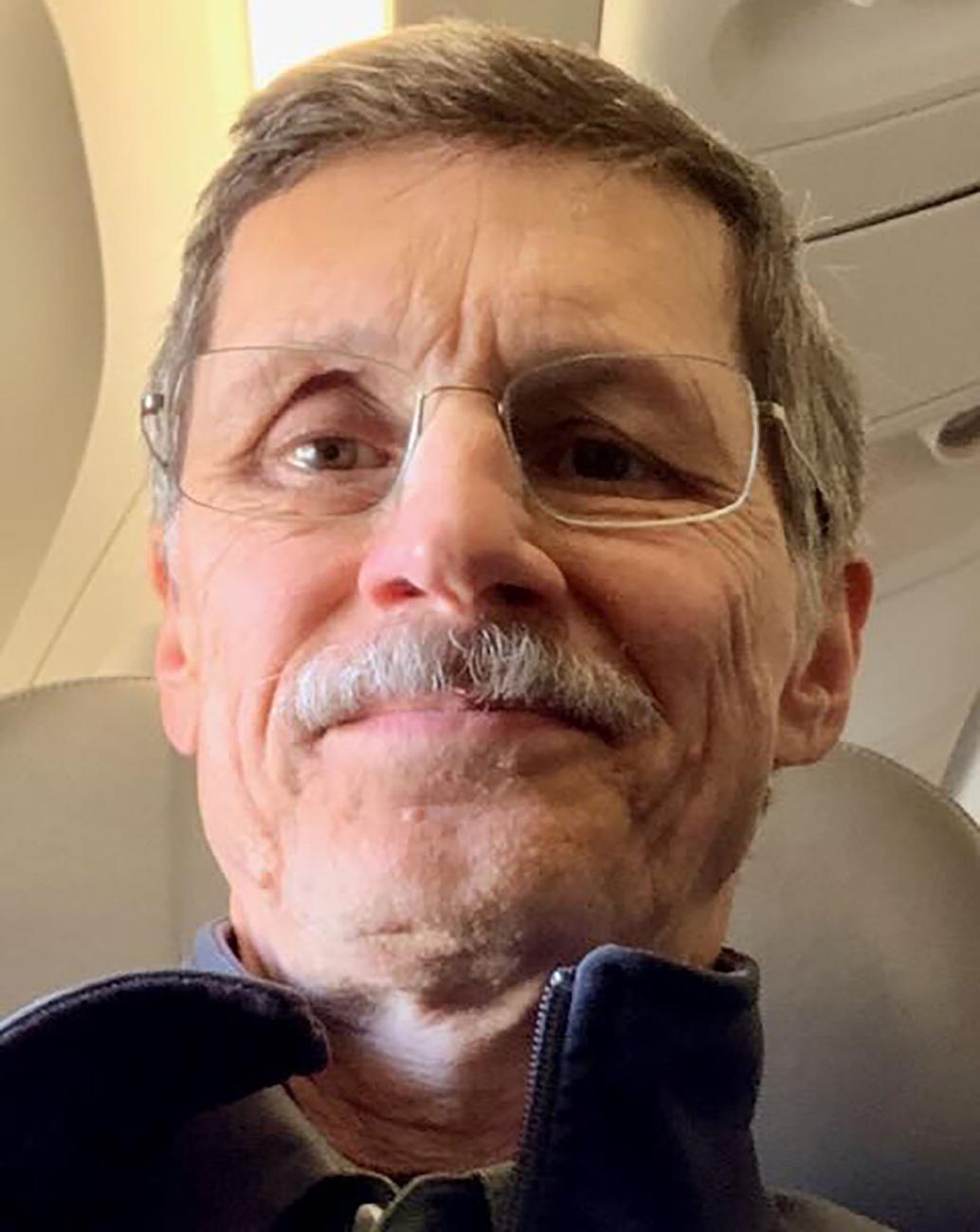
"Akamai's leadership in sustainability and carbon accounting makes a dramatic statement that what is green can also be good for the bottom line."- Mark Housley, Chairman & CEO, Vigilent
Data centers are among the most energy-intensive buildings on earth. The servers inside them generate enormous heat, and cooling those servers typically consumes 30-40% of a facility's total energy. For years, the answer was brute force: run the air conditioning at full blast and accept the waste. Vigilent's platform does something different.
Using industrial-grade IoT sensors distributed throughout a facility - measuring temperature, airflow, and heat load in real time - Vigilent's AI software builds a continuous model of thermal conditions and dynamically adjusts cooling to match actual demand. The system eliminates hot spots, reclaims unused cooling capacity, and runs fewer CRAC units at higher efficiency. Akamai, one of Vigilent's earliest enterprise clients, reduced its annual energy consumption by 150,000 kilowatt hours and cut carbon emissions by 170,000 lbs - while operating the data center with fewer cooling units and no temperature impact.
The platform is built on 52 patents in applied AI. The company holds a wireless mesh network for sensor communication, predictive maintenance algorithms, and failsafe system architecture - all developed in-house. Siemens, one of the most sophisticated industrial engineering companies in the world, liked what it saw and became a minority shareholder.
In 2023, Vigilent acquired the SynapSense business from Panduit, pulling in a customer base and technology portfolio that further extends its reach into colocation, hyperscale, and enterprise facilities.
"Oakland offers the perfect setting for our expansion. It's vibrant, growing, and green - just like us."- Mark Housley, on Vigilent's Oakland expansion, 2013
Pomona College sits in Claremont, California, consistently ranked among the top liberal arts colleges in the United States. Housley graduated with honors in mathematics - a discipline built on logic, proof, and the refusal to accept answers that can't be demonstrated.
Forty-plus years later, that mathematical sensibility shows up in how he talks about energy efficiency: in kilowatt hours, in tons of CO2, in documented outcomes per facility. The humanities can inspire. The math has to check out.
Pomona featured Housley's story in a profile titled "A Liberal Education: How Pomona College Empowered Mark Housley '78, Co-Founder of Spectrum Wireless, to Wander." The wandering, it turned out, was systematic.