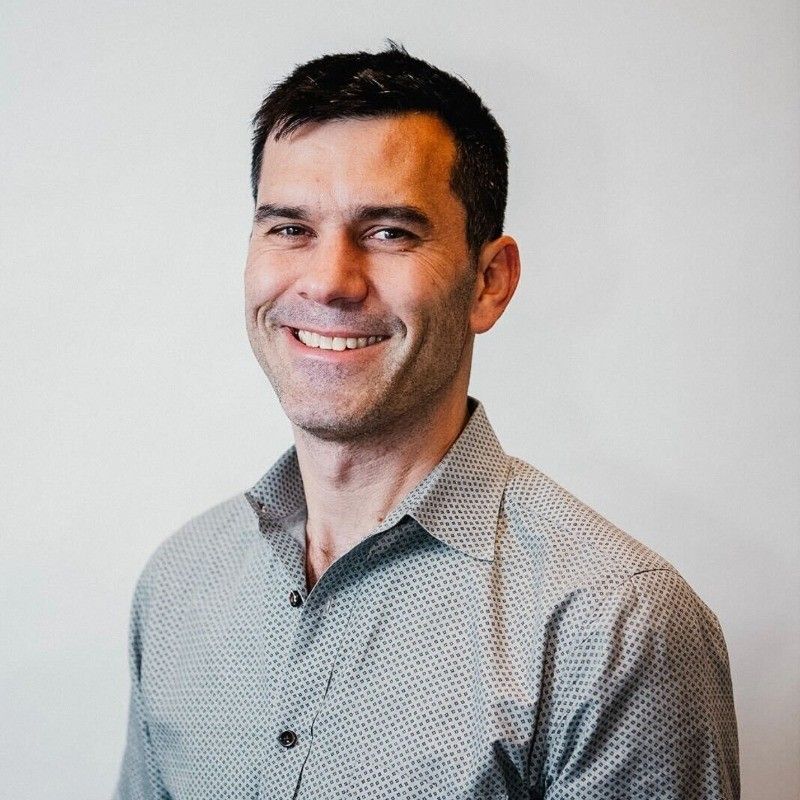
Mark Floreani runs a streaming company built on a bet most media executives would have called a rounding error: that the fans of a sport nobody televises will pay to watch it done right.
FloSports, the company he co-founded in 2006 and has led as CEO since 2018, streams somewhere around 50,000 events a year across more than 25 sports. Not the sports you see on Sunday afternoons. The other ones - wrestling, track and field, cheer, grappling, gymnastics, motorsports on dirt tracks, marching arts, rodeo, elite hockey that the big networks skip. The catalog reads like the events list at a county fair that somehow got a technology budget.
The company's operating theory, which Floreani has repeated in various forms for two decades, is that passion, not size, defines a great sports audience. A wrestling final with 40,000 obsessive fans is, for his purposes, a better business than a marquee event with millions of casual ones. The casual viewer will not pay. The obsessive one already has.
This is the "long tail" applied to live sports, and Floreani was applying it before streaming was a word anyone used at dinner. The strategy has a tidy internal logic: go deep in one vertical - own it, staff it with people who actually competed in it - and then repeat the move 25 more times. FloSports is what happens when you industrialize that pattern.
A van, ten thousand dollars, and a 1,100-mile drive
The company began, as these things sometimes do, with a brother arriving unannounced in the middle of the night. In May 2006 Martin Floreani drove roughly 1,100 miles and turned up at Mark's Austin apartment around 2 a.m. with a website prototype. Mark had just graduated from the University of Texas, where he ran track and cross country well enough to be named an All-American. Martin had wrestled at Cal Poly. Between them they had two sports and a shared complaint: nobody was covering either one.
They started FloSports - with Madhu Venkatesan as the third co-founder - on about $10,000 to $20,000 in seed money and a van. The two founding sports became FloTrack and FloWrestling, which is a rare case of a company's product line being a literal transcript of its founders' resumes.
The breakthrough came in early 2007. Mark drove to Houston to film a half-marathon, and from the back of a noisy pickup truck, in early-morning fog, he captured a runner named Ryan Hall setting a U.S. record. The footage was, by every technical standard, bad - big blocks of digital fuzz, an engine roaring over the audio. It was also the only footage. Within an hour of posting it, the brothers were scrambling to add bandwidth to keep up with the traffic.
That is the founding artifact of FloSports: a record-breaking athletic performance, shot handheld, from a moving vehicle, by a guy who used to compete in the sport himself. The lesson the Floreanis took from it was not about production values. It was that exclusivity plus a devoted audience beats polish plus indifference, every time.
Go deep, buy the rest
Floreani's expansion strategy has two speeds. The first is organic: pick a sport with a real community, hire people who live inside it, and build the definitive coverage. The second is acquisition. FloSports bought DirtonDirt in 2019 for grassroots dirt-track racing, Speed Shift TV in 2020 for roughly 400 racing events, TrackWrestling in 2021 for wrestling events and analytics, and HockeyTech that same year to move into elite hockey streaming and data.
The money followed the pattern. A $21 million Series B in 2016 led by DCM Ventures and Bertelsmann Digital Media Investments; a $47 million Series C in 2019, the year Floreani has called the company's most successful to that point. Total funding sits around $79 million. The backer list has at times included Bertelsmann, Discovery, and WWE - which is to say, people who already understood that a passionate niche audience is a durable one.
Floreani is unusually candid about the modesty of the ambition, which is itself a kind of strategy. "Our business model works," he has said. "We're not coming into here trying to blow everyone's doors off." For a founder in sports media, a field not known for understatement, this is close to heresy. He would rather own the sports that others ignore than lose money fighting for the ones everyone wants.
College is the other front. FloSports has pushed hard into NCAA rights, including Division II and III partnerships that larger networks treat as an afterthought. Floreani's reasoning is that today's college wrestler or sprinter is tomorrow's professional draw, and the platform that covers them early owns the relationship. Hockey follows the same logic: "a large, passionate fanbase that don't really get the love that they deserve, especially in the US."
The truck was 2007. Now it's AI.
The man who once filmed a race handheld is now automating the camera. In 2025 and into 2026, Floreani has been talking publicly - on podcasts, at CES - about using AI to scale FloSports' coverage: AI-powered dubbing to reach fans in more languages, AI in production to cover more events without a proportional army of crew. For a company whose whole premise is serving markets too small to justify traditional production costs, cheaper production is not a gimmick. It is the entire unlock.
The framing is consistent with everything before it. Floreani is not trying to make FloSports look like ESPN. He is trying to make the economics of covering a rodeo, or a Division III meet, or a hockey league in a country nobody streams from, work well enough to keep doing it. AI is the 2026 version of the pickup truck: whatever gets the overlooked event onto a screen at a cost the audience can sustain.
In 2026 FloSports turned 20. Floreani promoted Jayar Donlan to president and kept talking about going deeper rather than wider - doubling down on the sports that already work, obsessing over the customers who already show up. "We not only survived," he said of the company's hardest stretch, "we started to thrive." It is not a triumphant line. It is an accountant's line, delivered by a former runner who has spent two decades betting that the small, loud crowd was the one worth serving.
The Floreani file
We really want to go deep in each vertical or sport.
We're not coming into here trying to blow everyone's doors off.
Those are the next superstars in those sports.
We not only survived, we started to thrive.
FAQ
Who is Mark Floreani?
CEO and co-founder of FloSports, the Austin-based streaming company he started in 2006 with his brother Martin Floreani and Madhu Venkatesan.
How did FloSports get started?
With roughly $10,000 to $20,000 and a van. Its breakout came when Mark filmed Ryan Hall's record half-marathon from the back of a pickup truck, and the video went viral.
What sports does FloSports cover?
More than 25 that mainstream broadcasters overlook - wrestling, track and field, cheer, grappling, motorsports, hockey, cycling, gymnastics and more - totaling around 50,000 events a year.
When did he become CEO?
In 2018. He led the company to its most successful year to that point in 2019.
What is FloSports' core strategy?
A direct-to-consumer, long-tail model built on the belief that passion, not audience size, defines a great sports audience.
On camera
Floreani has spoken about FloSports' approach to broadcasting track and field in a filmed interview with FloTrack: