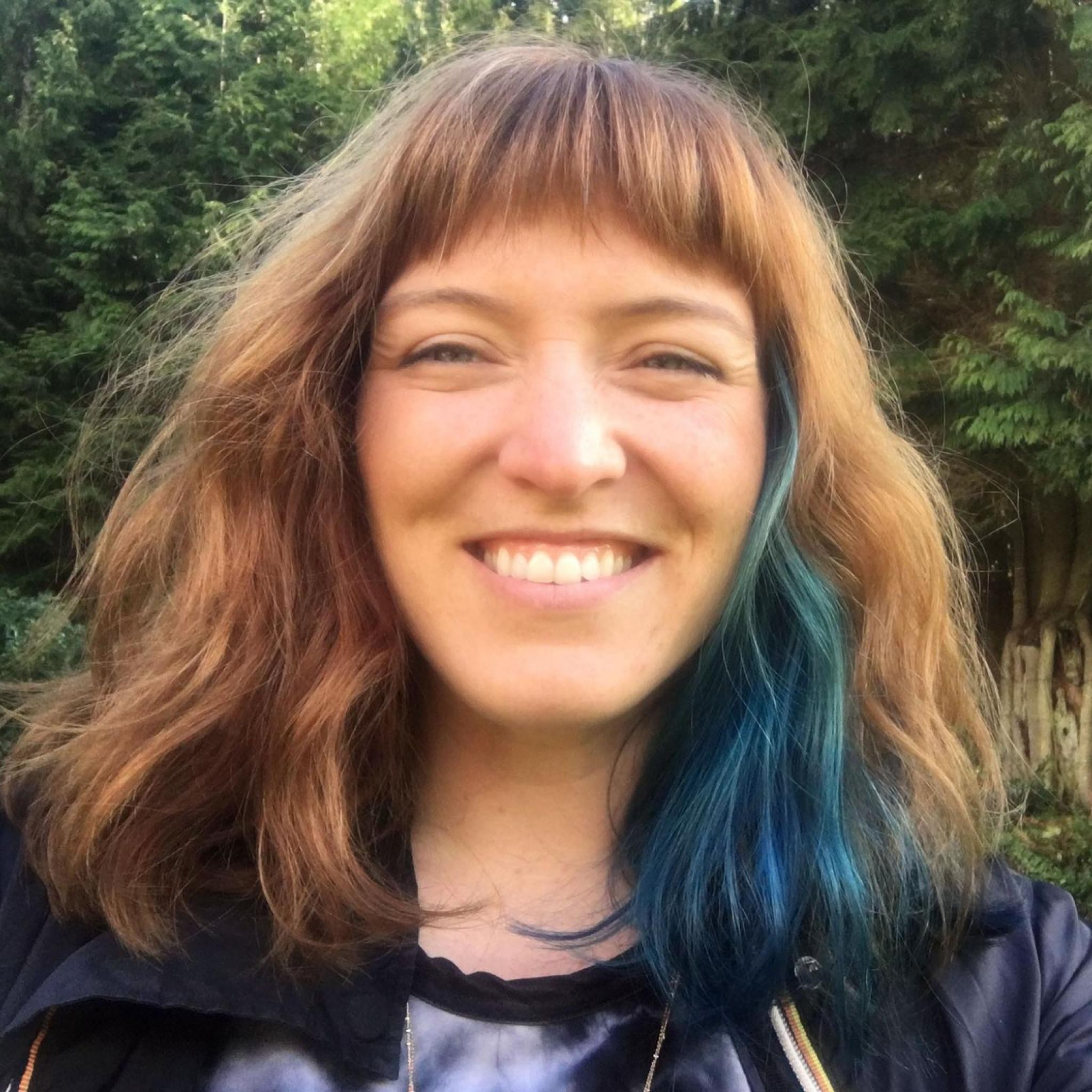
The woman making the web work for everyone
Walk into any serious frontend team in 2024 and ask about accessibility. The answer will either reference Marcy Sutton directly or echo something she wrote, built, or taught. That's not an accident. It's the result of fifteen years of deliberate work by someone who started on GeoCities and ended up at Khan Academy - with a few stops along the way to reshape an entire professional discipline.
Marcy Sutton Todd is currently Senior Engineer on the Frontend Infrastructure team at Khan Academy, where she focuses on design systems and accessibility at scale. Before that: independent consultant (Spotify, Microsoft, Google, Pinterest), Head of Learning at Gatsby, Developer Advocate at Deque Systems (where she worked on axe-core - the engine powering most automated accessibility testing). The resume reads like a greatest-hits of modern web development.
But her origin story isn't what you'd expect. She studied visual journalism at Brooks Institute of Photography. She planned to be a photojournalist. Then stock photography platforms ate the industry. So she pivoted - studied web design at the Art Institute of Seattle, took freelance gigs, built things, and slowly found her way into a career that nobody was calling a "career" yet.
The accessibility pivot came around 2010-2011, when she was assigned to work on the Target account. Target had just settled a landmark accessibility lawsuit. Compliance was contractual. But for Marcy, something else happened: she saw what it meant for a disabled person to actually be able to book a ticket on a website for the first time. That wasn't compliance. That was a civil rights moment. She's been chasing that feeling ever since.
She built a package that stole your mouse
Sometimes the most elegant ideas are also the most annoying. The no-mouse-days npm package does exactly what it says: it disables the mouse cursor on your site via CSS, forcing everyone - developer, designer, reviewer - to navigate using only a keyboard.
The idea is almost comically simple. The execution is equally simple. But the impact? A generation of developers discovering that half their interactive elements are completely unreachable without a pointing device. No hover states that show hidden content. No click targets that aren't also focusable. No "it works fine, just use the mouse."
It's the kind of tool that teaches through inconvenience. You run it once and you never forget what it felt like to be stuck. That's the point. Empathy by friction.
The package became one of the most celebrated small tools in the accessibility community. Not because it solved a hard technical problem - but because it made an invisible problem suddenly, uncomfortably visible.
npm install no-mouse-days
// In your app:
import 'no-mouse-days'
// Now: navigate everything
// with just your keyboard.
// If it breaks, fix it.
// That's the lesson.
"If you're proud of your craft and you care about what you're putting out there, why wouldn't you want to make it accessible and solid and robust?"- Marcy Sutton Todd
A career that left receipts
Accessibility is a civil rights issue. Full stop.
Marcy Sutton doesn't talk about accessibility as a legal requirement or a nice-to-have. She frames it as a fundamental question of who gets to participate in modern life. When a website blocks someone with a disability from booking a flight, reading news, or using a bank - that's exclusion. That's a rights issue.
This framing matters. Developers who see accessibility as compliance drag their feet. Developers who see it as civil rights build it in from the start. Marcy's entire body of work - the tools, the workshops, the talks, the community building - is designed to move people from the first category to the second.
She's also quick to acknowledge her own limits. As an able-bodied developer, she actively recruits feedback from disabled users rather than assuming she has all the answers. That intellectual humility is part of what makes her credible.
Source: Marcy Sutton's public talks and workshops
From GeoCities to Khan Academy
The career arc is unusually coherent for a field as chaotic as web development. She found her niche early - not through a master plan, but through a series of moments where the human stakes of her work became impossible to ignore.
The jump from photojournalism to web development looked like a detour. In retrospect, both pursuits were about the same thing: helping people see what they'd otherwise miss. The subjects changed. The mission didn't.
- Dog named Rainier McCheddarton
- Started on GeoCities before it was retro
- Originally training to be a photojournalist
- Avid cyclist and snowboarder in Bellingham, WA
- Built a npm package that literally hides your cursor
- Actively resisted being pushed into project management
- Became a mother around the Testing Accessibility launch
- 4,500+ Bluesky followers and counting
"The fact is that accessibility doesn't happen by accident. Often it is seen as too hard or time consuming."- Marcy Sutton Todd
Testing Accessibility - the workshop that changed how teams work
When Marcy Sutton launched Testing Accessibility in 2022, it wasn't just another online course. It was the internet's most complete, practical guide to building and testing accessible web applications - structured in six modules that mirror the actual workflow of a professional team.
Module 1 covers accessible HTML - the foundation. Module 2 tackles CSS and visual design. Module 3 goes into JavaScript interactions and dynamic content. Module 4 is about design reviews and working with designers. Module 5 covers user testing with disabled users - the part most courses skip entirely. Module 6 deals with organizational strategy: how to actually make accessibility stick in a company.
That last module matters more than the others. Because the hardest accessibility problem isn't technical. It's cultural. Marcy has watched the same pattern play out across dozens of companies: a motivated engineer builds something accessible, ships it, and then watches it get quietly dismantled by the next sprint. The answer isn't better tools. It's organizational muscle memory.
The course came with a free 6-part email newsletter for newcomers - a gentle on-ramp that drove learners toward the full curriculum. She built the infrastructure herself, partnered with Egghead.io, and ran it as a proper product with her independent company, Modern Sole Design, LLC.
It's the kind of thing you build when you've spent years giving the same advice in corporate workshops and finally decide to bottle it.
Things she actually said
"Accessibility means someone with a disability can actually book a ticket on a website, whereas before, they would have just lost their business."
"I like solving problems with design and code when they have potential to help as many people as possible."
"You must write accessible HTML if you're building an interface that humans use."
"In my world, every GitHub issue comment or conference talk or Twitter exchange could inspire another accessibility champion."
"Even as an experienced person, I still have biases and don't necessarily have the perspective necessary to get the best feedback on accessibility solutions."
Encouraging, not finger-wagging
One thing distinguishes Marcy Sutton's approach from the broader accessibility discourse: she doesn't shame developers. She doesn't lecture. She explains, demonstrates, and then hands you a tool that makes the right thing the easy thing.
Colleagues and attendees consistently describe her as "engaging, charming and just all-round nice" and "a beacon of upbeat positivity and easy-going charm." Those aren't empty adjectives. In a field that can veer into compliance policing, she chose education over enforcement.
She also talks openly about burnout - something rare in a field that fetishizes hustle. She sets boundaries. She picks her projects carefully. She prioritizes her mental health. She's selective about what she takes on, which is part of why the things she does take on are consistently excellent.
The career intentionality is real. When her roles started pushing her toward project management - a common fate for senior technical people - she pushed back. Hard. She knew what she was there to do: build interfaces. Solve hard problems with code. That self-awareness is a feature, not a flaw.
Off-screen: she's a cyclist, hiker, and snowboarder based in Bellingham, Washington. She bakes pies. She does night photography. She has a dog named Rainier McCheddarton, which is exactly the kind of name a person who takes both craft and joy seriously would give a dog. She's a wife and a mother. She's present in Bluesky conversations and GitHub issues alike. She's the real thing.