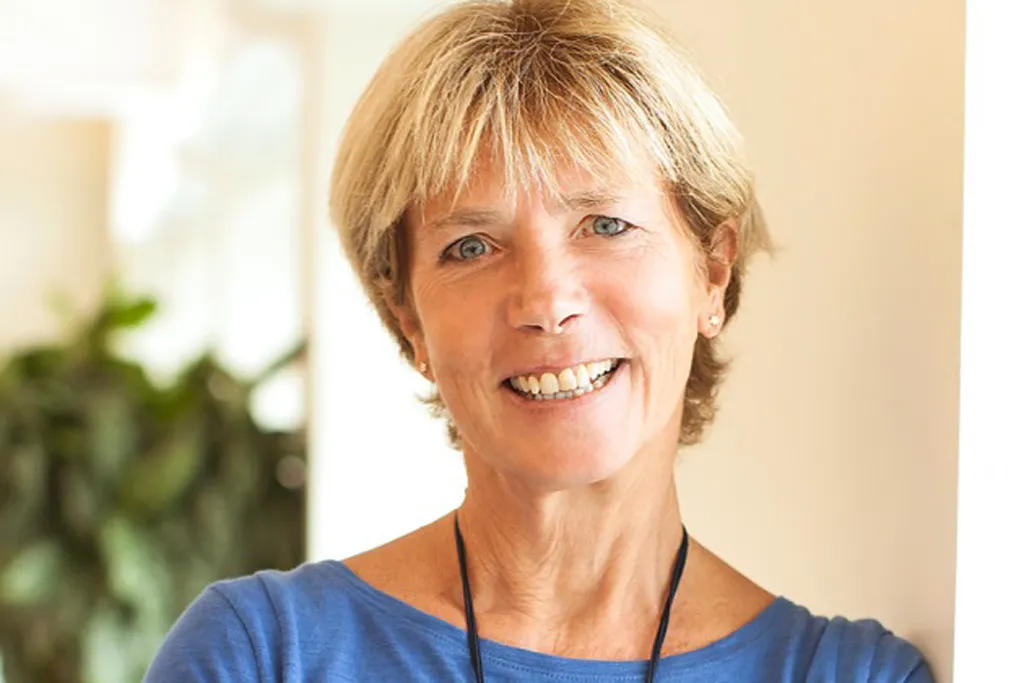
She Went to Denmark for a Horse
The trip was supposed to be about horses. Mandy Cabot and her partner Peter Kjellerup were equestrian professionals operating Five Star Farm in Chester County, Pennsylvania, and they had traveled to Denmark to find new stock. They came back with the idea that would reshape American comfort footwear for thirty years.
Someone was wearing clogs. Danish clogs - the kind you could stand in all day, the kind that actually made sense if you spent your life on hard floors or moving between stalls and paddocks. Mandy noticed. She brought a case home. Her friends on the equestrian circuit noticed too. Before she had a business plan, she had a market: nurses, doctors, teachers, anyone whose livelihood required standing for eight hours straight.
That was 1990. The first sales came out of the back of a station wagon in Chester County. That detail matters. Not because it's charming origin-story mythology - though it is - but because it sets the register for everything that followed. Dansko was never going to be a venture-backed moonshot. It was going to be a real business, selling a real product, to real people who needed it.
What Mandy built at Dansko wasn't just a shoe company. It was, from the start, an argument. An argument that you could run a business with values and not bleed profit doing it. Dansko offered employees 20 paid volunteer hours annually. They established a foundation that awarded over $500,000 to more than 80 charitable groups. They built two LEED-certified campuses at a time when "green building" was still considered a niche indulgence. They became one of the first B Corporation certified companies in America - accepting legal accountability for their impact on people and planet alongside their obligation to profit.
None of this was a marketing strategy. You can tell because it predates the era when "purpose-driven" became a brand category. Mandy wasn't building a story. She was running a company the way her family had always run things.
The family context is load-bearing. Mandy grew up in a household organized around the question: "What will your legacy be?" Her grandfather co-founded Maine Coast Heritage Trust and protected 44,000 acres in Colorado. Her father served on the boards of Conservation International. These weren't dinner-party stories. They were working examples of what wealth was supposed to do when accumulated by people who meant it.
So when 2012 arrived and the question of what happens to Dansko came up, the answer was not private equity. The answer was not a strategic buyer. The answer was an Employee Stock Ownership Plan - an ESOP - that transferred 100% of the company to the people who had built it. One hundred and seventy-five employees woke up that morning as owners. Mandy called it carrying on the vision while ensuring the culture survived.
It's worth pausing on that. She spent 22 years building something valuable and then structured the exit so that no one person walked away with a check. The employees got equity. The culture got continuity. Mandy and Peter got to leave on their own terms. It's an unusual kind of ambition - the kind that doesn't show up on a Forbes list but shows up in how a company still operates a decade later.
Belize Was Not the Plan
Mandy Cabot retired from Dansko in 2018. The plan, loosely, was to stop. Twenty-eight years of building a company earns you a quieter second act. That is not what happened.
What happened was Silk Grass Farms. Nearly 8,500 acres of vertically integrated agribusiness in Belize, sitting adjacent to a wildlife preserve covering 24,500 acres of rainforest that 100% of the farm's profits go toward protecting. The product list includes juices, juice blends, creams, milks, honey, and oils. The business model is, in Mandy's own description, "the mother of all impact investments."
Silk Grass Farms became Belize's first B Corporation certified company. The pattern holds. Wherever Mandy Cabot goes, it seems, the B Corp follows.
The comparison to Dansko's origin story is easy to make and worth making anyway. In 1990, Mandy spotted something useful - a product, a market, a gap between what people needed and what existed. In Belize, thirty years later, she spotted something else: a gap between agricultural land that could sustain itself economically and the rainforest that would survive if it did. The mechanism is different. The instinct is identical.
What Mandy Cabot does, specifically, is build vertically integrated systems where the business logic and the social good reinforce rather than trade off against each other. Dansko didn't give to charity instead of making money. It made money and structured the giving into the operating model. Silk Grass Farms doesn't sacrifice profit to protect rainforest. The farm generates profit; the profit funds the preserve. The relationship is symbiotic by design.
This is what makes her career interesting to study, and not just admire. Most impact investing talks about trade-offs. Mandy Cabot keeps finding structures where the trade-off disappears. That is either luck or a very specific kind of architectural thinking - the ability to see the system before it exists and build toward it anyway.
The accolades track the work. In 2013, the Two Ten Foundation awarded her the T. Kenyon Holly Memorial Award for Outstanding Humanitarian Achievement. In 2024, UnTours Foundation gave her the Hal Taussig Award. Between those two dates, Dansko collected a shelf full of external recognition - Triple Bottom Line Award, Green Business Award, Corporate Goodwill Award, multiple Best Places to Work designations - while Silk Grass Farms was quietly becoming a case study in whether Belizean agribusiness could function as conservation infrastructure.
Mandy has served on the boards of the Pennsylvania-Delaware chapter of The Nature Conservancy, Penn Medicine Chester County Hospital, and Longwood Gardens. The breadth matters. She is not a single-issue operator. She moves between healthcare, ecological preservation, and cultural institutions with the ease of someone who has always understood that these things are connected.
There is a particular kind of entrepreneur who builds once, harvests, and moves on. And there is a rarer kind who treats each new chapter as an extension of the same argument, the same question, the same animating belief. Mandy Cabot is the second kind. The horse trip to Denmark, the station wagon in Chester County, the ESOP, the Belize rainforest - these are not separate stories. They are the same story told across three decades in three very different industries.
The question her family has always asked: What will your legacy be? She appears to be answering it one chapter at a time. At the rate she is going, there may be a chapter four.