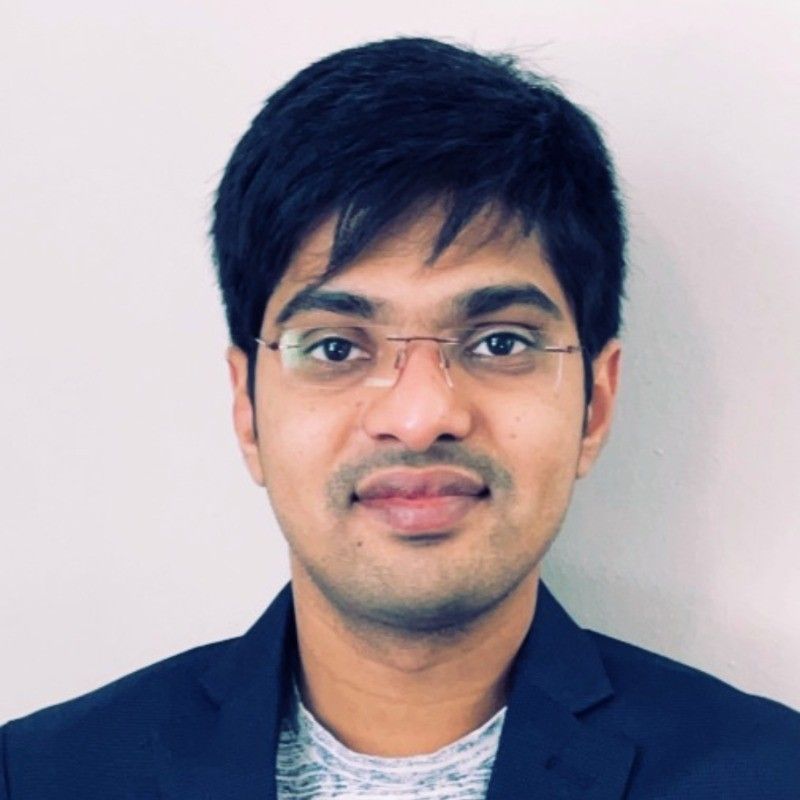
Mahesh Devalla runs technology at Players Health, a Minneapolis company that insures and protects youth athletes and the sports organizations around them. His job title is Chief Technology Officer. His actual work is narrower and heavier than that phrase suggests: he is trying to make software that helps someone make a better decision, in real time, about a child's safety on a field.
Players Health sits at an unusual intersection - insurance, risk management, health data, and youth sports. Devalla leads product and engineering across all of it. Since taking the role he has been modernizing the company's infrastructure, tightening the alignment between what the product team promises and what the engineering team ships, and pointing artificial intelligence at a specific target: safer, athlete-centered decisions rather than dashboards nobody opens.
His framing for the work is deliberately plain. Technology, he says, "must be innovative, ethical, accessible, and human-centered." Those are the kind of words companies print on a wall and forget. Devalla treats them as build constraints. If a feature is clever but opaque, or powerful but inaccessible, it does not fit the mandate. That discipline is easier to state than to hold, especially in a field where AI hype rewards noise.
A decade of enterprise AI, then a hard turn
Devalla did not arrive at sports safety directly. Over roughly a decade he helped architect enterprise-scale AI platforms at large, complicated organizations - Citi, Bank of America, American Water, and the industrial software firm Hexagon among them. He started closer to the money: a project manager supporting commercial lending at Bank of America, then a lead project manager at iCreditWorks delivering an omnichannel lending platform.
At App Orchid, an AI-focused software company, he served as Manager of Project Delivery and Lead Technical Architect, building AI-driven applications for the energy, utilities, and insurance sectors. It was the kind of resume that usually points toward a bigger enterprise job, not a sports insurance startup with fewer than a hundred people.
He turned anyway. At Players Health he first served as Director of Engineering before being promoted to CTO. The reframe he brings is worth pausing on: sports insurance sounds dull until you notice the underlying product is a person's wellbeing. That shift in stakes - from a lending workflow to a young athlete on a field - is the thing that seems to animate his engineering choices.
The argument in the book
Somewhere across those years, Devalla accumulated a thesis strong enough to write down. His book, The AI Dilemma: Why Businesses Still Fail to Embrace AI, makes a claim that runs against the industry's instinct to blame the technology. Businesses do not fail at AI because the models are weak, he argues. They fail because of the leadership mindset around them.
"AI does not fail because of the limits of its capability," is his reading of the pattern. "It fails because of the leadership mindset." The corollary he keeps returning to is uncomfortable for cautious executives: "Hesitation is more dangerous than failure." Waiting for certainty, in his account, is itself a decision - usually the wrong one.
Paired with that is a preference for restraint on the engineering side. "Meaningful advancement in AI and digital systems comes from purposeful design, not complexity," he has said. The two ideas fit together neatly. Leaders should move faster; builders should build simpler. The failure modes are opposite - timidity at the top, over-engineering below - and both are self-inflicted.
Recognition, and what it is for
The industry has noticed. Devalla has been named a USA 40 Under 40 honoree and an Asian American 40 Under 40, ranked among global top-100 AI leaders, recognized as a CTO of the Year, and listed among TradeFlock's Most Visionary Tech Leaders for 2025. Players Health publicly celebrated the 40 Under 40 recognition as the product of "years of perseverance, innovation, and leadership grounded in purpose."
The academic footing underneath all of this is a master's degree in computer science and artificial intelligence from Dartmouth College - a credential that lets him speak the language of researchers while spending his days translating it into shipping software. The accolades are pleasant, but they are not the point he makes about himself. The point is the mission: technology, built carefully, that makes sports safer for the kids who play them and the communities that show up to watch.