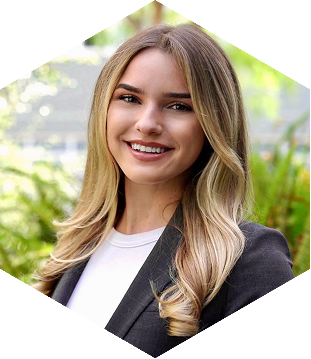
The Work Now// 01
Overdose prevention, rebuilt as something students actually finish.
Start with the product, because the product is the argument. DopaGE is overdose-prevention education delivered as a series of video-game levels. An hour of training. Optional. Free to the student. You don't sit through it, you play through it - learning how to read the signs of an opioid or fentanyl overdose, how to administer naloxone, how mixed substances stack their risks, and what to do in the ninety seconds that matter.
The build team is the tell. DopaGE was assembled by physicians, neuroscientists, and video-game engineers - three trades that rarely share a Slack channel. The platform is cloud-based, so a university can switch it on for thousands of students without a logistics nightmare. It is gamified, because a curriculum nobody completes saves nobody. Hilliard's insight wasn't that students need this information. Everyone knew that. It was that the information had to arrive in a format a nineteen-year-old would actually choose to finish.
She runs it as Founder and CEO out of Marina del Rey, with a roster of clinical advisors - MDs, a general counsel, research scientists, an audio engineer - that reads more like a small studio than a startup. DopaGE sells the scalable version of a thing she first proved by hand: that peer-to-peer training, done right, changes outcomes on a campus.
"
He's alive today because we were able to educate his friends around him, so that when he did overdose, they were prepared to respond.
— Madeline Hilliard, on ABC News
The Origin// 02
Three preventable moments
Hilliard didn't arrive at overdose prevention through theory. She arrived through a phone call. A college friend died of a polysubstance overdose in May 2020, on the heels of other student deaths that year at her university. Grief is usually shapeless. Hers came with a diagnosis: she identified three separate moments where someone with the right knowledge could have changed the ending. The information existed. It just hadn't reached the people standing in the room.
So she gathered peers and built the thing that should have been there. They called it Team Awareness Combating Overdose - T.A.C.O., an acronym warm enough to disarm a heavy subject. It teaches the biochemistry of substances, the protective laws students don't know they're covered by, and the harm-reduction moves that buy time. What began as a campus response is now a nationwide network of roughly 300 student volunteers, and it is credited with saving lives in the four digits.
There's a footnote that lands harder than any statistic. A college student who survived an overdose later credited the naloxone training Hilliard had taught his fraternity. He told the story himself, on ABC Nightline. The curriculum she built because one friend's friends weren't ready turned out to make another set of friends ready in time.
The Training// 03
Before the company, the ambulance
Hilliard is a Nationally Registered EMT. Before DopaGE, she worked the back of an ambulance and the floor of an ER, treating overdose and emergency patients directly. That's the layer most edtech founders don't have - she has stood over the exact emergency her software is trying to prevent. The product isn't a guess about what helps. It's the distilled version of what she watched work and fail in real rooms.
The academic half matches the field half. She earned a B.S. in neuroscience from the University of Southern California, on a pre-medical track, studying the computational side of how the brain actually behaves. It's why DopaGE's pitch is "based in neuroscience and emergency medicine" and not marketing copy - both halves of that sentence are her own résumé. The service streak runs even further back: she started volunteering at a free clinic for deaf patients at fourteen, and at a hospital at seventeen.
Pre-med. EMT. Founder. The crisis met someone who'd already done the homework.
The Recognition// 04
The list, the lab, the film
In November 2023, Hilliard and co-founder Amanda Grennan were named to the Forbes 30 Under 30 list in Education. The funding that made DopaGE real came a year earlier, in 2022, when she led the winning team at the Brittingham Social Enterprise Lab's Venture Competition - pitching peer-to-peer education that was easy enough for a large institution to deploy across thousands of students at once.
Her reach now extends past her own two organizations. She has consulted on overdose prevention and response for the California Department of Health Care Services, for Indivior, and for the nonprofit Song For Charlie. In 2024 she stepped in front of the camera as associate producer and co-star of the short film "Real Talk About Fake Pills," which was adopted by the Los Angeles Unified School District. The pattern holds across every format: ambulance, classroom, game engine, film set. Same message, delivered wherever the audience already is.
What makes Hilliard worth watching isn't a single credential - it's the unusual stack of them. Neuroscientist who can read the research. EMT who has run the call. Founder who can ship software. Communicator who'll co-star in a short film to reach a high-schooler. Each role on its own is common. The combination, pointed at one problem, is not.
overdose preventionfentanyl awarenessnaloxone trainingharm reductiongamified educationpeer-to-peerneuroscience-informedEMTgood samaritan lawsbystander interventionevidence-based learningedtech