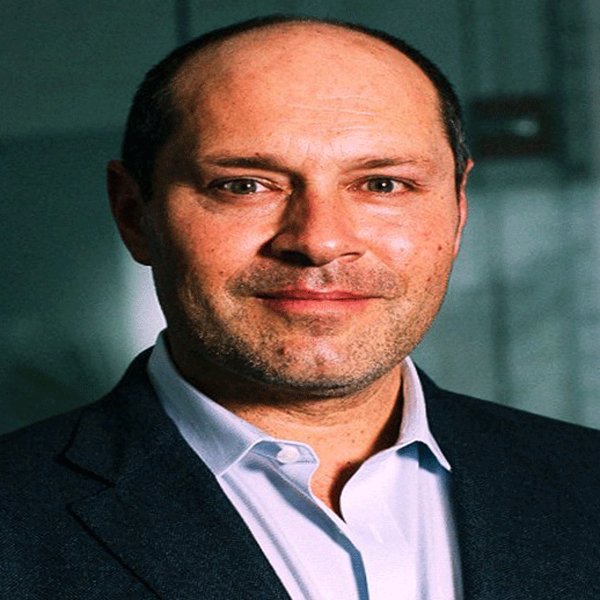
The restaurateur who turned staffing into software
Luke Fryer runs Harri, a workforce platform built for the industry he knows best. From an office at 665 Broadway in New York, his company handles hiring, scheduling, onboarding and compliance for more than 500 enterprise brands across upwards of 35,000 restaurant and hotel locations - roughly four million frontline employees in all.
Most people who build enterprise HR software come at it from the outside. Fryer came at it from the floor. His first business was food, not code: at 22 he opened the first Burger King franchise in Australia. In 2002 he secured the Australian franchise rights for the wagamama Noodle Bar and grew it into one of the country's Top 100 Fastest Growing Companies for three consecutive years. By 2007 he had relocated to New York, where he developed restaurants in one of the most competitive markets in the world, including the gourmet burger franchise The Counter and a ramen concept.
Running those businesses, Fryer kept hitting the same wall. Finding, hiring and keeping good hospitality staff was a scramble stitched together from a dozen disconnected tools - job boards, spreadsheets, paper applications, separate scheduling and payroll systems. The problem was expensive, constant, and, he decided, solvable. In December 2011 he co-founded Harri to fix it.
Five years ago, we began the Harri journey with a vision of creating the next generation of broadly capable, industry optimized, employee management technology.
The pitch is simple to state and hard to build: consolidate up to 30 fragmented point solutions into a single, mobile-first enterprise platform made specifically for service-driven businesses. Harri covers the full arc of the frontline employee - talent attraction, applicant tracking, onboarding, scheduling, time and attendance, compliance, and engagement - and ties them together with analytics. The bet is that hospitality deserves its own software rather than a generic HR suite bolted on top.
That bet has drawn real capital. In October 2023 Harri raised $43 million in growth equity led by Atalaya Capital Management and Golub Growth, bringing total funding to around $110 million. The money was earmarked for two things: deepening the platform's AI capabilities and pushing beyond restaurants and hotels into retail and healthcare, sectors with the same frontline staffing headaches.
The AI work moved fast. By 2025 Harri had launched an open beta of what it calls Harri Agentic AI, a hospitality-first intelligence layer for frontline work, with an agent named Salli at the center of it. Early adopters included large brands like KFC and Jersey Mike's, and Fryer framed the results in operator terms - the metrics operators actually feel.
Operators saw immediate benefits, including scheduling accuracy, compliance protection and labor efficiency, proving Salli is a breakthrough for the frontline.
What is notable about Fryer's framing of AI is what it leaves out. He does not talk about replacing hospitality workers. Harri's public position is that technology should amplify the human side of hospitality, not stand in for it - handling the scheduling math and compliance rules so managers can spend their attention on people. That is a coherent stance for someone who spent years as the manager doing the scheduling math himself.
Fryer still spends time with the people who use the product. He has hosted executive conversations with technology leaders at brands like Taco Bell and Jack in the Box, where the talk tends to skip the buzzwords and go straight to the everyday headaches operators know - turnover, open shifts, the cost of a bad hire. Those conversations feed back into what Harri builds. It is a tight loop, and it is unusual: the founder is a former customer.
The through-line across two decades is consistency of subject. Burger King, wagamama, The Counter, Ramen Co., and now Harri are all the same business viewed from different angles - the business of running service operations that live or die on their people. Fryer's contribution has been to take the hardest, least glamorous part of that business, the staffing, and turn it into a product the rest of the industry now runs on. The résumé reads like a menu, but the theme never changes.
Harri's headquarters sit in SoHo, a long way from a Sydney Burger King counter, and the company now counts its users in the millions. Fryer's aspiration, as the product roadmap makes clear, is to make Harri the definitive workforce intelligence layer for service-driven industries - broader than hospitality, smarter with each release, but always built for the frontline. For a founder who started by flipping burgers, that is a fittingly grounded ambition.
Quotes
"During its closed beta, Harri Agentic AI proved to be impactful for early adopters, including large brands like KFC and Jersey Mike's."
"Five years ago, we began the Harri journey with a vision of creating the next generation of broadly capable, industry optimized, employee management technology."
"Operators saw immediate benefits, including scheduling accuracy, compliance protection and labor efficiency, proving Salli is a breakthrough for the frontline."