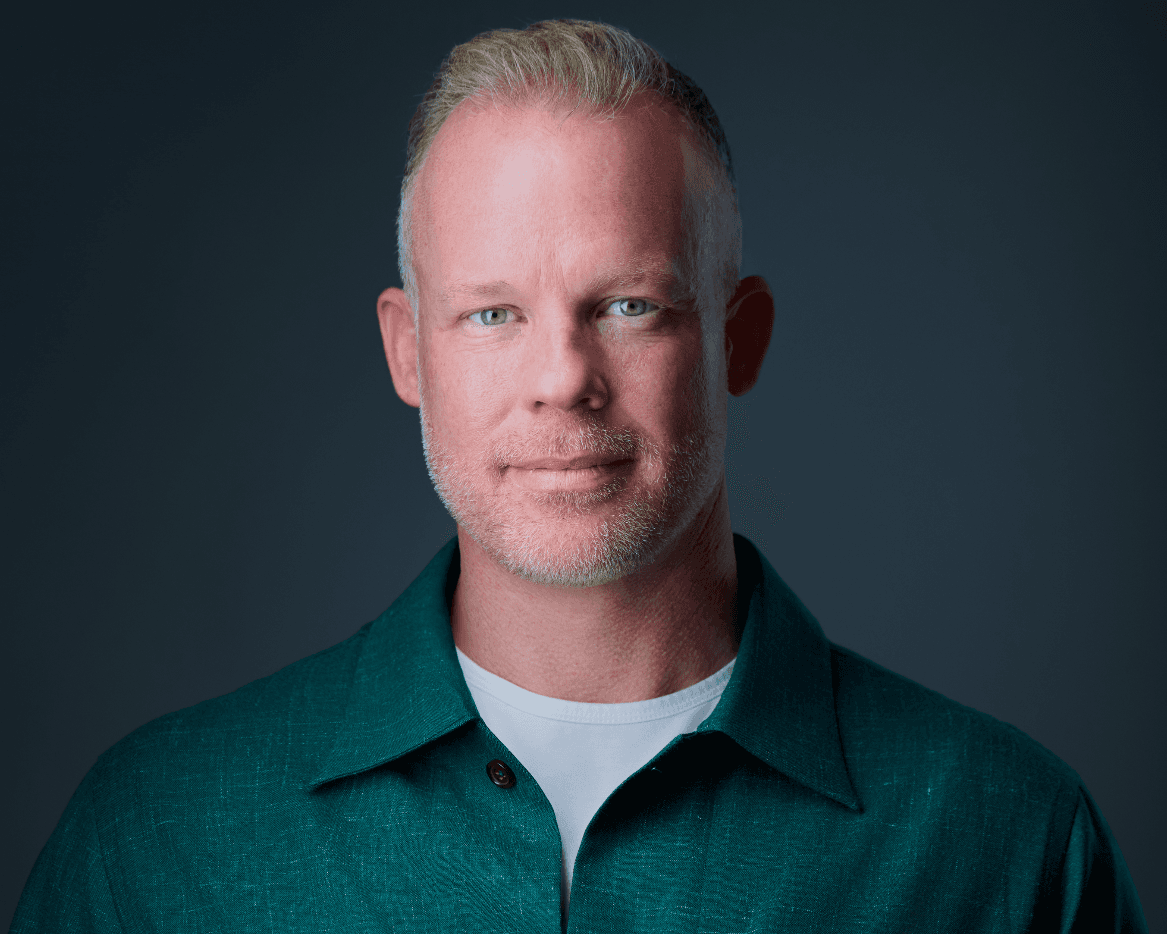
Luke Fischer runs a space company that has never launched a satellite. From an office in Austin, he and his team at SkyFi have built what he calls the largest virtual constellation on Earth - not by putting hardware into orbit, but by wiring together the sensors already up there. Order a fresh image of a port, a wheat field, or a construction site through SkyFi's web or mobile app, and the request routes across more than 50 geospatial imagery providers. What once took months now takes minutes.
That is the pitch, and Fischer delivers it with the plainness of someone who has spent a career cutting through friction. SkyFi, he says, exists to "make satellite imagery acquisition easy for everyone." The company describes itself as a kind of Getty Images for Earth observation: one contract, transparent pricing, and a catalog that spans finance, defense, infrastructure, insurance, and agriculture. Hedge funds use it to count cars in parking lots and measure stockpiles. Governments use it to get answers to people in the field.
The problem SkyFi set out to solve was almost comically analog. Fischer's co-founder, the investor Bill Perkins, wanted satellite imagery to inform bets in natural gas and oil. Buying it turned into a slog: up to a million dollars in imagery, three to six months of lead time, and separate negotiations with every major provider. "He got so frustrated that he wanted to start something new," Fischer has said, "and that's when we met and formed SkyFi." The two built the platform around a simple conviction - that ordering a picture of the planet should feel no harder than buying a house online.
"The process before SkyFi to get answers to warfighters took anywhere from 5 to 16 days. We're able to do it in three to five hours."
Luke Fischer, co-founder and CEO, SkyFiAn operator, first
Fischer did not arrive in space through physics or finance. He arrived through the cockpit. A Wisconsin native, he entered the U.S. Army via the ROTC program at Xavier University and flew reconnaissance and attack helicopters through combat tours in Iraq before assessing for U.S. Army Special Operations Command. Over 16 years on active duty he commanded units and served as an operations officer for multiple special operations task forces - the kind of roles where the job is to remove friction between a decision and its consequences.
That instinct carried into his civilian work. He ran flight operations at Uber, then led government operations at Joby Aviation, the electric air taxi company. Before SkyFi, he was an entrepreneur-in-residence at Shield Capital, investing in space, autonomy, AI, and cyber. Along the way he collected an unusual set of credentials: a business degree from Xavier, a master's in strategy and policy from the Naval War College, and a master's in management from the Stanford Graduate School of Business. It reads less like a straight line than a series of deliberate lateral moves, each one closer to the intersection of national security and frontier technology.
The Uber chapter left a mark on how SkyFi is built. Fischer staffed the early engineering team with former Uber engineers who, in his words, "understand APIs." The comparison he reaches for is Uber's multi-modal view of demand. Because SkyFi sees what customers across many industries are actually looking at, he argues, it has a sharper read on the market than any single satellite operator. "We have that equivalent data on what people are looking at," he told TechCrunch. "It gives us a much better purview."
Selling answers, not pixels
Fischer's central bet is that imagery itself is becoming a commodity. Resolution keeps improving, sensors keep multiplying, and raw pictures keep getting cheaper. What stays scarce is the answer - the specific insight a customer needs, delivered fast enough to act on. So SkyFi has been pushing up the stack into analytics, using AI to turn pixels into things like object counts, change detection, and stockpile measurements.
He is blunt about where the technology stands. "There's no 'AI experiment' anymore," he has said. "AI is here, and every industry needs to embrace it." For a company whose entire value proposition is speed, that is less a slogan than an operating principle. The goal, as he framed it around the Series A, is "providing answers for customers, both government and commercial." SkyFi claims the largest virtual constellation of assets with every sensor type represented, from optical to synthetic aperture radar, which lets it match a request to whichever satellite can actually deliver.
"There's no 'AI experiment' anymore; AI is here, and every industry needs to embrace it."
Luke FischerThe raise, and the tailwind
In January 2026, SkyFi announced a $12.7 million Series A. The round did not start there. Fischer had targeted something closer to $8 million; investor demand, riding a record year for defense-tech investment, pushed it past $12 million and left it oversubscribed. Buoyant Ventures, a climate-focused firm, and IronGate Capital Advisors, which backs dual-use companies, co-led. DNV Ventures, Beyond Earth Ventures, and TFX Capital joined. Reported total funding for the company sits around $33.9 million.
The money is aimed at deepening the analytics layer - more AI, more answers, faster. It is a natural extension of the through-line in Fischer's career: find a slow, manual, gatekept process and collapse the time between question and answer. He has spent time flying missions, running operations for two of the more ambitious mobility companies of the last decade, and writing checks into frontier tech. SkyFi is where those threads meet.
Bringing sci-fi to life
Ask Fischer what he is actually building and he tends to zoom out. "Deep tech is bringing sci-fi to life," he has said. "It's the combination of everything." SkyFi's stated mission is to democratize access to Earth intelligence for commercial and government users worldwide - to put the same view of the planet in reach of a farmer, a city planner, and a hedge fund analyst alike.
The company's values page lists one that reads like a note to self from a former operations officer: "Always Be Hustling." For a founder who spent 16 years removing friction under pressure, and who now spends his days shaving days off the time it takes to see the world clearly, it fits.