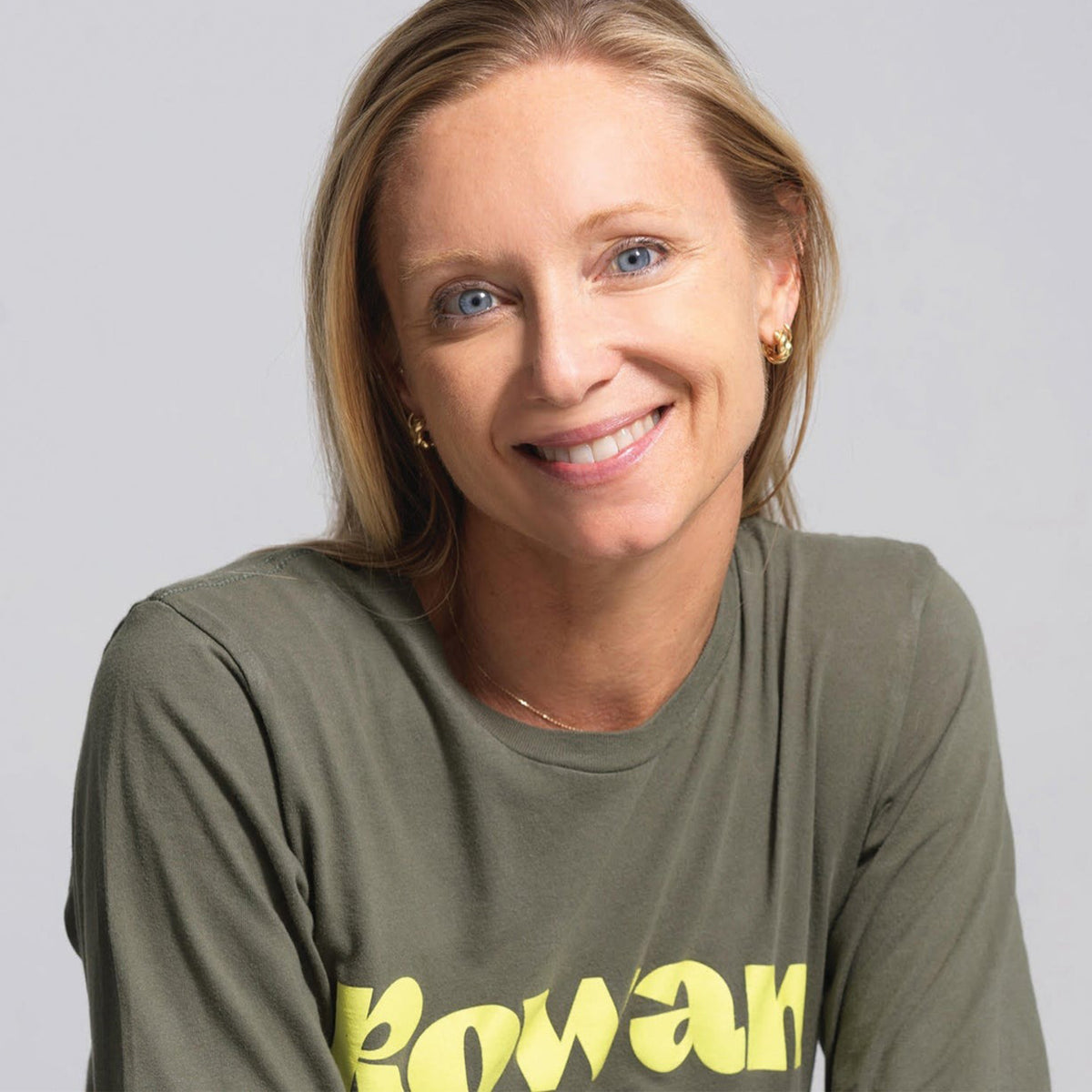
The earring is the easy part
Ask Louisa Schneider what Rowan sells and she will steer you away from the obvious answer. Yes, there are studs and hoops and a "Lobe Language" collection built from customer requests. But the thing people are actually buying is a feeling: that the small, slightly nerve-wracking ritual of getting your ears pierced can be clean, careful, and a little bit of a party. Rowan is the rare piercing company that staffs its studios with registered nurses, runs its own medical advisory board, and treats a hole in your earlobe as the minor medical procedure it has always been.
That framing is the whole business. In an industry where Schneider says adverse outcomes have historically hovered around 30 percent, Rowan reports under 1 percent. The pitch is not glamour. It is competence wearing a smile.
By 2025, that idea had grown into roughly 90 studios and about 800 employees, more than half of them nurses, with revenue reported north of $70 million. A few years earlier the company was a different animal entirely: licensed nurses, dispatched from Schneider's own attic, knocking on doors around New York to pierce ears in living rooms.
Walking out of someone else's four walls
The cleanest version of Rowan's story would skip the part where it nearly became a Target concession. By the end of 2022 the company was running roughly 300 piercing kiosks inside Target stores - distribution most founders would kill for. Schneider gave it up.
The reason was control. A Rowan piercing is supposed to feel like an occasion, and an occasion is hard to stage in a corner of a big-box store. So in 2023 she pulled the kiosks and bet on standalone studios instead, where the lighting, the music, and the nurse's bedside manner all belong to Rowan. The standalone studios grew to about 65 by 2024, with a $100 million annual run rate and roughly 400 employees - then kept climbing.
It is the kind of decision that reads as obvious in hindsight and reckless in the moment: trading guaranteed foot traffic for the right to control the experience. Schneider talks about finding a company's "North Star" - the single thing that tells you what to do when the spreadsheet is ambiguous. For Rowan, the North Star is safe and celebratory. The Target kiosks could deliver safe. They could not reliably deliver celebratory.
A trader who knew exactly what retail was worth
Schneider did not stumble into consumer business. She studied it for a living. After Dartmouth, she started on Wall Street as an analyst at Morgan Stanley, where she worked on the sale of Brooks Brothers. She covered consumer and retail at J.P. Morgan in the firm's Credit Portfolio Group, earned an MBA from Columbia Business School, then went back to Morgan Stanley to trade retail stocks. Two decades of looking at brands from the outside - what makes a customer loyal, what makes a margin hold - turned out to be unusually good training for building one.
The trigger was personal. As a new mother, she went looking for a place to pierce her daughter's ears and disliked all of it: the piercing parlors felt unsafe, the pediatrician's office felt charmless. Both of her parents are doctors, so the absence of a clinical option grated. The clearest line she has given about that moment is also the simplest:
She named the company Rowan, after Rowan County, North Carolina, where she grew up - a quiet nod to her own roots stitched into a New York startup.
How the curve bent
Rowan's expansion has been steep enough to make the timeline feel compressed. A rough read of the milestones the company and press have shared:
The kiosk number and the studio number are not apples to apples - one was a concession inside another retailer, the other is Rowan's own real estate. That gap is the whole strategic story: fewer locations, more control, bigger experience.
The best ad is a third grader
Schneider has a favorite growth channel, and it is free. When a kid shows up to school with newly pierced ears, the questions start immediately. The piercing becomes a small social event, and the brand spreads by playground word of mouth faster than any campaign could buy.
It is a tidy demonstration of why the experience matters so much to her. A frightening piercing produces a kid who never wants to talk about it. A joyful one produces a walking advertisement. Rowan has leaned into the Gen Alpha audience without condescending to it - sports studs for young athletes, hypoallergenic metals for sensitive skin, a nurse helpline and a "Piercing 101" blog for the anxious parents standing behind them.