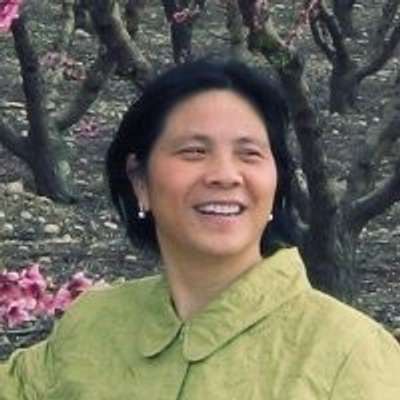
She is designing cancer pills for targets most drug hunters skip
Lina Yao runs a small biotech in Redwood City, California, that is trying to do something the rest of the cancer field mostly does not: attack tumors with oral small molecules aimed at receptors better known for other jobs entirely. Her company, Teon Therapeutics, which she co-founded in 2018, is built on a single conviction - that the tumor microenvironment, the crowded biochemical neighborhood a cancer builds around itself, is where the disease quietly switches off the immune system, and that the right small molecule can switch it back on.
Teon's two lead programs are both first-in-class and both taken as pills. TT-702 is an antagonist of the adenosine A2B receptor. TT-816 blocks the cannabinoid CB2 receptor and acts as an oral immune checkpoint inhibitor. Neither target is an obvious place to look for a cancer drug, which is precisely the point. Yao has spent a career studying G-protein coupled receptors - the sprawling family of cell-surface signaling proteins that most modern medicines already touch in one way or another - and she has bet her company on the idea that a few overlooked members of that family are doing the tumor's dirty work.
That thesis reached a milestone in February 2021, when Teon closed an oversubscribed $30 million Series A financing led by Oceanpine Capital, with participation from Oriza Ventures, Lifespan Investments, former Gilead senior executives, and existing backers including Northern Light Venture Capital, Kaitai Capital and Oriental Fortune Capital. It was not a splashy raise. Yao described it as validation of the pipeline rather than a marketing triumph, and the money went where she said it would: into the clinic.
From receptor biology to a company
Yao trained as both a physician and a pharmacologist, earning an MD and a PhD in molecular pharmacology from Huazhong University of Science and Technology, then completing postdoctoral research at the University of California, San Francisco. She stayed at UCSF as an assistant professor in the Department of Neurology, where she studied how G-protein coupled receptors behave in drug addiction and other diseases of the central nervous system. It is a detail worth holding onto: the same receptor class she probed in neuroscience became, years later, the raw material for her cancer company.
Her move into industry took her first to CV Therapeutics, where she served as Director of Biology and led the ALDH2 biology behind ANS-6637, an ALDH2 inhibitor that advanced to Phase 2 for addiction. From there she joined Gilead Sciences as Senior Director of Biology, running a team of roughly 30 scientists across inflammation, oncology, fibrosis and cardiovascular-metabolic disease. At Gilead she contributed to the development of Selonsertib, an ASK1 inhibitor that reached Phase 3, and worked on programs spanning the company's pipeline.
By 2018 she had seen enough drugs move from bench to clinic to want to run the whole play herself. Co-founding Teon meant starting with an empty pipeline and a hypothesis, trading the stability of a senior director's post for the risk of an early-stage founder. It is a leap plenty of accomplished scientists never make. Yao made it in her area of deepest expertise, which may be why the company's strategy reads less like a pivot and more like a continuation of the questions she had been asking for two decades.
Two shots on goal
The clinical work is where the thesis meets reality. In collaboration with Cancer Research UK, Yao advanced TT-702, the A2B receptor antagonist, toward first-in-human studies. The A2B receptor is over-expressed on tumor cells, immune cells and tumor-associated fibroblasts, and high local levels of adenosine keep it switched on in ways that help cancer grow, invade and evade attack. Block it, the reasoning goes, and you loosen the tumor's grip on the immune response.
TT-816 followed a similar logic through a different door. The FDA accepted its investigational new drug application in mid-2022, the first patient was dosed in a Phase 1/2 trial that November, and in January 2023 Teon announced a collaboration with Merck to test TT-816 in combination with KEYTRUDA, one of the best-known cancer immunotherapies on the market. For a company Yao's size, pairing a home-grown molecule with a blockbuster antibody is both a scientific test and a vote of confidence.
She holds more than ten issued US patents and has authored or co-authored over fifty peer-reviewed papers and book chapters - the kind of record that signals a scientist who spent years generating the ideas before spending years raising money for them. At Teon those two halves of her career have merged. The company is her argument, made in molecules, that cancer's best hiding places are also its weaknesses.
The quiet way she builds
Yao is not a founder who leads with the megaphone. Teon is a small team with outsized ambitions, and the public record around her is thin on personality and thick on data - patents, trial milestones, receptor mechanisms. That reticence seems deliberate. When she does speak, it is to point at the pipeline. The 2021 financing statement is characteristic: no grand vision speech, just a claim that the science was strong enough to draw an oversubscribed round in an uncertain market, and a promise to get a drug into patients before the year was out.
What she is chasing is straightforward to state and hard to deliver: first-in-class, orally administered medicines that reach patients with difficult-to-treat cancers - the metastatic, triple-negative and mismatch-repair-deficient tumors that resist the current toolkit. Whether the A2B and CB2 bets pay off is a question only the clinic can answer. But the shape of Teon is unmistakably hers: a receptor scientist's company, built on the belief that the targets everyone else walked past are worth a very close look.