Profile — Fintech Founder
Lilac Bar David
She built a bank for the people banks kept overlooking - freelancers, the self-employed, the small business owner buried in paperwork. Twice, on two continents.
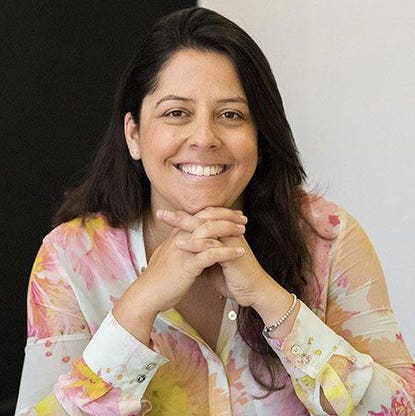 Photo: public profile / Forbes
She built a bank for the people banks kept overlooking - freelancers, the self-employed, the small business owner buried in paperwork. Twice, on two continents.
Photo: public profile / Forbes
Today Lilac Bar David runs Lili, a New York financial platform that tries to make the least glamorous part of owning a business - the banking, the invoicing, the accounting, the taxes - feel like a few taps on a phone.
The idea sounds simple until you have lived it. Small business owners were stitching together separate tools for every task, an arrangement that Bar David has said could run up to $50,000 a year for a single owner trying to keep the lights on. Her answer with Lili was to collapse the whole stack into one app: a checking account that talks to invoicing, invoicing that talks to accounting, accounting that quietly prepares the taxes. The company started as a duo with co-founder Liran Zelkha and grew toward roughly a hundred people while serving hundreds of thousands of businesses.
What makes the product convincing is that Bar David is not designing for a customer she read about in a deck. She owns a small business herself, and she refines Lili through her own friction points - the receipts, the categorization, the quarterly dread of tax season. That firsthand view is the reason Lili's roadmap has moved the way it has: taxes and expenses first, then getting paid through invoices, then credit.
Her read on the market was also a read on the moment. When the pandemic pushed more people into freelance and gig work, she saw both a surge of new independent workers and a banking system that had never really been built for them. Traditional institutions, as she put it, simply were not offering enough products for how people actually earn now.
Traditional finance companies and banking institutions aren't offering enough products.— Lilac Bar David
Bar David did not arrive in fintech as an outsider. She spent roughly two decades in banking and payments, work that included business development inside the Bank Leumi and Max ecosystem, where she built partnerships and helped stand up a program for early-stage fintech startups. Then she co-founded Pepper, described as Israel's first mobile bank - a full challenger-bank build, not a side project.
So when she and Zelkha started Lili in New York around 2018 and 2019, the pattern was familiar and the target was new: take the challenger-bank playbook and point it squarely at the American self-employed. It is a rare founder who ships a mobile bank on one continent and then does it again on another.
Figures reflect publicly reported milestones and may have changed since. User counts reference 200,000 (2021) and 550,000+ (2022) reported figures.
More recently Lili added Accountant AI, a generative tool that reads a business's own banking and accounting activity and offers guidance in plain language. It categorizes transactions, syncs with the account, and generates reports and invoices - but the interesting part is what people ask it. When Lili published data from the tool in 2025, more than half of small business owners' questions were about taxes: how to structure the business, and how to pay less.
That finding sits neatly on top of everything Bar David has argued for years. The self-employed are not confused about their balance. They are anxious about the machinery of running a business. Around the same stretch, Lili also reshaped its product to serve higher-revenue, multi-employee businesses, a sign the company is growing up alongside the customers who started with it.
Ask people who have interviewed her and a consistent picture emerges: practical, product-driven, unusually close to the customer. Bar David treats trust as the precondition for everything else in financial services. Automation is the promise - remove the busywork, save the hours, lower the tax bill - but she is clear that in money, you earn the right to automate by being trustworthy first.
It is a founder's discipline more than a slogan. Lili claims to save freelancers something like 60 hours and $1,700 a year, the kind of numbers that only matter if the person using the app believes the app has their back.
Traditional finance companies and banking institutions aren't offering enough products.
We're focusing on taxes and expenses first, now we're looking more into getting paid invoices and credit next.
The $50,000 problem. Bar David noticed small business owners could spend as much as $50,000 a year cobbling together separate financial tools. That waste became the founding thesis for a single integrated app.
She is her own user. Bar David owns a small business, and she refines Lili through her own pain points - which is why the roadmap tracks the real order of an owner's worries.
The pandemic read. As COVID-19 pushed more people into freelance work, she saw a wave of new independent earners meeting a banking system that was never built for them.
Sources: Crunchbase, LinkedIn, Forbes, TechAviv, The Financial Technology Report, Tearsheet, FinLedger, Banking Dive, FintecBuzz. Profile compiled from public reporting; some figures reflect the date they were reported and may since have changed.