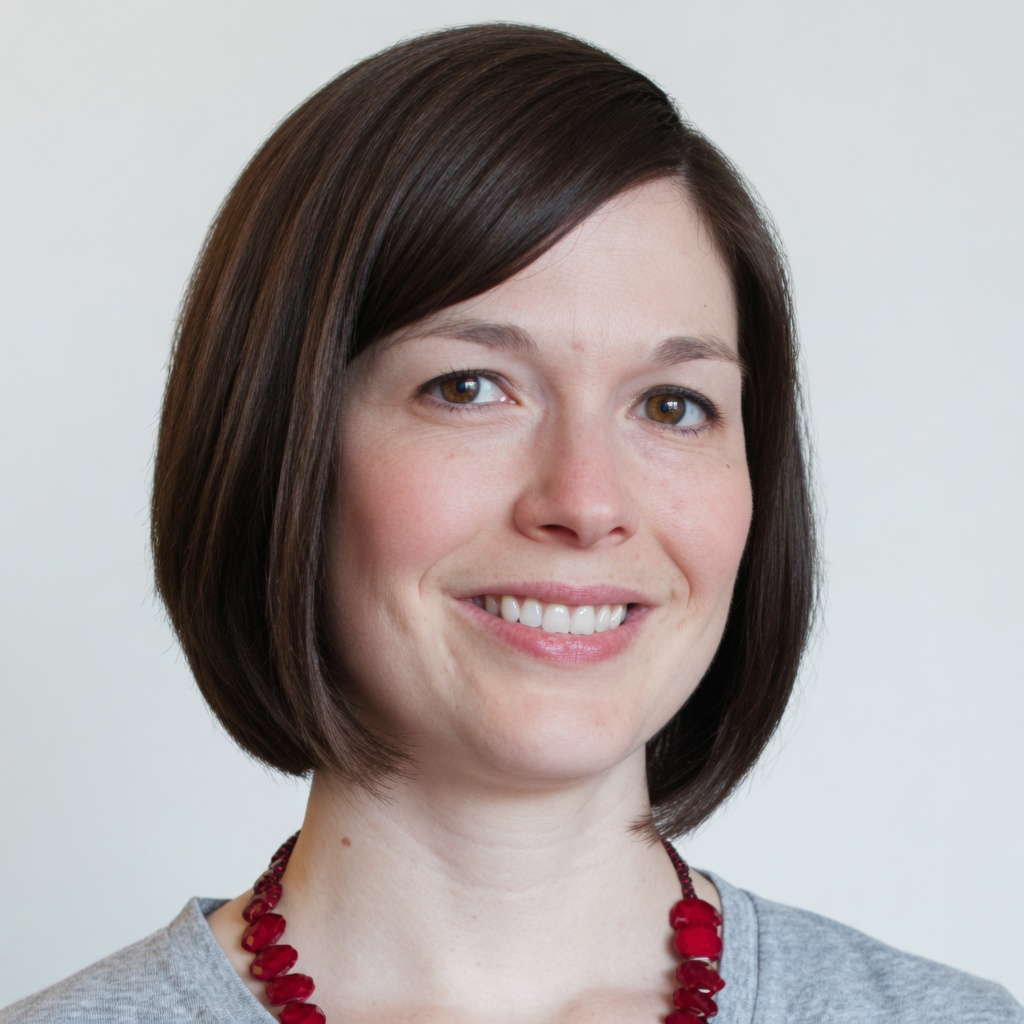
Libby Roin — @LibbyRoin
Executive Profile — Goodreads CEO
Libby Roin
Where 150 million readers go to find their next book - she decides that.
Libby Roin — @LibbyRoin
Where 150 million readers go to find their next book - she decides that.
Libby Roin grew up one of seven children in Oklahoma - daughter of a police officer and a schoolteacher who floated checks at the grocery store and sent every kid to a good school anyway. That detail matters. It explains something about the way she operates: deliberate, community-grounded, unbothered by the gap between where you start and where you end up.
She studied English at Boston College, spent nearly a decade in children's publishing at Barefoot Books, then went to MIT Sloan for her MBA. She is not the kind of executive who crashed into tech from finance. She came through books, stayed through books, and now runs the biggest book-gathering platform on the internet.
In January 2022, Roin was named CEO of Goodreads - the Amazon-owned social reading platform that 150 million members use to track what they've read, discover what's next, and argue about star ratings. It's a platform that readers love with the specific fierceness people reserve for things they use every single day.
"Starting my first company at 33 made me feel like the Billy Madison of Silicon Valley."- Libby Roin
Before Goodreads, she founded Polk Street Press - a children's interactive app studio she ran from 2011 to 2014. Her app Goodnight Safari was downloaded hundreds of thousands of times. She was in her thirties, in San Francisco, launching a startup. She had the wit to find it funny and the tenacity to make it work. Both traits show up in how she leads today.
The throughline in Libby Roin's career is not ambition in the abstract. It's specificity about who she's building for - children, readers, book communities. She's spent her professional life in the same general territory: making content and knowledge more accessible to more people.
She started in publishing. At McGraw-Hill and then Barefoot Books, she learned the industry from the inside - marketing, trade, education, library markets. Seven years inside the machinery of how books reach shelves gave her a fluency in publishing that most tech executives simply don't have.
Then came Teach for America. As Managing Director of Development for the Bay Area, she built and managed a team and raised over ten million dollars in philanthropic funding. This is not a resume line - it's evidence of a particular skill: persuading people to believe in something enough to invest in it. That skill travels.
MIT Sloan's MBA program in 2008-2010 gave her the language of business to sit alongside her years in publishing and education. Then she went sideways, not up. She founded Polk Street Press and made children's apps.
Her Twitter bio long after she became CEO still listed her as a "product manager at Goodreads." That's not an accident. That's identity.
She joined Goodreads in 2014 as a Mobile Product Manager, at a time when the platform's app was still finding its footing. Over the next eight years, she moved through every major product leadership role - Senior PM, Principal PM, Senior Manager of Product, VP of Product - before the company named her CEO in January 2022.
Goodreads hosts one of the largest book databases on the internet - millions of titles, with user reviews, ratings, reading lists, and a recommendation engine built on decades of reader behavior data.
Book clubs, reading challenges, author Q&As, genre groups, quote sharing - Goodreads is as much a social network as it is a database. Roin's product background means she understands both sides of that equation.
Goodreads was acquired by Amazon in 2013 for a reported $150M. Roin leads the platform as part of Amazon's broader books and e-commerce ecosystem, navigating both reader expectations and corporate scale.
What Roin inherited in 2022 is a platform beloved and sometimes criticized in equal measure - beloved because it gives readers a place to track, discover, and discuss books with other readers; criticized because some features have felt stagnant for years. Leading Goodreads means holding both truths at once and deciding what to build next.
The platform runs on Ruby on Rails, serves content through Amazon AWS infrastructure, and has integrated with platforms like Salesforce, Slack, and Google's suite. It uses machine learning algorithms for personalized recommendations and has API access for third-party integrations. Under Roin's leadership, the product direction continues to center on community features, reading challenge tools, book discovery, and personalized suggestions - the core loop that keeps 150 million members coming back.
Seven years learning publishing from inside a children's book company - trade markets, education and library markets, marketing. Unglamorous and foundational. This is where she learned how books actually move from publishers to readers.
Managing Director of Development for the Bay Area. Led a team. Raised $10M+ in philanthropic funding. Proof that the ability to make people believe in something and back it financially is a transferable skill - from education fundraising to product strategy.
She founded a children's interactive app studio in her early thirties. Goodnight Safari reached hundreds of thousands of downloads. Called herself "the Billy Madison of Silicon Valley" - a self-aware observation from someone who chose to start anyway.
Eight years building up through the product org. Mobile PM to Principal PM to VP of Product. Every level was an education in what 150 million readers actually need, not what product teams assume they need. Then the CEO job.
Grew up one of seven children in Oklahoma. Her father was a police officer; her mother was a schoolteacher who made the finances stretch far enough for every kid to get a good education.
She started her first company at 33 - older than the Silicon Valley archetype demands. She joked about it. Then she shipped Goodnight Safari and hundreds of thousands of people downloaded it.
Before she was a product manager or a CEO, she raised over ten million dollars for Teach for America. That ability to convince people to invest in something sits under everything she's done since.
Boston College, English. In a world of CS founders and finance-to-tech pivots, she came through literature. It shows - Goodreads has always cared about the reader's experience of reading, not just the data around it.
She went to Sloan between her publishing career and her tech founding story - not as a shortcut in, but as a deliberate bridge between two versions of herself. It's a different kind of career calculation.
As CEO of Goodreads, she leads a platform used by more people than many countries have citizens. The decisions she makes about discovery, community, and recommendations affect what hundreds of millions of people read next.
People who have worked with Roin describe her as someone with an "enviable work ethic" backed by real competence - someone who can keep calm when other people can't. That's not a typical CEO-profile quality; it's the quality of a product manager who has shipped features on deadline for eight years and knows how to triage.
She describes herself as a "fearless foodie" and admits to still reading children's books for fun. Both details are consistent with someone who built a career on loving what she works on. She didn't stumble into books. She pursued them through every stage of her professional life - children's publishing, children's apps, adult book community platforms.
There's also something in the founding story that's worth sitting with. Silicon Valley tends to reward the early founders - the ones who started in their dorm rooms at 22. Roin didn't found her first company until 33, after a full career in publishing, a stint in education philanthropy, and an MBA. She could have found the timing embarrassing. Instead she made the joke herself, and then shipped the product. That's a particular kind of confidence.
Her Twitter presence has always been sparse and unpretentious - more "product manager who cares about books" than "CEO building a personal brand." Given that she leads one of the most discussed book-adjacent platforms on the internet, the restraint is notable.
"still reads kids stories for fun, fearless foodie, founder of Polk Street Press, product manager at Goodreads"- Libby Roin's Twitter bio (written when she was already CEO)
The bio that doesn't update itself is its own kind of statement. She could call herself a CEO. She calls herself a product manager. At Goodreads, those two things might be the same job.
Running Goodreads in 2025 and beyond means navigating a specific tension: a deeply loved platform with a deeply loyal user base that has, at times, found feature development slower than they'd like. The community is vocal, opinionated, and attached - which is both an asset and a constraint.
Roin's background in product gives her a particular advantage here. She's been inside the platform's decision-making for eight years. She understands the technical architecture, the community dynamics, and the Amazon parent company relationship in a way that an outside hire never could.
The priorities that emerge from Goodreads under her leadership point toward more personalization, stronger community features, better reading habit analysis tools, and improved author-reader interaction. The platform's keyword cloud - machine learning, recommendation algorithms, data-driven recommendations, community management, reading challenge - reflects a product direction that wants to be smarter about connecting specific readers to specific books at the right moment.
The competitive landscape has shifted around Goodreads too. StoryGraph, The Storygraph, and newer reading tracking apps have attracted attention from readers who want more from their book-tracking platform. The pressure to evolve is real, and Roin is the person inside the platform who has to decide how fast and in which direction.
What she's building toward is a platform that knows its readers better than they know themselves - not in a surveillance way, but in the way a great bookseller who has known you for years knows to press a particular novel into your hands without explanation. That's the aspiration. The 150 million members are both the challenge and the proof of concept.
The platform that knows which book you need before you know you need it - that's the version of Goodreads worth building.