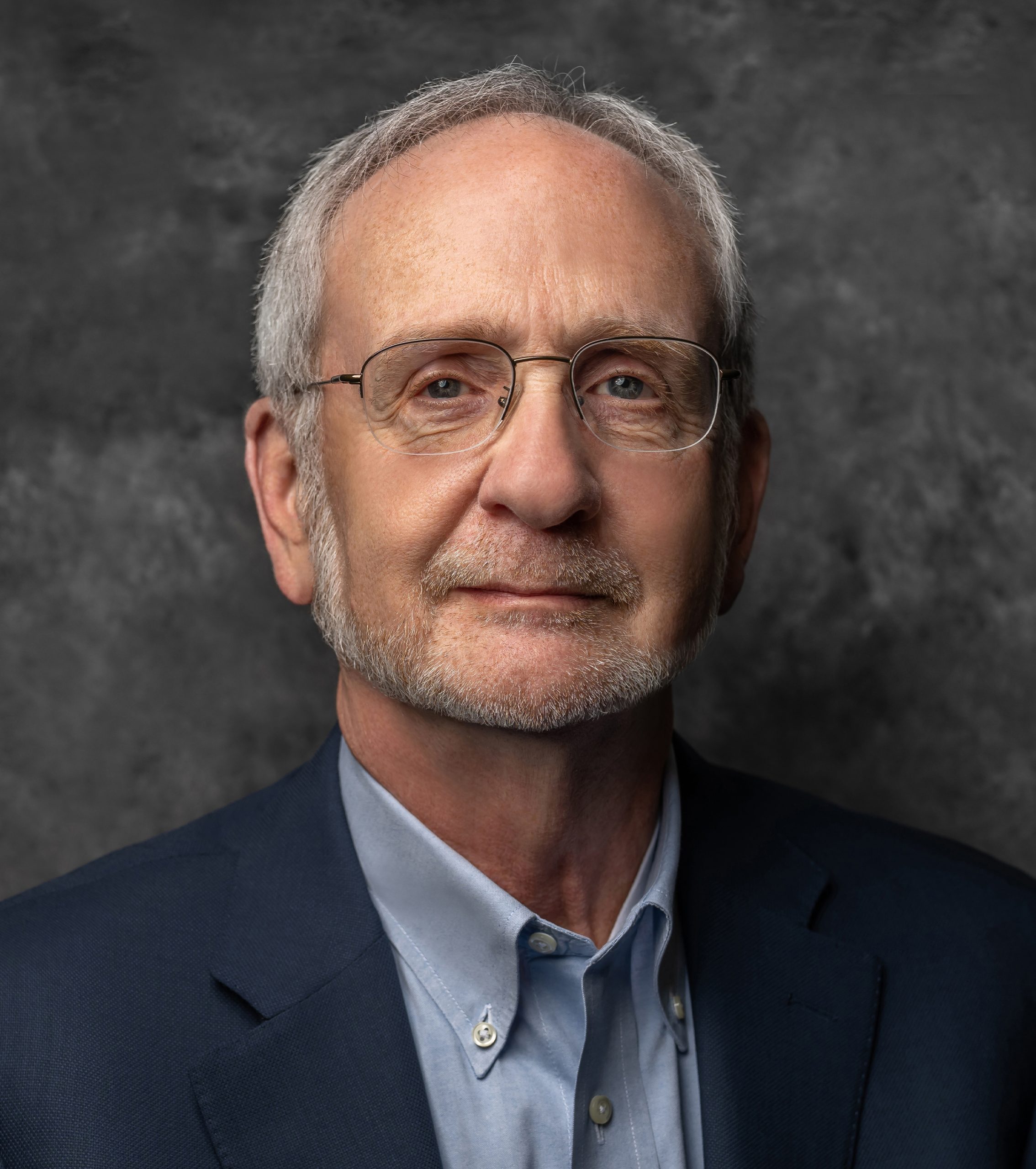
Profile
The Factory Floor
Nobody Sees
Every time you stream a Fox Sports match, pull up a Discovery documentary, or watch an A&E Networks show, there is a reasonable chance that the invisible scaffolding moving that content from acquisition through processing to your screen runs on software Lawrence Kaplan built. The platform is called Rally. The company is SDVI Corporation. Most viewers will never hear of either. That's exactly how it's supposed to work.
Kaplan got his start in television through a college roommate's father - a NABET shop steward at ABC New York who slipped him an internship application. Four summers at ABC. That accidental handshake with broadcast stuck. He graduated from the University of Wisconsin-Madison with a degree in electrical engineering, picked up an MBA from Rutgers, then joined Tektronix in 1974. He stayed 18 years. By the time he left, he had become the youngest General Manager in Tektronix history - running a division that was also the company's most profitable. Not a bad place to start.
From Tektronix he moved to Sony Electronics in 1985 to run the broadcast division, overseeing cameras, switchers, and VTRs for professional markets worldwide. A decade of learning how broadcasters actually think about infrastructure. Then in 1998 - armed with a specific conviction about where the industry was heading - he co-founded Omneon Video Networks with three colleagues from the Sony/Tektronix world.
🏆
2019 Technology & Engineering Emmy Award
SDVI, alongside Fox Networks Engineering & Operations, Discovery Communications, AWS, and Evertz, received the National Academy of Television Arts & Sciences Emmy for "Pioneering Public Cloud-Based Media Supply Chains." It's the broadcast industry's highest technical honor.
The Omneon insight was deceptively simple: video servers were IT infrastructure, not broadcast equipment. Most competitors in 1998 saw them through the latter lens and priced, marketed, and built accordingly. Kaplan positioned Omneon squarely in the IT camp - standard interfaces, commodity components, server economics. It sounds obvious now. At the time it was a bet that the industry wasn't willing to make. Omneon made it anyway, backed by Accel, Norwest, ATVentures, Meritech, Intel, and Invesco. The company grew to dominate broadcast storage. In September 2010, Harmonic Inc. bought it for $307 million.
Kaplan spent the next two years in the Office of the CEO at Harmonic, advising on integration. Then in January 2013, at 62, he co-founded SDVI with Simon Eldridge and Jeff Beachy. Most people at that stage of a career cash out and find a beach. Kaplan went back to building.
SDVI was founded on another durable bet: that media companies would eventually adopt full cloud-based supply chains - not just dabbling with cloud storage, but running the entire content lifecycle from ingest through packaging to distribution in a virtualized, orchestrated environment. The flagship product, Rally, is that vision made concrete. It deploys, manages, and optimizes media supply chains across public cloud, private cloud, and hybrid environments. It handles ingest, transcoding, quality control, metadata management, packaging, and delivery - coordinating dozens of best-of-breed third-party tools through a single orchestration layer. Kaplan calls it "a factory floor in a virtualized facility, a kind of manufacturing plant in the sky."
The results customers report are not incremental. A&E Networks documented 70% improvement in time to market with 85% cost savings. Other Rally deployments achieve 83% faster content processing at less than 10% of previous costs, and reduce human involvement in content ingest by 80%. These aren't marketing estimates - they're the numbers that drove Fox, Sky, Warner Bros. Discovery, Comcast, ITV, and RTL to bet their operations on it.
Sky led a strategic investment round in 2018, joining Fox, Turner, and Discovery as SDVI shareholders - a clear sign that the customers themselves believed in the platform enough to own part of it. In 2020, SDVI and its platform received a Technology & Engineering Emmy Award from the National Academy of Television Arts & Sciences, shared with Fox, Discovery, AWS, and Evertz, for pioneering public cloud-based media supply chains. That same year, SDVI raised an additional $2.92 million in venture funding.
In 2023, SDVI achieved net-zero carbon footprint status - a reflection of the company's foundational argument that cloud efficiency isn't just cheaper, it's also cleaner. The environmental math works because Rally eliminates idle infrastructure. Resources spin up when needed and release when done. No humming servers burning power on standby.
Kaplan's philosophy hasn't changed since Omneon. "It sounds corny," he said in an early profile, "but it's a fanatical devotion to the customer." At 40+ years into an industry career, the continuity of that phrase is either remarkable or instructive. The market seems to believe it's the latter. In March 2025, SDVI signed a Strategic Collaboration Agreement with AWS - elevating a relationship that has existed since SDVI's founding to a new institutional tier. Two months later, Rally earned Product and Project of the Year awards at NAB 2025.
In April 2026, SDVI launched the next generation of Rally - featuring a graphical supply chain builder, a modular functions layer, and an agentic AI foundation. Media companies can now describe workflows visually, then let AI agents optimize and execute them. Where Omneon's insight was positioning video servers as IT, SDVI's current bet is that media supply chains should operate like modern software systems: observable, composable, and increasingly autonomous. Forty years on from his first internship at ABC, Kaplan is still building the infrastructure that nobody sees but everybody depends on.