A Career Spent in the Emergency Room of American Retail
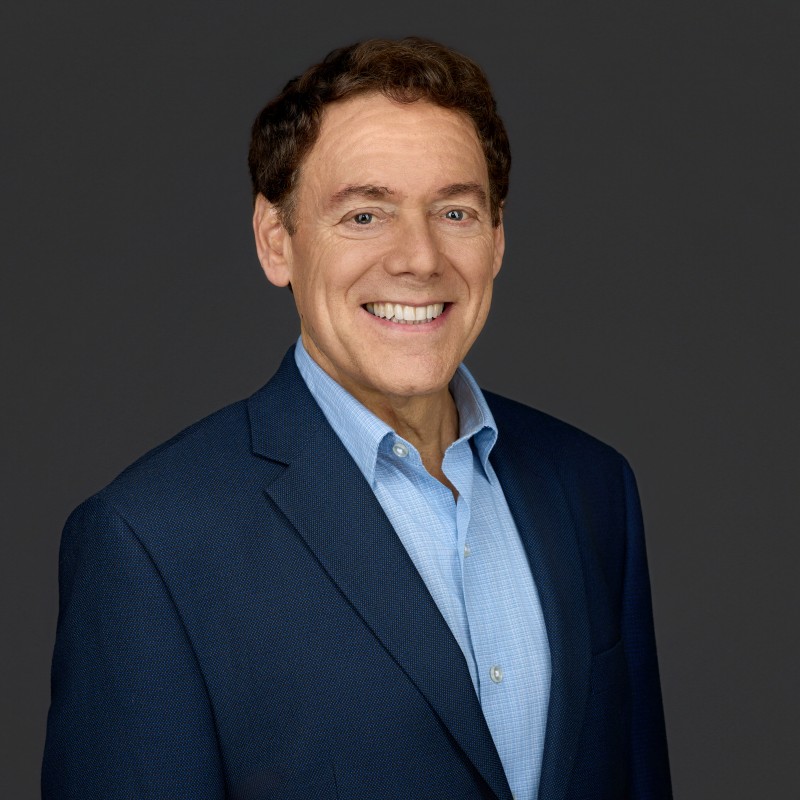
There are two kinds of executive in consumer products. The first kind arrives with a deck, a runway and a launch party, and is photographed holding the product at a slight angle. The second kind arrives on a Tuesday, in a conference room with bad coffee, to explain to a room of lawyers why the company still deserves to exist. Larry Nusbaum has made a career of the second kind, which is to say he has made a career of the part nobody films.
The résumé, read quickly, looks like a filing error. Rotisserie ovens. Skateboards. Phone cases. Artisan subscription boxes. Steel-toe boots. Hospital scrubs. It has the scattered quality of a man who cannot settle, until you notice the one thing every entry shares: each business was, at the moment he took it on, in some measure of trouble. Nusbaum is not a category specialist. He is a condition specialist. The condition is distress.
The Pocket Fisherman Years
The chapter that made his name involves one of the most quietly absurd assets in American commerce. In June 2007, Ronco - the company Ron Popeil founded in 1959 and sold in 2005, the company that gave the world the Veg-O-Matic, the Pocket Fisherman and the Showtime Rotisserie - filed for Chapter 11. That summer it was auctioned in bankruptcy court to Marlin Equity Partners for about $6.5 million. Nusbaum, a direct-response veteran, partnered with Marlin and relaunched the business out of Simi Valley, California, under the frankly optimistic banner of "The New Ronco." He returned as chairman, chief executive and president in April 2008.
His diagnosis of what had gone wrong was refreshingly free of consultant vocabulary. The previous management, he argued, had committed the cardinal sin of being embarrassed by their own brand. They had drifted away from television advertising. They had drifted away from Popeil himself. Revenue had slid from a $97 million run rate to $47 million. The cure, therefore, was not reinvention but the opposite - a return to the medium and the face that had built the thing.
Ron's name and likeness continues to be one of the company's major assets in generating brand awareness in the marketplace.
LARRY NUSBAUM, 2008There is something almost Wildean in the logic. The company had spent years trying to be respectable and had nearly died of it. Nusbaum's contribution was to point out that respectability had never been the product. He rebuilt the direct-response television operation, widened retail distribution into Walmart, Kohl's, Sears and Walgreens, and reported more than $1 million in operating profit for 2008 - during, it should be noted, the precise months in which the global financial system was doing its impression of a controlled demolition.
By 2009 the numbers had genuinely turned: roughly $30 million in sales, about $4 million in profit, against a prior annual loss of some $7.5 million. Approximately 63 percent topline growth. The M&A Advisor named him Turnaround Corporate Executive of the Year, an award given out in Palm Beach to people whose companies did not die, which is a smaller and more useful club than the one for people whose companies briefly soared.
The Ronco Reversal
The Wandering Decade
What followed reads like a tour of every way Americans have bought things in the last fifteen years. As chief operating officer of Vertex Capital Management he sat on the investor side of the table. At GlobeIn he took a business selling artisan goods and rebuilt it around subscription, which is the commercial equivalent of converting a shop into a standing appointment. At Bravo Sports he served as president and chief marketing officer. At Midwest Trading Group - a Downers Grove, Illinois importer moving consumer electronics, housewares, toys and wellness products - he ran the company as chief executive, cut costs, diversified channels, and in December 2023 acquired the phone-accessory brand TYLT.
His own LinkedIn headline offers the tidiest summary of the throughline: "P&G trained." Two words carrying an entire methodology. Procter & Gamble is the finishing school of consumer marketing, and its graduates tend to share a certain unsentimental habit of asking what the customer actually does rather than what the brand deck says they feel. It is a discipline that travels. It travelled, eventually, to a chain of 4,500-square-foot stores selling work boots and scrubs in New England.
Work 'N Gear, and the Arithmetic of Bad Years
Work 'N Gear was founded in 2002 by Tony DiPaolo and grew, over two and a half decades, into a genuinely useful regional institution: functional footwear, workwear, high-visibility jackets, flame-resistant shirts, lab coats, healthcare apparel, and a private-label scrubs line that Nusbaum named Scrubology - a name that gives away his direct-response ear the way an accent gives away a hometown. At its peak the business cleared more than $40 million in annual revenue across New England and the Mid-Atlantic.
Then came the sequence that has flattened a great many mid-sized specialty retailers: rising costs, thinner margins, competition from every direction at once, and two consecutive unprofitable years. In July 2025 the company filed for Chapter 11 in the District of New Jersey, reportedly after a creditor swept its bank accounts. Among the largest supplier claims were Carhartt at roughly $515,000 and Timberland at roughly $226,000 - which is worth pausing on, because those are not abstractions. Those are companies that shipped goods in good faith and then read the news.
Nusbaum's public statements through the restructuring were notable mainly for what they declined to do. There was no fog machine. In October 2025, announcing a debtor-in-possession facility with Black Feather Capital that funded the court-supervised turnaround, he said the quiet part in plain English.
While it has been challenging to reduce our store count and right-size the business after two consecutive unprofitable years, this financing marks an important step forward.
LARRY NUSBAUM, OCTOBER 2025And then, in the same release, a sentence that ought to be taught in business schools as an example of how to address people you owe money to: "We're grateful to our vendors and landlords for their partnership through this arduous process as we rationalize down to profitability." Every word is load-bearing. Arduous concedes the pain. Partnership thanks parties who were fully entitled to sue instead. Rationalize down is corporate English for we are going to be smaller, and we are going to say so out loud rather than issue a press release about our exciting new focus.
The footprint went from 38 stores to 26 performing locations. It was not enough. In February 2026 the case converted to a liquidation plan, the remaining stores and the Avon, Massachusetts distribution centre closed, and the staff were released. For most companies the story ends there, in a footnote and a going-out-of-business banner.
Work 'N Gear: Store Count, 2025-2026
The Part That Was Not Supposed to Happen
On 7 April 2026, Work 'N Gear announced that its assets had been acquired by a family-office-backed operator. The DIP lender, Baaj Capital, was fully repaid and exited its position - a detail worth underlining, because "lender made whole" is not a phrase that appears in most retail bankruptcies. The plan announced alongside it: relaunch the e-commerce platform, reopen up to ten stores across Long Island, New Jersey and Pennsylvania, and rebuild around the core categories with a mix of vendor brands and private label.
Nusbaum was given one quote in that release. Executives typically spend theirs on themselves, or on the transaction, or on a word like "journey." He spent his on the staff.
I am proud of our staff and field teams for their resilience throughout this process. We are excited to continue serving our loyal customer base with a strong mix of branded and private label offerings.
LARRY NUSBAUM, APRIL 2026Jas Singh, managing partner of Baaj Capital, offered the outsider's verdict: "We believed in Larry's strategy and execution plan from the outset. We appreciate the team's focus and the swift progress toward a successful outcome." Lenders are not, as a species, prone to sentiment. When one of them puts your first name in a press release after being repaid, it is closer to a reference letter than a courtesy.
The Trade Nobody Advertises
Nusbaum is now also an operating partner at Dark Alpha Capital, an independent sponsor based in Dover, Delaware, where his bio describes more than two decades leading private-equity-backed growth platforms, turnarounds and multi-channel sales organisations - CEO, CMO, COO, everything from fast-growth direct-to-consumer brands to $135 million international divisions. He is a long-standing member of YPO, the Association for Corporate Growth and the Turnaround Management Association, a trio of affiliations that rarely appear together and which between them describe the whole shape of the work: growth, deals, and the aftermath of both.
He lives in Philadelphia. He runs, or has run, a company historically headquartered outside Boston. He has a YouTube channel of his own, on which sits a Bloomberg Television interview from November 2010 that labels him, with the medium's gift for compression, a turnaround expert.
The wider point is that the modern economy contains a small, largely uncelebrated profession of people who are only ever called once the news is already bad. They do not get magazine covers, because there is no photograph to accompany a restructuring. They get plaques from organisations with acronyms, and rooms full of lawyers, and the occasional press release in which a lender who has just been repaid uses their first name. Nusbaum has been doing it since a bankruptcy court in 2007 handed him a company best known for a device that sold fish hooks in a plastic tube.
The Pocket Fisherman, for the record, is still in production. Which is either an argument about the durability of American consumer brands or a very long joke about second chances. Possibly both.