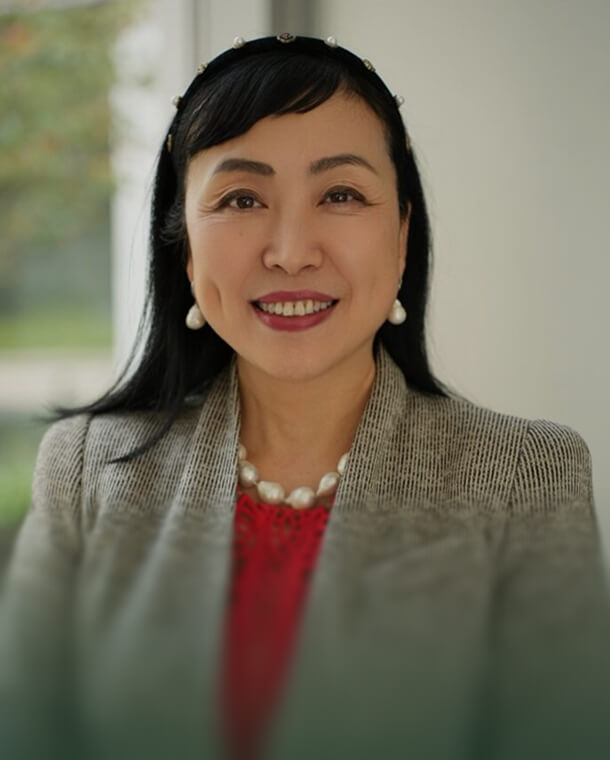
Lan Huang runs SEED Therapeutics from an office at 28 Liberty Street in Lower Manhattan, where a small team of about 25 people is chasing a goal that sounds almost unreasonable: to make medicines for the proteins that drug developers gave up on decades ago.
Most drugs work by fitting into a protein like a key into a lock, jamming it so it can no longer do harm. That approach depends on the protein having a pocket to fit into. Roughly 80% of the proteins inside human cells have no such pocket, which is why the pharmaceutical industry has long labeled them undruggable. Huang built SEED, founded in 2020, around a different strategy. Instead of blocking a bad protein, her company designs small molecules called molecular glues that get the cell to recognize the protein as garbage and destroy it using machinery every cell already carries.
The company calls its discovery engine RITE3. The idea rests on a family of enzymes known as E3 ubiquitin ligases, the cell's tagging system for marking proteins for disposal. There are more than 600 of them encoded in the human genome, and picking the right one for a given target is most of the battle. SEED's platform is designed to make that choice deliberately rather than by luck, pairing a disease-driving protein with the ligase most likely to bring it down.
How a molecular glue works
A scientist before a CEO
The science is not borrowed. Huang earned a PhD in chemistry from the University of California, Berkeley, where she was honored with the Graduating PhD Woman Award from Soroptimist International. She went on to postdoctoral training at Memorial Sloan Kettering Cancer Center between 1998 and 2002, working on the same protein-degradation biology that now underpins her company. During that period she helped solve an early structure of an E2-E3 ubiquitin ligase complex tied to the degradation of the tumor suppressor p53, work that was published in Science.
That background matters because targeted protein degradation is a field where the founders often are the scientists. Huang co-founded SEED alongside researchers who have spent careers on the ubiquitin system, including Ning Zheng and Michele Pagano, and Avram Hershko, who shared the 2004 Nobel Prize in Chemistry for discovering ubiquitin-mediated protein degradation. A Nature feature described the founding group as a set of protein-degradation experts bound together by the promise of molecular glue.
Our alliance with Lilly is the catalyst for the world-class team at Seed Therapeutics to begin developing a pipeline of TPD therapies for diseases in which common strategies have failed.
— Lan Huang, on SEED's collaboration with Eli Lilly
The second company
SEED is not Huang's first venture, and that history explains a lot about how she operates. She founded BeyondSpring Pharmaceuticals and took it public on NASDAQ under the ticker BYSI, steering its lead small-molecule asset, plinabulin, through new drug application filings in both the United States and China. SEED Therapeutics grew up as a BeyondSpring subsidiary before charting its own course with outside investors.
Before either of those, Huang was building companies in China. She co-founded WuXi MTLH Biotechnology, whose cancer peptide drug was acquired by Shanghai Pharmaceutical Group in 2010, and Paramax International, a clinical contract research organization that was sold to RPS and later folded into Warburg Pincus in 2011. Founding, scaling, and selling across two continents gave her a rare combination for a scientist-founder: she can read a crystallography result and a term sheet with equal fluency.
The deals that gave the science room to run
In November 2020, only months after SEED took shape, the company announced a research collaboration and license agreement with Eli Lilly. The terms included a $10 million upfront payment and a $10 million equity investment, with the potential for up to roughly $780 million more in milestones plus royalties. For a young biotech, a deal of that size from a major pharmaceutical company is more than money. It is a signal that the science is credible. SEED has since added Eisai as a partner and investor, and continued raising capital, with reported total funding in the tens of millions.
The recognition kept coming. In August 2025, SEED Therapeutics was named a finalist for the Prix Galien USA Best Start-Up Award, one of the more respected honors in the life sciences. For Huang, awards are a marker rather than the mission. The real scoreboard is the shrinking list of proteins that no one could drug.
What she is actually betting on
There is a deliberate contrast built into SEED's approach. Much of the targeted protein degradation field has focused on PROTACs, two-headed molecules that physically link a target to a ligase. Huang's company leans instead into molecular glues, smaller molecules with more conventional drug-like properties, which can be easier to turn into pills and to move through the body. It is a design choice with real consequences for how a future medicine might be dosed and delivered.
The ambition behind all of it is straightforward to state and hard to achieve. If the industry has only ever been able to reach about a fifth of the proteome, then the diseases driven by the other four-fifths, many cancers, neurodegenerative conditions, and more, have been out of reach by definition. Huang's wager is that the cell's own disposal system, aimed carefully, can change that arithmetic. She has spent a career moving ideas from a lab bench into companies, and SEED is the most direct expression yet of the biology she has studied since her Sloan Kettering days.
Whether SEED's molecular glues become approved medicines is a question only years of clinical work will answer. What is already clear is the shape of the bet, and the person making it: a chemist who kept following the same thread, from an early ligase structure to a platform designed to make that biology treat disease.