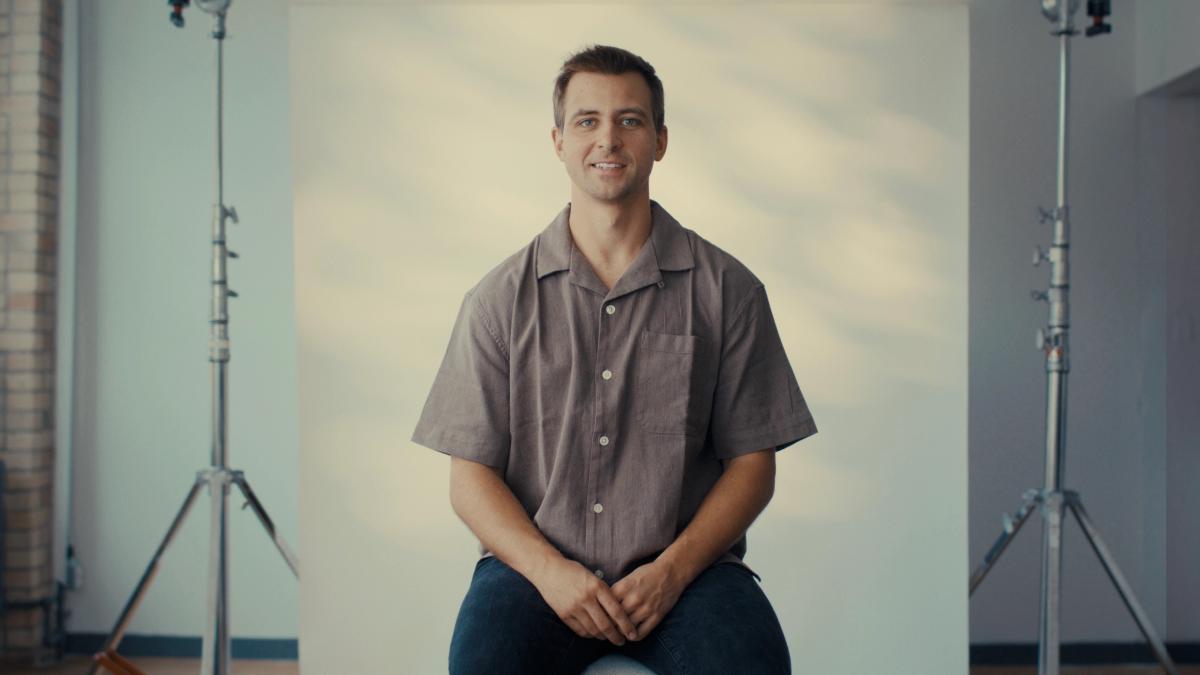
Somewhere right now, a nurse at a skilled nursing facility is squinting at a 40-page referral packet faxed over from a hospital, trying to decide in the next twenty minutes whether her building can safely take a new resident. That decision - which patient gets a bed, which gets turned away - is one of the least visible and most consequential moments in American healthcare. Laird Russell built a company around it.
Russell is the co-founder and CEO of ExaCare AI, a New York company building what he calls "an AI operating system for all of post-acute." Post-acute is the stretch of care that begins after a hospital discharge: skilled nursing, senior living, home health, the messy handoffs in between. It is an industry built, in Russell's telling, as a pile of isolated tasks - tools that never shared context, decisions that left no paper trail. ExaCare's pitch is that software should carry the weight so the humans can carry the patients.
The product is a suite of AI agents that read the unstructured chaos of healthcare - referral packets, clinical notes, intake forms - and turn it into clear next steps. By late 2025 those agents were running inside roughly 1,500 facilities and had processed more than two million patients. The customer list reads like a who's-who of operators who do not hand their workflows to a startup lightly: National Healthcare Associates, Journey Healthcare, Ignite Medical Resorts, Monarch Healthcare Management, Majestic Care.
"Our vision is to build an AI operating system for all of post-acute. Powerful AI agents will work alongside every team to turn scattered data into clear next steps."
How a hockey player ended up here
Russell did not grow up planning to spend his thirties inside nursing-home software. He played ice hockey at Brown University, where he earned a B.A. in Economics. The athlete's career did not last; a personal stretch of navigating the care system as a long-term patient did. He has said, plainly, that he never wanted to become an expert in healthcare. He became one anyway, and the experience left him with a builder's grudge against systems that make sick people do paperwork.
Before ExaCare, he took the credentialed route: covering healthcare in the investment banking group at Goldman Sachs, then strategy consulting at Bain & Company. He also founded an earlier company, Galea Health, aimed at proactive mental-health support for athletes - it earned a spot in Stadia Ventures' Fall 2021 Sports Accelerator. The through-line is easy to miss until you say it out loud: the demographic flipped from athletes to seniors, but the problem - fragmented care, missing context, people falling through the gaps between providers - stayed exactly the same.
The $30 million bet
In February 2024, ExaCare raised $6.5M from Foundation Capital, 1984 Ventures, and Bienville Capital to bring a data-driven approach to senior living operations. Twenty months later, in October 2025, the company closed a $30M Series A led by Insight Partners, with Foundation Capital, Bienville Capital, and a clutch of post-acute operators joining in. George Mathew, a managing director at Insight, framed the bet around the bottleneck everyone in the sector knows: "ExaCare's agentic AI platform is addressing this head-on by making admissions simpler, more reliable, and measurably faster."
What is unusual is how Russell got there. He has been candid that ExaCare built its team from top technology companies and won over skeptical skilled-nursing operators with effectively no spend on ads or marketing. In a sector that runs on relationships and reputation, the product and the operators did the selling. The capital is now pointed at engineering, product, and customer support - the unsexy machinery of scaling software that hospitals and nursing homes will actually trust.
"Post-acute care teams deserve systems that work as hard as they do."
Auditable by design
Russell keeps returning to one word: auditable. His stated standard for ExaCare is a world where "every decision is auditable, every handoff is complete." That is a deliberate stance in an industry where AI tends to arrive as a black box. The company's own values lean the same direction - AI should be explainable, not opaque; operations should enable care, not bottleneck it; and software should be built with the people who use it, not at them. It is a refreshingly boring set of principles for a category that loves to oversell.
The agents reflect that philosophy. Rather than one giant model promising to do everything, ExaCare ships specialists: an Admissions Agent to screen referrals, a Reimbursement Agent for the money, a Clinical Agent for risk detection, a Survey Readiness Agent for the regulators, and a Documentation Agent for the paperwork that never stops. Each does a job a human used to dread, and each leaves a trail. Russell's framing is less "replace the team" and more "give the team back their afternoon."
The next public marker on the calendar is the ExaCare AI Summit, set for April 26, 2026 in Scottsdale, Arizona - a sign that a company born in Manhattan with a meaningful Phoenix footprint now has enough of an ecosystem to gather it in one room. For a founder who once said he never wanted to be a healthcare expert, Laird Russell has become the person operators call first when the admissions inbox starts to overflow.