Founder & CEO · dope.security
Kunal Agarwal
The hacker who broke into his high school grading system now runs a Google Ventures-backed company telling the internet to fly direct.
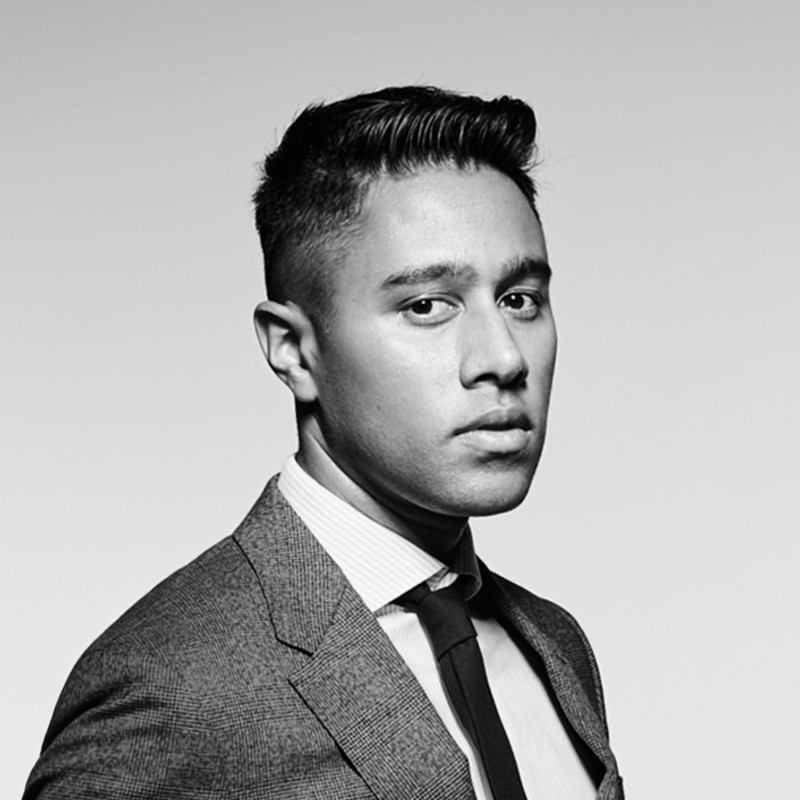 Kunal Agarwal
The hacker who broke into his high school grading system now runs a Google Ventures-backed company telling the internet to fly direct.
Kunal Agarwal
Most security software works like a layover. Your web traffic leaves your laptop, flies to a cloud data center somewhere, gets inspected, then flies back out to the website you actually wanted. Two hops where one would do. Kunal Agarwal looked at that arrangement - the one every legacy vendor sold as gospel - and asked the only question that ever interested him: why does it have to be this way?
dope.security, the company he founded in 2021 and launched in September 2022, runs the Secure Web Gateway on the endpoint itself. No detour through someone else's cloud. He calls it Fly Direct, and it is the kind of idea that sounds obvious only after someone has the nerve to build it. The pitch was not a tweak. It was a rejection of the architecture that Zscaler, Symantec and Forcepoint had all agreed on years earlier.
He would know. He helped build inside two of them. A decade at Symantec and Forcepoint taught him exactly where the proxy pinched - and exactly which customer complaints never got fixed because fixing them meant admitting the whole model was due for a rethink.
In March 2023, GV - Google Ventures - led a $16M Series A, with Boldstart Ventures and Preface joining in. In 2025, SC Media named him Innovator of the Year. Not bad for a kid who once stared down a district attorney.
A hacker is someone who always questions the status quo and questions how it could be different.Kunal Agarwal, SecurityWeek
Role: Founder & CEO, dope.security
Based: Mountain View, California
Education: UC Berkeley, EECS
Past lives: GM of IoT at Symantec; Sr. Director of Product at Forcepoint
Backers: GV, Boldstart, Preface
Every request takes a detour through someone else's infrastructure. Latency, cost, and a single point everyone shares.
Security runs where you already are. The traffic goes straight to its destination. No layover required.
He grew up in California and started hacking around age 8, for the most universal of childhood reasons: he wanted access to things he was not supposed to have. He taught himself emulators and ROMs to run pirated Nintendo games on the family PC. Xbox mods. A bit of malware. The standard curriculum for a curious kid with too much time and a fast modem.
At 15, the curiosity met consequences. He broke into his high school's grading system - not to change grades, he says, just to see if he could. He could. It nearly sent him to juvenile detention. What saved him was the skill he would later put on a business card in spirit if not in words: he talked the San Jose district attorney into probation instead of jail.
He calls it social engineering now. At the time he called it terrifying. Both are true.
It's in my DNA.On hacking as identity, not hobby
The interesting part of Agarwal's story is not that he broke rules. Plenty of kids break rules. It is that somewhere along the way he developed a precise sense of which ones. He frames it as nature plus nurture: the instinct to question is innate, but the judgment about what is acceptable is learned.
He credits Symantec colleagues for the ethics - a lesson that you never lie to a customer, and you never push them toward something they shouldn't do. It is a strikingly old-fashioned creed for an industry that runs on fear. It also happens to be good business.
On the juvenile-detention scare that, in hindsight, taught him how fast trust evaporates - and how much it's worth.
I call it my Master's degree.On his years at Symantec
The leap out was not his idea, at least not at first. He was comfortable. Senior title, big company, the kind of role most people spend a career climbing toward. It took a friend to ask the question that does the damage: if you weren't going to do some random big company, what would you do?
The answer had been sitting in his head for years. So had the name.
The name lived in his head "all the way back to Symantec" - something that was both functional and personally meaningful, long before there was a company to attach it to.
He looks for "career musicians, not tourist musicians" - people who are in it for the long song, not a single set. Passion over passing through.
"Everyone, from your engineer, to your QA, to your marketing, to your sales person, have all used the product." He won't ship what the team won't run.
"We have to work to live, not live to work." A cybersecurity CEO who guards his boundaries and means it.
"There is no reward worth ruining your word and the trust someone shares with you." A lesson learned the hard way at 15.
"You will always have to level up yourself to accomplish the next challenge." The boss arrives only once you've earned the fight.
His read on the competition: "Existing cybersecurity companies are pretty dull and clock-in/clock-out." dope is the antidote he wanted to exist.
Each moment in life only comes once.
That is my basic nature. But then there's a learned aspect of what is acceptable - what rules you can break and what rules you should not.
We are so passionate about this. We want to make it good.
If you weren't going to do some random big company, what would you do?
The Secure Web Gateway was the wedge, not the whole plan. Agarwal's ambition is a full next-generation SASE/SSE platform - CASB, private access, the lot - rebuilt around the Fly Direct idea instead of bolted onto the old cloud-proxy model. dope has also leaned into AI for sharper, more accurate data-loss prevention.
But ask him about the dream and it gets less technical. He wants people to look at what dope.security ships and say, "Wow, you've gone the extra mile." And further out: he wants to help people - any people, any profession - find genuine excitement in their work. The security product is the vehicle. The mission is enthusiasm.
We want to make it good.The whole strategy, more or less
· SC Awards 2025, Innovator of the Year
· $16M Series A led by GV (Google Ventures)
· Featured by TechCrunch, Forbes, CRN, Fortune
· NYSE CEO & Founder Conversations
Sources: dope.security, LinkedIn, SecurityWeek, Strategy of Security, Authority Magazine, TechCrunch, GV, SC Media. Built from public reporting and interviews; details are quoted or paraphrased from those sources.