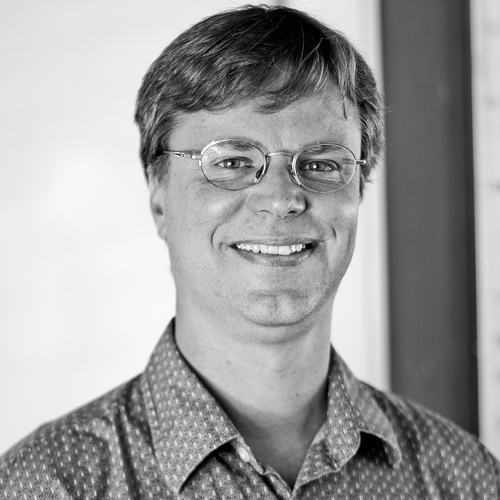
There is a particular kind of immigrant story that Silicon Valley loves to tell: the brilliant foreigner arrives with nothing, sleeps on a couch, codes through the night, and builds an empire. Konstantin Guericke's story is not that story. He arrived at Stanford University in the 1990s on a tennis scholarship that covered roughly sixty percent of his tuition, studied Engineering Sciences, and slowly absorbed the entrepreneurial culture that radiated from every corner of the campus. His parents were both high school teachers in Bremen, Germany — Gymnasiallehrer — and had raised him with a discipline and intellectual curiosity that would later define his approach to both networking and venture capital. The tennis courts of Bremen had already made him a Landesmeister, a state champion. Stanford would make him a co-founder of one of the most important companies of the internet age.
The origins of LinkedIn were not born in a garage or a dorm room, but on weekly walks. Guericke and Reid Hoffman — who had known each other since their days at Stanford — would meet once a week to tear apart business ideas. They had ten or twelve concepts on their list, and they worked through them methodically, one at a time, bouncing them off each other with the analytical rigor of two engineers who understood that most ideas fail not because they are bad, but because the timing is wrong. When they settled on a professional networking site, the decision was not dramatic. It was inevitable. The web was fragmenting into social silos, and the professional world — the world of resumes, referrals, and reputation — had no home.
LinkedIn launched in stealth mode in the spring of 2003. There were no press releases, no TechCrunch exclusives, no splashy announcements. Guericke and the founding team — Hoffman, Allen Blue, Eric Ly, Jean-Luc Vaillant, and others — sent exactly 350 invitations to their most important contacts. These were not mass emails. They were personal, deliberate, and strategic. By the end of the first month, the network had grown to 4,500 members. The growth was organic, word-of-mouth, and precisely controlled. Guericke, as VP of Marketing, kept meticulous lists of his lunch meetings, tracking every connection with the same precision he had once applied to engineering problems.
One of the most consequential product decisions in LinkedIn's early history was the choice to launch without profile photos. Friendster was the dominant social network at the time, and it was widely perceived as a dating site. Guericke's team wanted to send an unambiguous signal: LinkedIn was about professional reputation, not socializing. The absence of photos was a feature, not a limitation. It was a deliberate act of positioning that carved out an entirely new category in a market that seemed already crowded. Years later, when LinkedIn finally added photos, the platform's identity was so firmly established that the change felt like an evolution, not a reversal.
By March 2006, LinkedIn had reached ten million members and profitability — a rare achievement in the social media landscape of the mid-2000s. But Guericke was already restless. He left the company he had helped build to become CEO of Jaxtr, a VoIP and social communications startup that promised to bridge the gap between social networks and phone calls. It was a bold move, and for a while, it seemed to work. Jaxtr raised twenty million dollars in total funding, including a ten-million-dollar Series B from Lehman Brothers. The platform reached ten million users. Guericke was interviewed by Mixergy, spoke at conferences, and appeared to be on his way to a second act as impressive as his first.
Then came October 2008. The financial crisis was tearing through the global economy, and Jaxtr was not immune. The company conducted layoffs affecting thirty percent of its staff. Weeks later, Guericke was fired as CEO by the board. It was a public and painful fall — the kind that Silicon Valley often buries under success stories, but the kind that Guericke would later cite as one of his most important learning experiences. "Erfolg ist immer besser als Scheitern," he told German media, "das ist auch im Silicon Valley so. Es kommt aber darauf an, wie man mit dem Scheitern umgeht und was man daraus lernt." Success is always better than failure, even in Silicon Valley. But what matters is how you deal with failure and what you learn from it.
Jaxtr was acquired in June 2009 by Sabse Technologies, a company founded by Sabeer Bhatia — the co-founder of Hotmail — for an estimated ten million dollars. The acquisition was not a triumph, but it was not a total loss either. Guericke took his lessons and his scars and stepped back from the CEO role. He would not build another company from scratch. Instead, he would help others build theirs.
In 2012, Guericke joined Earlybird Venture Capital as a Venture Partner. The firm, with offices in Berlin, Munich, and London, was one of Europe's most established VC institutions, and Guericke brought something rare to the table: deep Silicon Valley operational experience combined with native German fluency and cultural fluency. He was promoted to full Partner in 2014. His investment thesis was simple and consistent with his life's work: he looked for European startups with the potential to become market leaders in the United States. He helped portfolio companies with positioning, distribution, and revenue models — the same disciplines he had mastered at LinkedIn and Jaxtr.
Today, Guericke lives in Palo Alto, not far from where he and Reid Hoffman once took their weekly walks. He still conducts meetings on hikes around the hills near Stanford — a habit that has become legendary among German entrepreneurs who visit Silicon Valley. They forget sunscreen. They get sunburned. They return to their hotels with red faces and signed term sheets. It is, in its own way, a perfect metaphor for Guericke's career: he does not do things the easy way, or the conventional way, or the way everyone else does them. He does them his way — methodically, deliberately, and always with the understanding that the relationship matters more than the transaction, but the transaction, when it comes, is worth more than a hundred meetings without results.