The useful thing about an octopus is not that it has eight arms. It is that the arms talk to one another. Kira, a Palo Alto education company with a cheerful purple octopus for a mascot, has built its latest argument around the same bit of anatomy. A lesson planner that cannot see the gradebook is merely clever. A tutor that cannot tell the teacher where a pupil is stuck is merely talkative. Intelligence, in this view, lives in the connections.
- What it is: one platform for making lessons, teaching, tutoring, assessing, grading and deciding what happens next.
- Who buys: schools, districts and public education systems; individual teachers can begin free.
- The proof so far: Tennessee reported 106 active districts and 73,066 enrolled middle- and high-school students in FY2025.
- The catch: district pricing is private, outcome evidence is still thinner than adoption evidence, and consolidation only works when schools trust one vendor with the loop.
A graduation rule opens the door
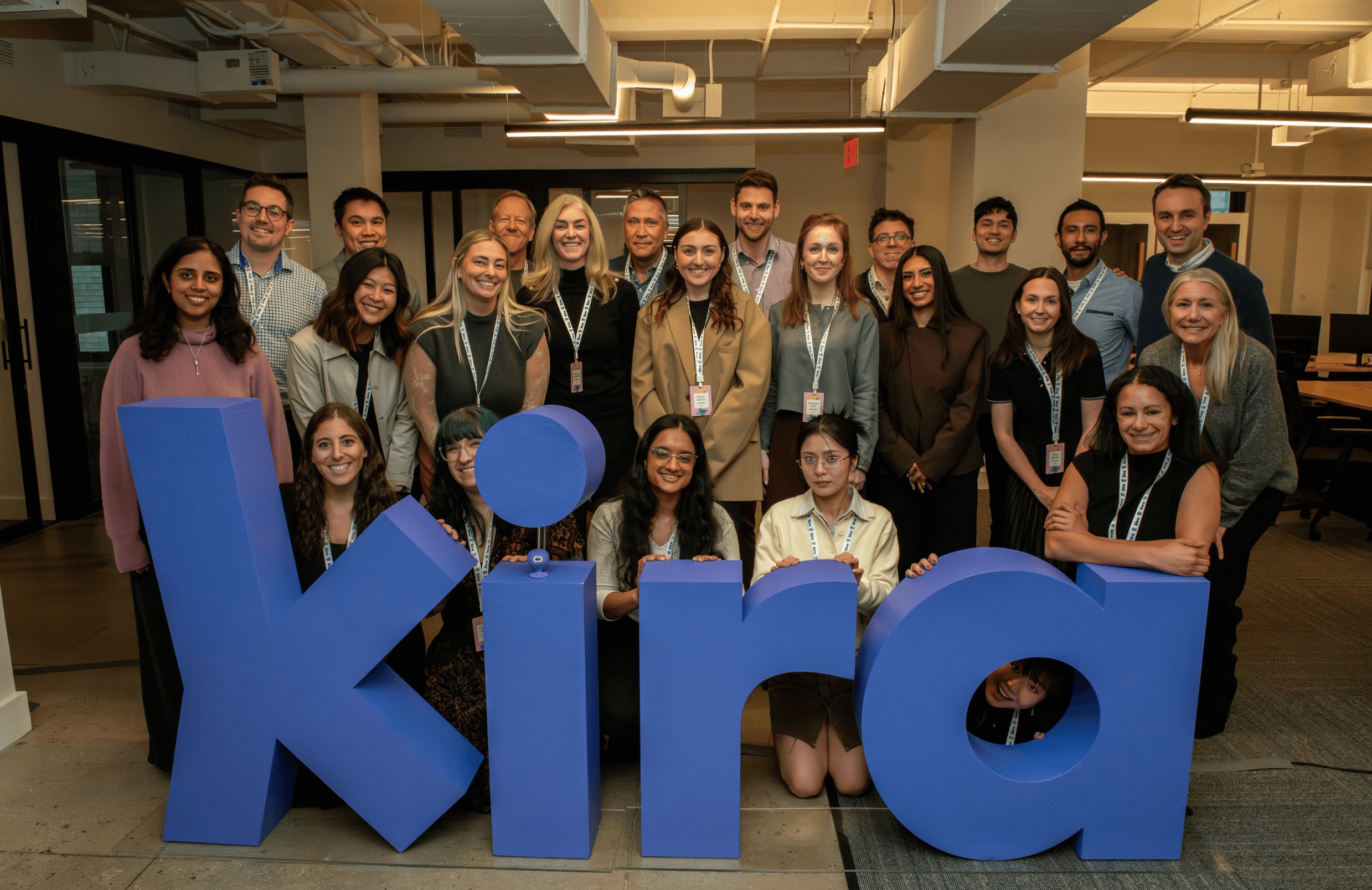
Kira was founded in 2022 by Andrea Pasinetti and Jagriti Agrawal. Pasinetti had spent a decade building Teach For China; Agrawal had worked on AI software for NASA's Perseverance rover. Andrew Ng, the Coursera co-founder, became chairman, and his AI Fund joined New Enterprise Associates in putting up a $6 million seed round. The first announced micro-course had a pleasingly audacious itinerary: take a ninth grader from coding basics to programming a neural network.
Then Tennessee made computer science a requirement for middle and high school. The state had urgency, standards and a shortage of specialists - the rare procurement triangle in which a young company can become useful before it becomes famous. Kira won a competitive process with the Tennessee STEM Innovation Network and the state education department. It supplied courses, software, training and teacher communities. In 2023, NEA and AI Fund added a $15 million Series A.
By Tennessee's FY2025 count, Kira was active in 73 percent of the state's districts. That is evidence of distribution, not a randomized verdict on learning. Still, statewide implementation is a more demanding test than a polished demo. Putnam County had roughly 1,200 students who needed to pass computer science. The first threats were prosaic - devices, logins and the uncomfortable fact that not every room had a certified computer-science teacher. Software tends to arrive dressed for pedagogy and trip over the password reset.
“The problem isn't that teachers lack tools or skill. It is that the tools don't form a system.”
The first thing to fail was the handoff
Kira's original answer was curriculum: video instruction, coding projects, an in-browser editor, assessments and support for teachers who were learning the material while teaching it. But the deeper nuisance soon appeared. Teachers planned in one place, assigned in another, graded somewhere else and discovered who needed help when the reporting system finally caught up. Each product could be competent while the whole remained ridiculous.
That changed the company's scope. Kira moved beyond computer science into multiple subjects and added an AI Tutor, more than 20 teacher tools, a lesson creator, rubric builder, Essay QuickGrader, plagiarism and AI-writing checks, progress reports and multilingual support. Clever, ClassLink and learning-management integrations handle rosters and grades. In 2026, Kira 2.0 bundled the argument into three verbs: create, evaluate, understand.
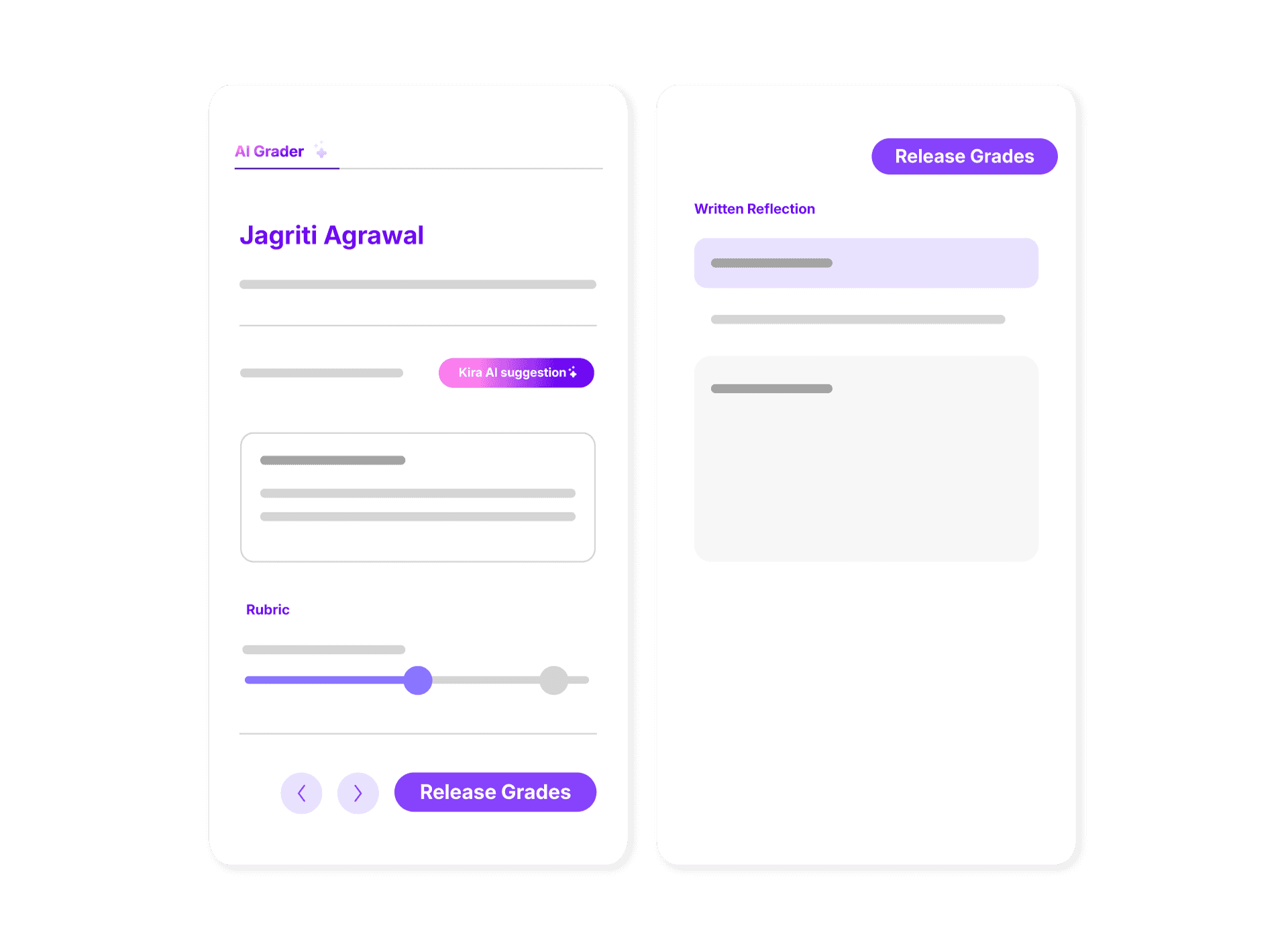
Course Studio makes a standards-aligned lesson that can be assigned without rebuilding it elsewhere. The Tutor is grounded in that lesson and can be tuned by student or class. When work comes back, AI proposes rubric-based grades and feedback; the teacher reviews and releases them. Student Atlas then maps mastery and suggests an intervention. The practical distinction from a generic chatbot is not prose quality. It is memory with a job to do.
A category with too many neighbours
Kira competes with different companies depending on which arm one is looking at. MagicSchool and SchoolAI offer AI help for educators. Khanmigo tutors. Canvas, Schoology and Google Classroom manage courses. Code.org and Codio cover coding curriculum and practice. Kira's claim is that buying these functions separately preserves the very fragmentation AI was supposed to remove.
This is an enterprise-software argument wearing classroom clothes. The buyer is usually a district or school; the users are administrators, teachers and students; the sale depends as much on rostering, privacy, training and reporting as on the intelligence of a tutor. Kira offers free individual access, while institutions receive negotiated quotes. Tennessee educators have contracted access to the state courses through the 2025-2026 school year. No public list tells a superintendent what the district edition costs.
What did it cost to reach this point? Publicly announced venture capital totals $21 million: $6 million at seed and $15 million in the Series A. That money bought product breadth, curriculum expertise, district integrations and implementation muscle. It also bought permission to pursue a much larger market than computer science. The company now talks about English, history, biology, financial literacy, special populations, intervention and school operations. One may admire the ambition while keeping a hand on one's wallet.
The copyable part is not the octopus
Kira's most portable lesson is sequencing. It entered through a mandated problem that schools could name: computer science had to be taught, yet qualified teachers and ready curriculum were scarce. It packaged content, delivery and professional development together. Only after earning distribution did it widen from a subject product into a workflow product. Founders tempted to begin with “the operating system for everything” might notice that Kira began with one course.
The method travels. Find a required job with an ugly handoff. Put the generator beside the place where its output is used. Keep the human at the consequential decision. Feed the result back into the next action. In education, that means the lesson, student response, grade and intervention share a spine: standards.
Where the argument gets harder
One system is attractive when a district wants fewer subscriptions, has reliable devices and logins, can train teachers, and is willing to make standards and student work legible to the platform. It is less persuasive where connectivity is poor, procurement requires best-of-breed tools, teachers cannot review AI output, local curriculum resists mapping, or leaders expect software to compensate for missing staff without support.
Togo reveals another condition: implementation must belong to the place. Kira's first African program trained 44 lead tutors, who were to mentor about 900 course tutors and ultimately support 15,000 university students. Live translation bridged English and French; local universities, a ministry and education partner EdoMatch supplied the institutional machinery. The software travelled because the training model travelled with it.
The verdict is still in class
Kira has achievements worth counting: statewide reach in Tennessee, a Common Sense Privacy Seal, a 2025 Tech & Learning award for its AI Tutor, and an international program. It also has a familiar edtech burden. Adoption figures are plentiful; independent evidence of learning gains across deployments is not yet plentiful. A case study in Putnam County says every student passed. Useful, yes. Conclusive, no.
The company's restraint should therefore be product-shaped. Show teachers the rubric. Let them revise the grade. Make AI assistance adjustable. Keep district data under district control. Report not merely that a student clicked, but whether the extra practice helped. Kira's best idea is that every output should create evidence for the next decision. Its future depends on proving that the evidence is good.
An octopus can open a jar because its arms coordinate. Eight arms flailing independently are merely a committee. Kira has correctly identified the comedy of the modern classroom stack. Now comes the less comic work: turning connection into learning.