BREAKING: Bench scientist turned dealmaker leads BlueSphere Bio's business strategy One PhD, three disciplines: biochemistry, cell biology, molecular biology TCXpress finds the T-cell receptors. Kim Jaffe finds the partners From zebrafish embryos at Princeton to leukemia therapies in Pittsburgh Two clinical-stage oncology companies, two roles bridging lab and boardroom BREAKING: Bench scientist turned dealmaker leads BlueSphere Bio's business strategy One PhD, three disciplines: biochemistry, cell biology, molecular biology TCXpress finds the T-cell receptors. Kim Jaffe finds the partners From zebrafish embryos at Princeton to leukemia therapies in Pittsburgh Two clinical-stage oncology companies, two roles bridging lab and boardroom
Yespress / Profile

Kim Jaffe

She ran the assays before she ran the deals. Now she turns T-cell science into the partnerships that move cancer therapies out of the lab.

Chief Business Officer · BlueSphere Bio · Pittsburgh, PA
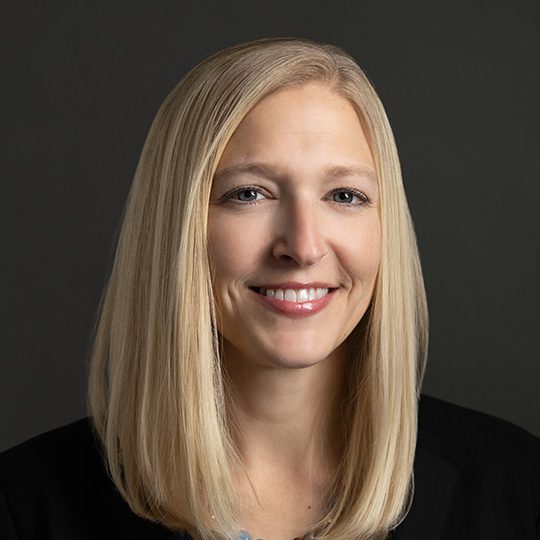
Kim Jaffe, Chief Business Officer at BlueSphere Bio
PhD in three fields. Reads the data, writes the term sheet.
The lede

Most chief business officers can't read the assay. Kim Jaffe ran it. She spent six years building cell lines at the bench before she ever built a business case, and that order of operations is the whole point.

3
Disciplines in one PhD
13+
Years in biopharma
2
Neoantigen therapies to clinic
2021
Joined BlueSphere Bio
Who she is now

The translator between the pipette
and the term sheet

At BlueSphere Bio, a clinical-stage biotech tucked into 350 Technology Drive in Pittsburgh, Kim Jaffe holds the title of Chief Business Officer. The job is deceptively broad. She owns strategy, partnerships, and business development for a company whose central bet is that the most precise cancer drug already exists inside each patient: their own T cells, tuned to the specific molecular fingerprint of their tumor.

BlueSphere's engine is a platform called TCXpress, a high-throughput, automated system for discovering T-cell receptors across a long list of clinical targets. The science is the easy part to admire. The hard part is everything Jaffe handles: deciding which targets to chase, which partners to bring in, and how a small team of roughly three dozen people turns a discovery platform into therapies that reach patients with high-risk leukemias.

What makes Jaffe unusual in the role is not the deal sheet. It is the lab coat she wore first. She does not need a translator when the science team presents data, because she has stood where they stand. She built the cell lines. She wrote the parts of regulatory filings that most executives only ever skim. When a partnership conversation turns technical, the conversation does not slow down.

That fluency is rare, and it is the reason her career reads less like a ladder and more like a hinge. For the first decade, she was a scientist. For the second, she has been the person who makes sure the science actually goes somewhere.

Consider the through-line. A biosimilar program at Oncobiologics. Two neoantigen therapies pushed to clinic at Advaxis. Licensing and operations at OncoSec. Now a TCR discovery platform at BlueSphere. Four companies, four flavors of oncology, and a single repeated motion: find the science that works, then clear the path between it and a patient. The diseases change. The chemistry changes. The job stays the same.

The strange specific

Before the deals, there were fish

Her postdoctoral research at Princeton studied left-right patterning in early development, using zebrafish embryos to ask a deceptively simple question: how does a body decide which side is left and which is right? It is the kind of problem that sounds whimsical until you realize it sits at the foundation of how any complex organism organizes itself.

That instinct, for the structural question underneath the messy biology, runs straight through her career. At Northwestern, her PhD formally spanned three fields at once: biochemistry, cell biology, and molecular biology. Not a specialization. A wide aperture. She started even earlier at the University of Illinois at Urbana-Champaign, with a degree in cell and structural biology and a minor in chemistry.

Then came the pivot most scientists talk about and few execute. In 2011 she joined Oncobiologics as a principal scientist, leading cell-line development and contributing to the regulatory groundwork for biosimilar programs. Six years at the bench, learning not just how to run the experiment but how the experiment fits into a development plan, a filing, a timeline that ends with a patient.

The detail that matters is what she did with those six years. Plenty of scientists log a decade in the lab and emerge with deeper expertise in a narrower slice. Jaffe did the opposite. She used the bench as a vantage point, watching how a molecule moves from a clean experimental result through manufacturing, regulatory review, and eventually a clinic. Cell-line development is unglamorous, foundational work - the kind of thing that decides whether a program is even manufacturable. Spend enough time there and you stop seeing experiments as ends in themselves. You start seeing them as steps in a much longer chain, most of which has nothing to do with the science and everything to do with decisions, money, and timing.

By the time she reached Advaxis in 2017, the hinge was turning. She advanced two neoantigen therapies into clinical stage and rose to head of research and development. The scientist was becoming the strategist, but she kept both hands on the work.

Then, at OncoSec, the title finally caught up with the trajectory. She arrived in 2019 as Senior Director of Business Development and Project Management, and within a year was promoted to Associate Vice President of Business Development and Operations. The portfolio widened: strategic licensing deals, the non-finance operational machinery that keeps a clinical-stage public company running. This was no longer a researcher dabbling in strategy. This was a business leader who happened to be able to grade her own due diligence.
01 / THE QUESTION

Which side is left?

Her Princeton postdoc used zebrafish embryos to study left-right patterning - how a developing body sorts out its own asymmetry.

02 / THE PIVOT

Six years at the bench

At Oncobiologics she led cell-line development and helped lay the regulatory foundation for biosimilar programs.

The arc

Bench to boardroom, in order

2008 - 2011
Princeton University - Postdoctoral fellow in cell and molecular biology, studying left-right patterning in zebrafish development.
2011 - 2017
Oncobiologics - Principal scientist leading cell-line development; contributed to regulatory filings for biosimilar programs.
2017 - 2019
Advaxis, Inc. - Senior Director of Research, later head of R&D; advanced two neoantigen therapies into clinical stage.
2019 - 2020
OncoSec Immunotherapies - Senior Director of Business Development and Project Management.
2020 - 2021
OncoSec - Associate Vice President of Business Development & Operations, managing strategic licensing and non-finance operations.
2021
BlueSphere Bio - Joined as Senior Vice President, Head of Business Development & Strategy.
Present
BlueSphere Bio - Chief Business Officer, leading strategy and partnerships for the TCXpress platform.
What she's building

A platform is not a product.
Someone has to close the gap.

BlueSphere Bio was founded to unlock personalized T-cell therapy for cancer. The premise is elegant: every patient's T cells already carry the specificity to recognize the molecular fingerprint of their own tumor. The TCXpress technology rapidly screens, identifies, and validates T-cell receptor therapies, with initial clinical programs aimed at high-risk leukemias.

But a discovery platform produces possibilities, not approvals. The distance between a validated receptor and a treatment a patient can receive is measured in partnerships, capital, regulatory strategy, and ruthless prioritization. That distance is Jaffe's territory. She decides where the company spends its limited shots, who it works with, and how the science finds a route to the clinic that does not run out of runway first.

It is the same problem she has solved twice already, at Advaxis and at OncoSec: take promising oncology science and give it an exit from the lab. The difference now is that she is doing it from the top business seat, for a company small enough that every decision shows.

Scale matters here. BlueSphere employs roughly three dozen people. There is no committee to hide behind, no layer of vice presidents to absorb a bad call. When Jaffe decides which TCR targets justify the company's limited capital, or which partner gets a seat at the table, those choices propagate fast. A team that size rewards exactly her profile: someone who can sit in a scientific review in the morning, understand precisely what the platform did and did not prove, and then walk into a partnership negotiation in the afternoon without losing the thread.

The TCXpress mission statement is blunt about the goal - to rapidly screen, identify, and validate TCR-based therapies for accelerated delivery to the clinic. The operative word is accelerated. Speed is the entire competitive argument, and speed is a business problem as much as a scientific one. It is decided by which experiments you fund, which deals you sign, and which dead ends you abandon early. That triage is the job, and it is the job Jaffe has been training for since she first learned that a clean result at the bench means nothing if it cannot find its way into a development plan.

THE BET

Your own T cells, weaponized

TCXpress is a high-throughput, automated platform for discovering TCR-based therapies across many clinical targets - with first programs focused on high-risk leukemias.

The credentials

Three campuses, one trajectory

Univ. of Illinois
B.S., Cell and Structural Biology - minor in Chemistry
1998 - 2002
Northwestern
PhD, Biochemistry, Cell Biology & Molecular Biology
2002 - 2007
Princeton
Postdoctoral training, Cell & Molecular Biology
2008 - 2011
Off the record

Three things worth knowing

FACT 01

Her PhD officially covers three fields at once - biochemistry, cell biology, and molecular biology. No specialization, all aperture.

FACT 02

Illinois, Northwestern, Princeton - she trained at three powerhouses before trading the bench for the boardroom.

FACT 03

Her postdoc studied how a zebrafish embryo decides which side is left and which is right.

The mission is unglamorous and absolute: get personalized TCR therapies from a platform to a patient before the clock runs out.
- Kim Jaffe's job, in one sentence

Spread the word

Share the scientist who reads the data and writes the term sheet.

Link copied to clipboard