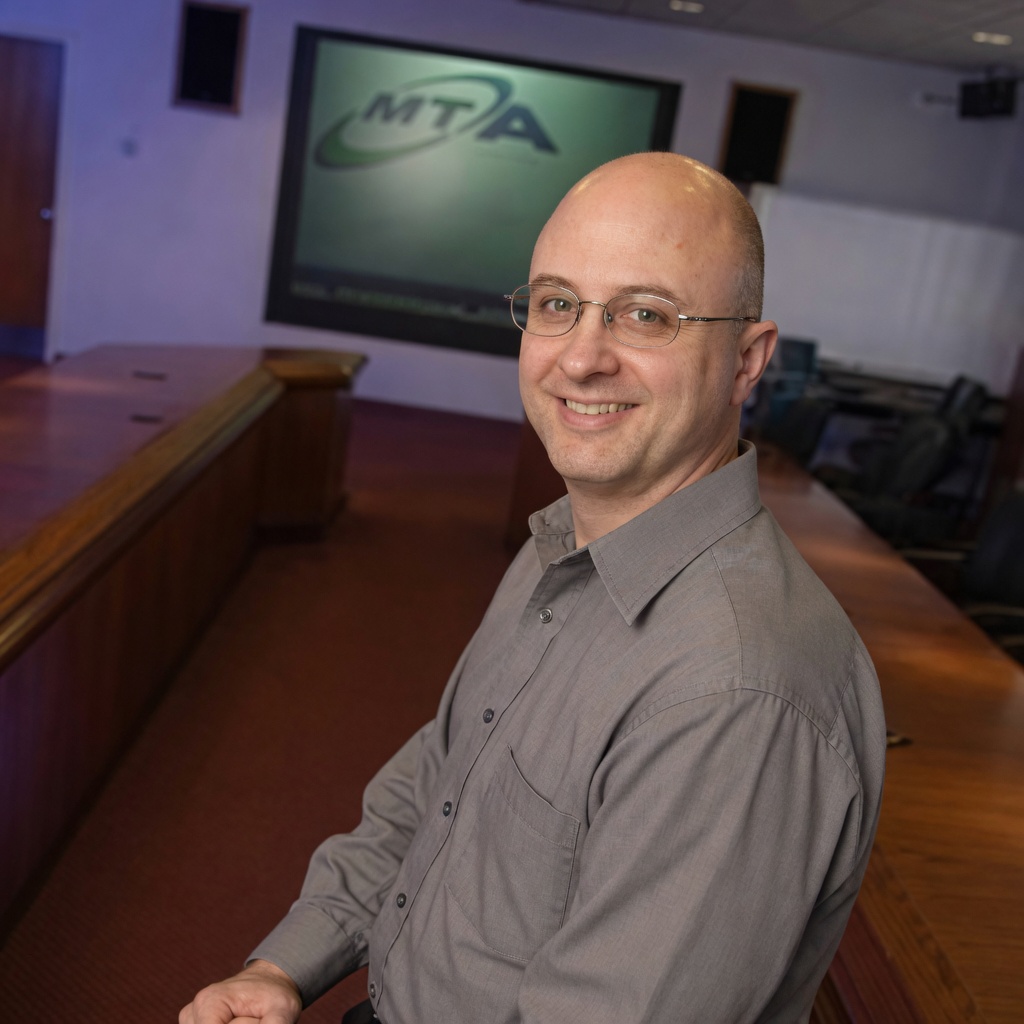
The CEO of Allied Telesis has spent a quarter century inside one building of the internet - the cabinet you never open, full of switches and routers humming on. He shows up. He fixes things. He has been doing it since 2008.

Most CEOs of 1,900-person tech companies treat the role like a stop on a tour. Keith Southard has treated it like a marriage. Allied Telesis Capital Corporation appointed him CEO in September 2008. He is still there. The company makes the unromantic, indispensable parts of the network - managed switches, fiber gear, wireless controllers, the AMF Plus automation framework that lets one engineer run a topology that used to need five. None of it gets a Netflix documentary. All of it gets used.
If you have ever made a phone call from a base house at Yokota, browsed a city's surveillance dashboard, or watched a smart-building HVAC sensor not fail at 3 AM, there is a reasonable chance that some of Allied Telesis' iron was in the path. Southard runs the company that ships it.
December 2008. Yokota Air Base, Japan. The VOIP system used by US military families to call home had collapsed three months prior. Calls from North America dropped. Premium cable feeds arrived at the wrong hour. Subscribers were furious.
Southard had been CEO for three months. He got on a plane.
"We've gone from fighting core-service delivery issues to solving minor fixes and customer-related problems," he told Stars and Stripes after the trip, in a sentence that reads less like a quote and more like an engineering changelog. He explained why syncing program guides across US time zones was harder than people thought. He went into the weeds about why HBO and Showtime wouldn't return calls when your subscriber count was three digits short of their minimum.
It is the kind of detail a media-trained CEO usually delegates. Southard delivered it himself.
A working definition of the entire networking industry, delivered without ceremony by a CEO explaining electronic program guides at a US air base in 2008.
Southard's public quotes read like field reports. No vision-speak. No "we are reimagining the network." Just timing problems, subscriber math, and what shipped this quarter.
There is a particular kind of executive Silicon Valley does not produce often anymore: the one who joins a company, sticks around, learns every closet, and ends up running the place. Southard's resume is short, by design.
Hardware vendors have been told they are dead since the cloud arrived. Allied Telesis kept shipping. Under Southard, the catalog reads like a working definition of modern networking: managed and unmanaged switches, PoE everything, industrial-grade gear that lives in transit cabinets, advanced VPN routers, wireless controllers with autonomous wave control, network adapters, transceivers and the fiber-monitoring gear that watches the cables for you.
The interesting bit is the software wrapped around it. AMF Plus - Allied's autonomous management framework - is the kind of product engineers write love letters to in private Slack channels. It collapses the network into one logical thing. It does the boring work. It is the answer to "how do we run more topology with fewer humans."
Illustrative mix based on Allied Telesis' published vertical focus. Not a financial chart.
Southard's public quotes lean technical: routing problems, time synchronization, subscriber thresholds. He sounds like someone who has used the products.
Two decades in one company is not a strategy. It's a temperament. The networking market rewards it. Customers buy switches expecting them to outlast the budget cycle that approved them.
No X presence. No Substack. A LinkedIn URL ending in '643253' that he has not bothered to clean up. The opposite of executive theater.
Network buyers are not impressed by demos. They are impressed by warranty coverage, support response times, and whether the rep returns a call at 11 PM. Allied Telesis' published customer footprint - public sector, transportation and logistics, healthcare networks, smart cities, manufacturers, utilities - is the audience that lives in support tickets, not keynotes.
Allied Telesis publishes installation guides, reference documents, training and certification, and a channel partner program. None of it is glamorous. All of it is what wins this market. Southard's tenure tracks with that bet.
Every networking company in 2026 has the same slide deck. AI-assisted operations. Autonomous network management. Energy-efficient hardware. Open ecosystem integration. Allied Telesis ships all of it, in measured updates, on a release calendar that engineers can actually plan around.
Southard's wager is unsentimental. The world keeps adding sensors, cameras, EV chargers, kiosks, drones, factory robots, traffic signals, and somebody has to terminate every cable. The category that wins is the one that makes that termination boring. He has spent eighteen years making it boring.
Allied Telesyn became Allied Telesis became Allied Telesis Capital Corporation. Southard's LinkedIn lists the same address.
He has not bothered to vanity-rename it. The man has bigger problems.
The year before everyone discovered that web browsers had market power.
Four years off-campus running an IP video system. Came back to Allied. Has not left since.
One mile from Cisco's Tasman campus, in the same zip code as half of networking.
The man explains program-guide synchronization in interviews. Mascots stay home; operators go in.