Theoretical cosmologist. Science's favorite explainer of the apocalypse. Holder of the Hawking Chair. Pilot. Newsletter writer. Friend of Hozier. Destroyer of assumptions about who does physics.
Dr. Katherine (Katie) Mack is not just a cosmologist - she is the cosmologist who made the phrase "the end of everything" feel like an invitation to look up and pay attention. As the inaugural holder of the Hawking Chair in Cosmology and Science Communication at the Perimeter Institute for Theoretical Physics in Waterloo, Ontario, she holds one of the most distinctive positions in modern science: half rigorous researcher, half gifted explainer, entirely herself.
Her research sits at the sharp end of what physics can say about existence: dark matter, the mysterious substance that outweighs all the stars put together but refuses to be seen; vacuum decay, the scenario where the universe might simply stop being stable with zero warning; primordial black holes and the Epoch of Reionization, when the first light flooded a dark cosmos. She studies, in short, the architecture of everything, including how it eventually stops.
Her 2020 book, The End of Everything (Astrophysically Speaking), laid out five ways the cosmos could cease - Big Crunch, Heat Death, Big Rip, Vacuum Decay, Bounce - with such wit and clarity that it landed on the New York Times Notable Books list and year-end recommendations from The Washington Post, The Economist, New Scientist, and The Guardian. Physics had rarely been so readable. The apocalypse had rarely been so charming.
Online, she is @AstroKatie, a science communicator who built an audience of over 400,000 Twitter/X followers not through algorithms or brand strategy, but through being genuinely funny, genuinely brilliant, and completely unwilling to pretend that physics is boring. She has written for Scientific American, Slate, Time, Cosmos, Sky & Telescope, and The Guardian. She co-hosted Crash Course Pods: The Universe with author John Green in 2024. She publishes The Last Star newsletter.
She also, as of 2020, flies planes. Instrument-rated in both the US and Canada, with tailwheel and complex endorsements, she discovered aviation by noticing a flight school sign during COVID lockdowns and decided to do something about it. She is currently working toward aerobatic competition qualifications. She is on the board of the Canadian Aviation Museum. She is a member of The Ninety-Nines, the international women pilots organization. The woman who studies the end of the universe is also, quietly, working on how to turn one upside down.
Her grandfather worked on the Apollo 11 mission at Caltech. Her mother watched Star Trek and Star Wars with her. She became a vegetarian at age 7. She went to Caltech for her undergraduate degree and Princeton for her PhD. Hozier wrote a song partly about her Twitter explanations of physics. She was a jury member at Sundance in 2019. These facts do not add up to a single genre. That is the point.
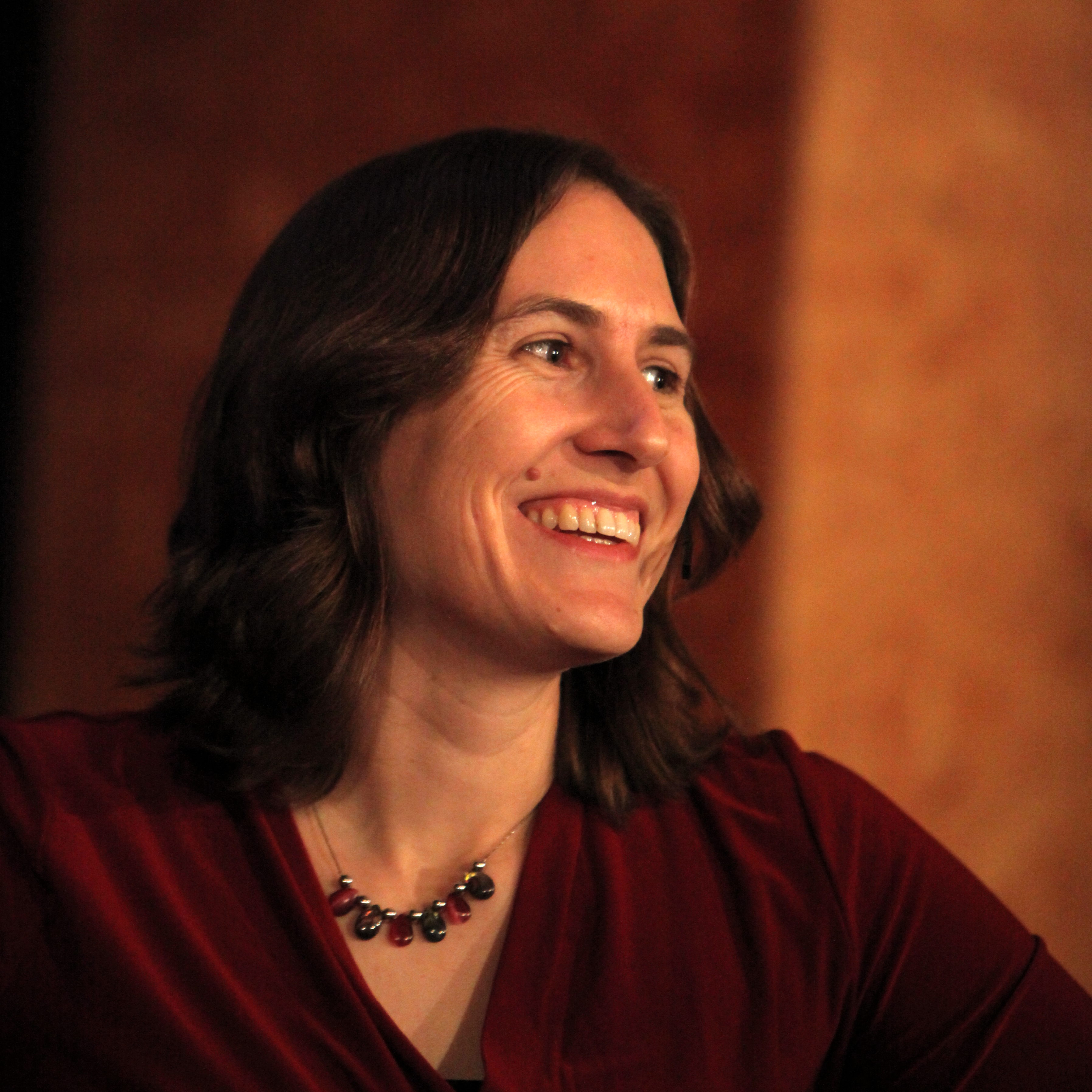
The universe doesn't care about us, but that's kind of freeing, isn't it?
- Katie Mack, @AstroKatie
Published in August 2020, The End of Everything (Astrophysically Speaking) is Katie Mack's answer to a question nobody thought to ask so directly: how exactly does a universe stop?
She covers five scenarios - Big Crunch (everything collapses back), Heat Death (energy spreads until nothing moves), Big Rip (expansion tears apart atoms themselves), Vacuum Decay (the universe's physics reboot to a lower energy state, obliterating everything instantly), and Big Bounce (death triggers rebirth) - with the rigor of a Princeton-trained physicist and the voice of someone who genuinely finds all of this thrilling rather than terrifying.
The book became a cultural moment, reviewed widely and recommended by readers who had never expected to enjoy a book about the thermodynamic death of all things. It proved something Katie Mack had already demonstrated on Twitter: physics, done right, is not intimidating. It is magnificent.
In 2019, Irish singer-songwriter Hozier released Wasteland, Baby! - a Grammy Award-winning album with a track called "No Plan." One of its lines? "As Mack explained, there will be darkness again." The Mack in question: Katie Mack, who had been explaining cosmological doom on Twitter in the precise, charming way only she could.
Hozier and Mack had become friends through social media - two people thinking seriously about mortality, one through music and one through the equations of late-universe thermodynamics. She knew the song was coming about a year before its release.
In 2023, she hosted Hozier for a visit to Perimeter Institute, where they discussed black holes, dark matter, quantum gravity, and the Einstein Field Equations. The internet, predictably, loved it.
Her research focuses on dark matter, the physics of the early universe, vacuum decay, and primordial black holes. Based at Perimeter Institute, one of the world's foremost theoretical physics centers.
Over 400,000 followers on Twitter/X. Regular contributor to Scientific American, Slate, Time, Cosmos, and The Guardian. TEDx talks. Podcast appearances. The Hawking Chair specifically includes science communication as part of its mandate.
Her 2020 book with Simon & Schuster earned six major year-end best-of listings and a New York Times Notable Book designation. A rare physics book that readers called "unputdownable."
Katie Mack's newsletter exploring cosmology, the fate of the universe, and the science of existence. For readers who want their physics with a side of genuine curiosity and sharp thinking.
In 2024, she co-hosted Crash Course Pods: The Universe with bestselling author John Green - bringing the cosmos to a new generation of curious minds.
Instrument-rated in both the US and Canada. Owns a 20% share in a Mooney. Pursuing aerobatic competition qualifications in a Super Decathlon. Board member of the Canadian Aviation Museum. Member of The Ninety-Nines women pilots organization.
In August 2020, during COVID lockdowns, Katie Mack noticed a flight school sign and decided to do something most people would not: she enrolled. While the world was making sourdough, she was learning to fly.
She earned her private pilot certificate in Northampton, Massachusetts, then completed instrument training in Raleigh, North Carolina. After relocating to Ontario for the Hawking Chair, she converted her FAA certificate to Transport Canada credentials, adding Canadian ratings that most career pilots never bother to collect.
She now co-owns a Mooney aircraft for cross-country and IFR flying, trains in a Super Decathlon for aerobatics, and has logged hours in a de Havilland DHC-1 Chipmunk at the Canadian Aviation Museum - where she serves on the board. She is working toward aerobatic competition qualifications and eventually wants full Chipmunk checkout certification.
The person who spends her days calculating how the universe ends spends her weekends learning how to flip one upside down at altitude. If there is a theme here, it is that Katie Mack is constitutionally incapable of approaching anything halfway.
I study the end of everything. It's a fun thing to think about astrophysically speaking.
- Katie Mack
The universe doesn't care about us, but that's kind of freeing, isn't it?
- Katie Mack, @AstroKatie
I study the end of everything. It's a fun thing to think about astrophysically speaking.
- Katie Mack, Irish Times interview
Science is how we figure out what is real.
- Katie Mack
We are starstuff contemplating the stars - and also their eventual demise.
- Katie Mack
Her grandfather worked on the Apollo 11 mission at Caltech. Physics runs in the family - just across different centuries of achievement.
She became a vegetarian at age 7. She is now vegan. This predates her knowledge of vacuum decay, which suggests the universe's impermanence was not the motivation.
Twitter/X followers as @AstroKatie - built through genuine expertise and humor, not virality strategies.
Hozier's "No Plan" on Grammy-winning Wasteland, Baby! (2019) contains the lyric: "As Mack explained, there will be darkness again." She knew the song was coming for about a year before release.
She was a Sundance Film Festival jury member in 2019 - because astrophysics and independent cinema are both about how humans make meaning.
She discovered aviation in August 2020 by noticing a flight school sign during COVID lockdowns. Most people noticed the sign. She enrolled.
The Hawking Chair at Perimeter Institute was named in honor of Stephen Hawking. She is its first-ever holder - appointed in 2022.
Vacuum decay - one of her research specialties - is the scenario where the universe's quantum field could spontaneously shift to a lower energy state, erasing all physics as we know it at the speed of light, with no warning. Sleep well.