She trained for the ballet and started college in engineering. Now she runs the software that decides how hotels buy, bill, and pay.
CEO & Co-Founder, Folio · Durham, North Carolina
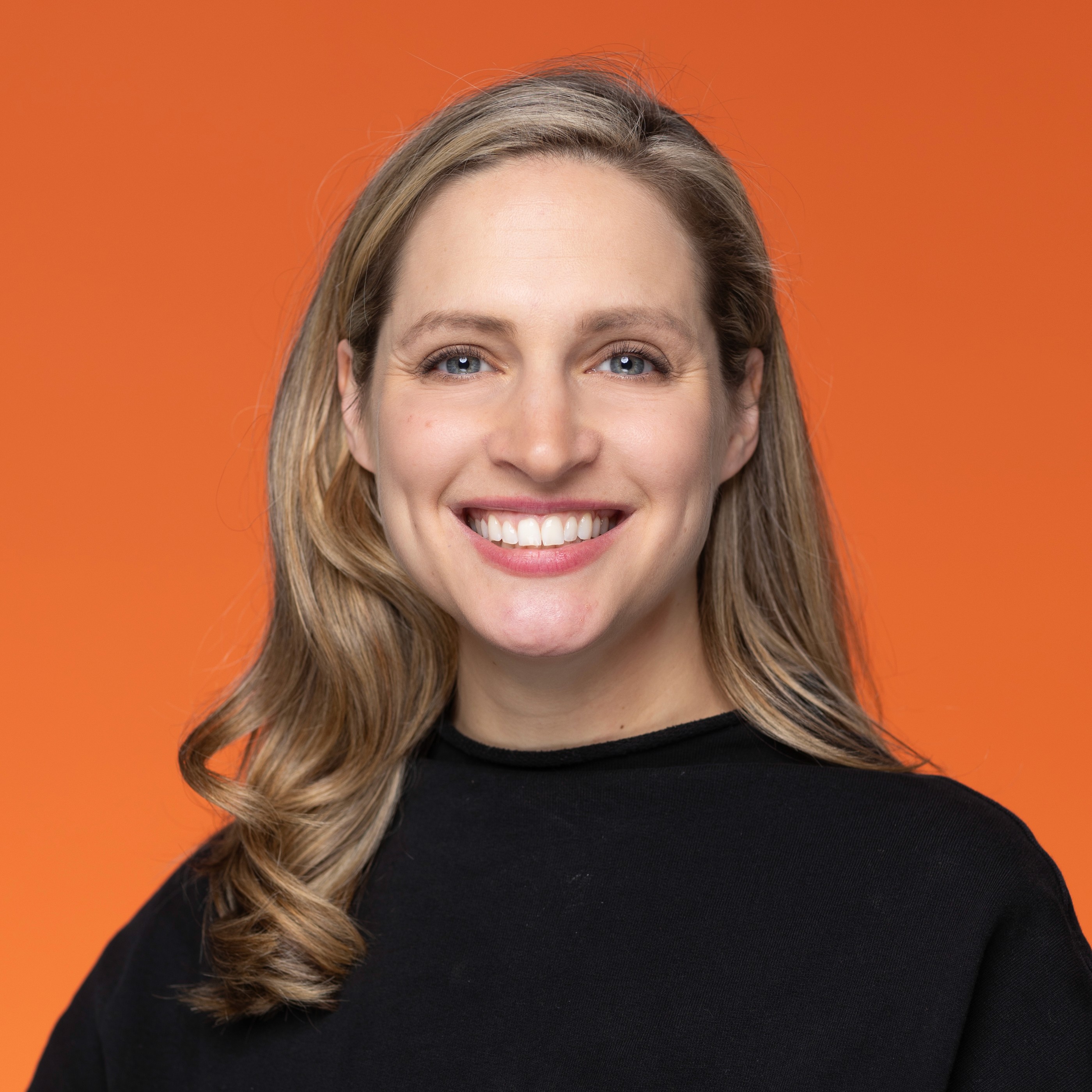
Kate Adamson - "Usually working, and always hungry."
Most people never think about how a 300-room hotel orders its towels, soap, steak, and printer paper. Kate Adamson thinks about little else.
Adamson is the CEO and co-founder of Folio, a company that has quietly inserted itself into the back office of the hotel business. Folio is a procure-to-pay platform: it turns the tangle of supplier catalogs, paper invoices, contract pricing, and payments into one system that hotel managers can actually use from their phones. The pitch is unglamorous and the stakes are large. Hotels run on thin margins and thick stacks of paperwork, and the gap between the two is where Folio lives.
The product comes in parts. Folio Buy is a managed marketplace that stitches a property's suppliers into one mobile-friendly store and honors the prices already negotiated in existing contracts. Folio Bills uses AI to read invoices and reconcile spend, killing the data entry that eats a controller's week. Folio Pay handles the money moving out the door. In 2025 the company added Folio Inventory, a fast stock-counting tool, because once you own purchasing and bills, counting what's on the shelf is the obvious next move.
Customers were there before the venture headlines. HHM Hotels, which manages more than 39,000 rooms and around $2 billion in revenue across the US and Canada, runs purchasing through Folio. By mid-2025 the platform powered buying across hundreds of properties. The industry noticed early: Folio won the E20X Judge's Choice Award for top new startup at HITEC 2024, the hospitality technology conference, before it had even announced a Series A.
That round arrived in July 2025: $14 million, led by Thrive Capital and Construct Capital, with Redseed VC and SciFi VC joining. The money is aimed at a single idea Adamson keeps returning to - that the people who run hotels deserve software as good as the experiences they're expected to deliver.
"At Folio, we're financial technologists who love hotels," she has said. "Our mission is to help hospitality thrive financially." It is a tidy sentence for a messy problem, and she earned the right to say it the long way around.
The File
Co-Founder
Folio's other founder is Al Hertz, Plaid's founding designer. His line on the business: "hospitality is really the same as great design" - both are about making something feel personal, not transactional.
When Adamson and Al Hertz left Plaid and started meeting for breakfast, they did something unusual for founders: they refused to pick a product first.
The first question wasn't what to build. It was who to build it for. They wanted to serve local economies and small businesses, and they kept landing on the same conclusion - the people running hospitality were doing demanding work with software that hadn't kept up. Hotels juggle dozens of suppliers, hand-keyed invoices, contract prices buried in PDFs, and payment terms that change by vendor. The guest-facing side of a hotel can be beautifully designed. The money-facing side is usually a filing cabinet.
Hertz, who designed Plaid's earliest products, frames the whole company as a design problem. "Hospitality is really the same as great design," he has said - both are about making an experience feel personal rather than transactional. Folio's bet is that the back office deserves the same care as the lobby. If a general manager can reorder supplies as easily as a guest books a room, the math of running the property gets better without anyone working harder.
That framing also explains the company's shape. Folio is based in Durham, North Carolina, and runs remote-first, with a team of around 33 people drawn from fintech, e-commerce, hospitality, and AI. It built distribution before it built buzz, winning over operators like HHM Hotels and partnering with the DayBlink group purchasing organization to surface better rates for independent luxury hotels. The HITEC award and the venture round followed the customers, not the other way around.
It is a patient way to build, and it fits the founder. Adamson has spent her career stepping into systems other people found too dull or too tangled to touch - regulatory affairs at a bank, credit access at Plaid, and now the accounts-payable desk of the hotel down the street. The throughline isn't an industry. It's a willingness to make the unglamorous thing work.
The Backers
Also
Adamson is a co-founder and board member of MIRA, and earlier was a resident at Thrive Capital - the firm that would later lead Folio's Series A.
"There is no limit to the amount of good you can do if you don't care who gets the credit." Kate Adamson
She grew up in Washington, D.C., raised by two lawyers, and spent more hours at the Washington Ballet than at high school. She was a pre-professional dancer. Discipline, repetition, and the unforgiving precision of getting a movement exactly right are not bad training for a founder who would one day reconcile invoices for a living.
At Princeton she started in engineering, then switched to economics and minored in dance - keeping a foot in both the analytical and the artistic. After college came JPMorgan Chase, where she worked as a senior associate in the Office of the Chief Operating Officer and the Office of Regulatory Affairs. She picked up a CFA charter and Series 7 and 63 licenses along the way, the credentials of someone who takes the plumbing of finance seriously.
The pivotal chapter was Plaid. She joined around 2017, when the company had roughly 13 people, and the way she got in says a lot about her. She wasn't hired on the first try. So she completed a case study while traveling in Scotland and came back with plaid souvenirs to make the point. She got the offer.
Inside Plaid she scaled the sales team from 2 to more than 50, then crossed over into product - leading credit and mortgage products and the company's Financial Inclusion Team, and helping grow the PM org from 5 to 15. Then the pandemic hit, and the work got real fast.
If you see something that's broken, step up and fix it.
Recognition
HousingWire named Adamson a Woman of Influence in 2019 for her work in financial services and access to credit.
In the spring of 2020, the Paycheck Protection Program landed on small businesses and the lenders scrambling to serve them. Adamson's team at Plaid built a product to let borrowers share payroll data with lenders - and they did it in about eight days.
From conception to market adoption in a little over a week, working weekends on almost no sleep. The tool helped thousands of small businesses reach funds when the timing mattered most. Adamson described the sprint as "bananas," but it's the kind of bananas she clearly likes: a broken thing, a deadline that won't move, and a small team that decides to fix it anyway.
It's a useful lens on Folio. The hotel back office isn't a crisis the way a pandemic is, but it has the same shape - a problem everyone tolerates because fixing it sounds boring, until someone decides boring is exactly where the value hides.
Folio bundles the hotel money cycle into four products. Each handles a stage that used to mean a different vendor, a different login, and a stack of paper.
"The first decision we made was not, what are we working on? It was, who are we working on it with." Al Hertz, Folio Co-Founder, on starting the company with Kate
Pre-professional dancer in D.C., raised by two lawyers.
Started in engineering, graduated in economics with a minor in dance.
Senior associate in the COO and Regulatory Affairs offices. Earned the CFA and Series 7 & 63.
Joined at ~13 employees. Scaled sales 2→50+, then led credit and mortgage products and financial inclusion.
Shipped a payroll-sharing product for PPP loans in roughly eight days.
Co-founded the company with Al Hertz and became CEO in May.
Won the E20X Judge's Choice Award for top new startup.
Raised $14M led by Thrive Capital and Construct Capital. Launched Folio Inventory.
At Folio, we're financial technologists who love hotels. Our mission is to help hospitality thrive financially.
By bringing properties, suppliers, and financial systems together in one place, hotel managers can more easily optimize spend.
There is no limit to the amount of good you can do if you don't care who gets the credit.
If you see something that's broken, step up and fix it.
She trained as a pre-professional ballet dancer with the Washington Ballet and minored in dance at Princeton.
Raised in Washington, D.C., by two lawyers - which may explain the comfort with regulation and fine print.
She started college in engineering before switching to economics. The technical instinct never left.
Co-founder Al Hertz was Plaid's founding designer and frames hotels as a design problem first.
Rejected by Plaid at first, she did a case study from Scotland and showed up with plaid souvenirs. Then she got hired.
Her LinkedIn bio reads, in full: "Usually working, and always hungry."