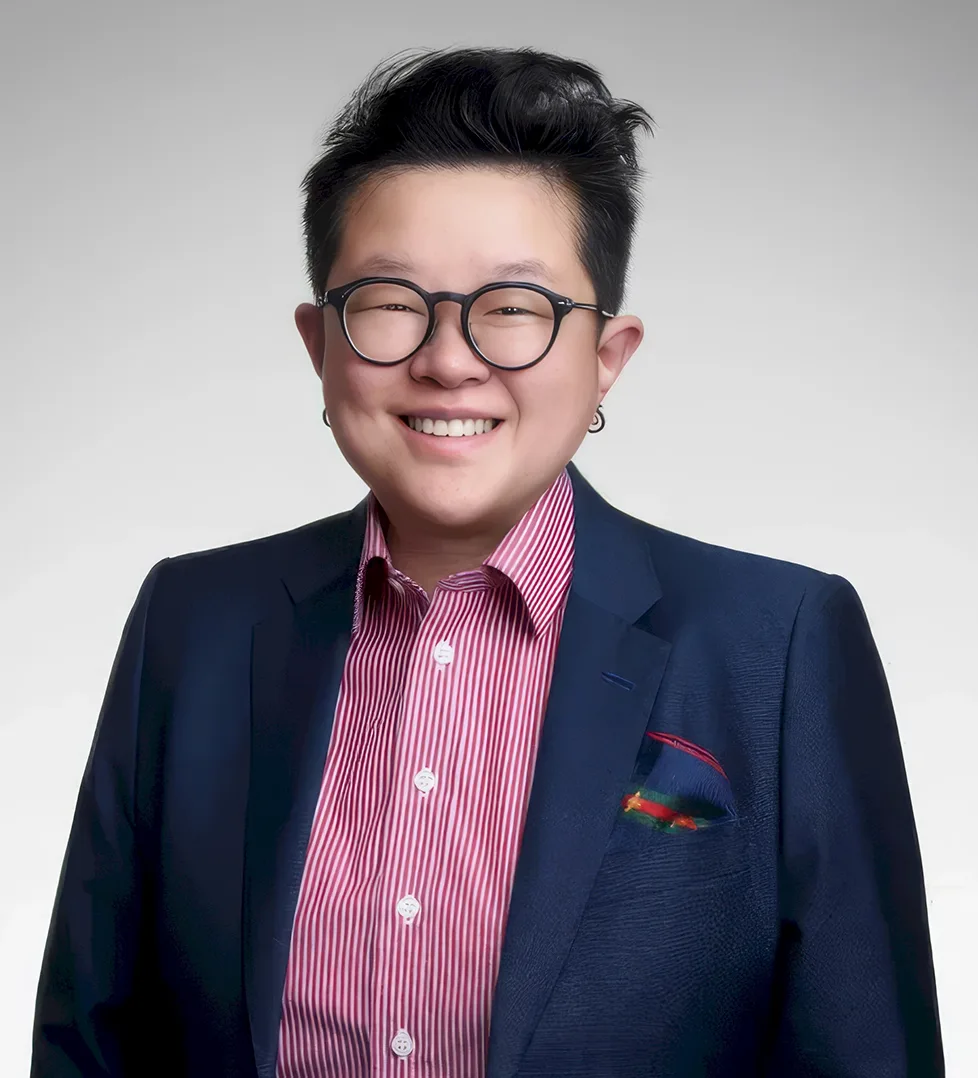
Karen Chu runs a company she is careful not to oversell. HiRO - Harvest Integrated Research Organization - is a contract research organization, the kind of firm that pharmaceutical and biotech companies hire to actually run their clinical trials. It operates across Mainland China, Taiwan, the Philippines, Australia, New Zealand, the United States, and South Korea. It oversees somewhere between 600 and 800 trials in a given year, coordinated by clinical teams spread across more than 55 countries. And yet the word Chu reaches for to describe it is "boutique."
That is not false modesty. It is strategy. In an industry defined by giants - IQVIA, Parexel, ICON, names that manage tens of thousands of employees and rank among the largest employers in the sector - Chu has staked HiRO's identity on being the opposite. "Our aim is not to become as large as the IQVIAs or Parexels of this world," she has said, "but to remain a mid-sized CRO that is as global as possible." The tension in that sentence - mid-sized but global - is the whole business.
The premise behind HiRO is a specific bottleneck Chu watched form in real time. Asian biotech companies, flush with capital and ambition, increasingly wanted to run trials in Western markets to reach regulators like the FDA and EMA. Western firms, meanwhile, were discovering that Asia offered large patient populations, competitive costs, and a growing share of the world's drug data. Neither side had an obvious partner fluent in both worlds. Chu built one.
The Long Apprenticeship
Chu was born in Taiwan and raised in New Jersey, and her career has stayed anchored to that dual geography ever since. She trained as a pharmacist, earning a Doctor of Pharmacy degree from Rutgers University in 2002. But rather than head to a hospital or a retail counter, she went back toward Asia and into the clinical research industry just as the biotech boom in the Asia-Pacific region was gathering force.
Her first job was not a leadership role. She joined APEX International, a startup CRO in Taipei, as a medical writer - the person who drafts the dense, precise documents that clinical trials generate at every stage. From there she moved into operations, learning how trials are actually assembled and run rather than just described on paper. It is an unglamorous foundation, and Chu tends to mention it plainly, without dressing it up.
When Parexel, one of the industry's largest players, acquired APEX, Chu went with it. She spent roughly twelve years there, moving through a series of Asia-Pacific roles before rising to lead global clinical operations - a remit that, at its peak, meant responsibility for something like 6,000 people working across 54 countries. She oversaw study start-up, remote and on-site monitoring, and the clinical conduct of early-phase through Phase II and III trials. By any conventional measure, she had reached the top of the profession.
A Detour Through Capital
Then she did something that, in retrospect, looks like preparation. Around 2019, Chu stepped away from operations entirely and joined a Shanghai-based venture capital fund investing in biotech and therapeutics. For roughly a year she sat on the other side of the table - evaluating companies, conducting due diligence on biotech and medical device firms, and watching how investors decide where money flows.
That vantage point matters to how HiRO works today. Most CROs sell a service: they run your trial, you pay them. Chu's model is more consultative. HiRO positions itself to address a biotech's needs holistically - connecting clients to financing, helping them select vendors, advising on clinical and regulatory strategy. She learned to speak the investor's language during that year, and it shows in the way HiRO courts early-stage companies that need more than a vendor.
Starting Small On Purpose
Chu founded HiRO in 2020 - a moment when much of the world's clinical trial machinery was seizing up under COVID-19. It was, on paper, a terrible time to start a company that depends on patients visiting sites and monitors traveling to check on them. But Chu has said the pandemic revealed something useful. When the usual mechanics of a trial became impossible, what held value was trust and access to the right expert connections. Relationships, not logistics, became the scarce resource. HiRO was built around exactly that.
The company grew, in part, by acquisition. HiRO acquired Courante Oncology, a US-based full-service clinical research provider specializing in oncology product development, strengthening its footing in the American market and adding cancer-trial depth. It also brought in PharmaSols, extending reach into Australia and New Zealand - a region prized for its speed and quality in early-phase work. Each deal was a way to add global surface area without ballooning into a mega-CRO, which is the balance Chu keeps returning to.
Trust and expert connections became the things that actually traveled.
The Shift She Is Betting On
Chu's larger thesis is that the center of gravity in clinical research is moving. She has pointed out that a substantial share - on the order of 30 to 40 percent - of new drug application packages now draw on Asia-Pacific data, a figure that would have been unthinkable a couple of decades ago. Post-pandemic pressures on hospital capacity in the United States have accelerated the migration of trials toward Asia. For a firm built specifically to move work across that boundary, the timing is favorable.
But she is candid about the risk that comes with it. As more trials run in the Asia-Pacific region, the pressure to maintain rigorous data-quality standards grows rather than shrinks. Regulators in the West will not accept data simply because it was cheaper or faster to gather. Chu talks about quality less as a marketing line than as the thing that keeps the whole cross-border model credible. If the data does not hold up, the bridge collapses.
Born in Taiwan, raised in New Jersey - a dual geography that mirrors HiRO's cross-border mission.
Started as a medical writer at a Taipei startup CRO, not a manager.
Spent about a year on the investor side at a Shanghai venture fund before founding HiRO.
Runs hundreds of trials a year and still insists on calling HiRO "boutique."
Leadership By Assembly
One tell of how Chu thinks about scale is the team she has built around her. HiRO's leadership bench reads like a roster pulled from the industry's larger institutions: a global chief medical officer with an MD and PhD and two decades in drug development; a chief operating officer with deep oncology and rare-disease experience; a chief medical safety officer with 25 years in pharmacovigilance; commercial and data chiefs with long CRO and pharma histories. Chu's contribution is less about being the single expert in the room and more about assembling people who each are - then holding them accountable.
Those who describe her tend to land on the same adjectives: direct, pragmatic, entrepreneurial. She values real-time business impact over abstraction, and she talks about mentorship and talent development as core to the work rather than as an HR footnote. It fits the profile of someone who started at the bottom of the org chart and climbed every rung - she knows what the people running the trials actually do, because she used to be one of them.
What Comes Next
In early 2026, Chu was in San Francisco during JPM week - the industry's marquee gathering - moderating a panel on cell and gene therapy investment and leading a workshop with a blunt title: how to navigate Asian venture-capital investment mandates. She brought Asia-based investors into a room full of biotechs looking for capital and translated between them. It is, in miniature, exactly what HiRO does at scale.
The emerging idea she has been promoting is the "NewCo" model - blending equity participation with experienced management to move a biotech's development forward faster and at lower cost. It pushes HiRO further from being a pure service vendor and closer to being a partner with skin in the game. Whether that model holds as the company grows is an open question. But it is consistent with everything else about how Chu operates: use the leverage of connections and expertise rather than the brute force of headcount.
The safe path for someone with her resume would have been to keep climbing inside a large, established firm. Instead she is testing a specific bet - that a company can be genuinely global while deliberately staying mid-sized, and that trust and integration can substitute for sheer scale. HiRO is the argument. So far, the trial results are encouraging.
What is striking about Chu is how little of this is framed as disruption. She is not promising to reinvent clinical research or to render the giants obsolete. Her pitch is quieter and, in its own way, harder to execute: match the reach of a large CRO with the responsiveness of a small one, and refuse the trade-off that usually forces founders to pick a lane. She has spent her whole career learning both ends of that spectrum, from drafting trial documents by hand to steering thousands of people across continents. HiRO is where those two educations meet - and where Chu is wagering that the middle, done well, is a place worth building.