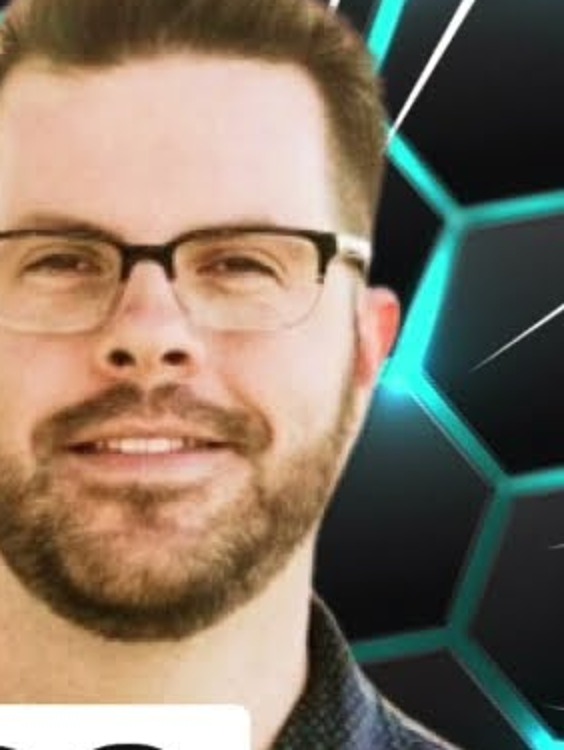
The operator running the register for the creator economy
Justin Smith runs a company most shoppers never notice and most creators can't live without. As chief executive of SamCart, he leads the checkout and online-selling platform that sits at the exact moment a browser becomes a buyer. It is not the flashiest square inch of the internet. It is one of the most consequential. More than 75,000 creators and entrepreneurs build on SamCart, and together they have sold north of $3.5 billion in products and services through it.
Smith's argument, repeated across podcasts and interviews, is that this last click has been badly undervalued. For years, digital marketing obsessed over reach: impressions, followers, awareness. He thinks that era is ending. "It's no longer just about raising awareness," he says. "It's about driving conversions." In his telling, the winners in online commerce are the ones who treat the checkout page with the same seriousness they once reserved for the top-of-funnel ad - and who measure content by whether it sells, not whether it trends.
That focus is not academic for him. It is the product he ships. SamCart is built around the mechanics of the sale itself: fast checkout, one-click upsells, split testing, and the small design decisions that separate a completed purchase from an abandoned cart. Smith frames the whole business around a shift in the buyer's journey, away from short bursts of email promotion and toward longer, patient relationships between a seller and an audience that actually wants to hear from them.
An inside path to the top job
Smith did not parachute into the corner office. He climbed to it. He joined SamCart on the product side as Head of Product, moved into operations as Chief Operating Officer, and then took over as CEO. That progression shows up in how he talks: less like a pitch-deck visionary, more like someone who has spent years inside the machine, watching which features move revenue and which just look good in a roadmap.
The path into technology was not obvious either. Smith studied political science at the University of Maryland, Baltimore County - not computer science, not an MBA. Before SamCart he worked in marketing and business development at fast-growing software companies, including a stint as Director of Marketing at Curalate and a business-development and partnerships role at LivePerson. Those jobs put him close to how software companies actually grow: the messy overlap of product, marketing, and the sale. It is a useful résumé for someone whose company lives or dies on conversion.
"Focus on what you excel at - the 5 to 20% that only you can do - and empower others to handle the rest. That's how you unlock real potential."
— Justin Smith on delegation and scalingA bet on what "creator" will mean
Ask Smith where this is all heading and he points at the word everyone uses loosely. "When you think of the word creator today, you typically think of influencer, entrepreneur, or founder," he told the team at YouAI on the "AI For That" podcast. "I think that's going to shift to a world where creators are more small businesses." It is a subtle prediction with big consequences. If creators are just influencers, they chase brand deals and attention. If they are small businesses, they need infrastructure: payments, checkout, upsells, customer support, analytics. In other words, they need something like SamCart.
That thesis also shapes how Smith talks about artificial intelligence. When a video interview asked bluntly whether creators can survive AI, his answer was not doom. He argues the tools are changing how people sell - lowering the cost of building, writing, and optimizing - and that the creators who lean into those tools will sell smarter rather than getting drowned out. SamCart itself has been folding AI into how sellers run their stores, in step with a broader wave of software that treats AI as plumbing rather than novelty.
The unglamorous discipline of selling
For all the talk of platforms and predictions, Smith keeps returning to fundamentals. He describes the ingredients of e-commerce success in plain terms: perseverance through the obstacles that inevitably show up, persuasive content built to convert rather than to rack up vanity metrics, and the patience to cultivate a real audience through experimentation instead of shortcuts. None of it is flashy. All of it is hard. That combination - unglamorous discipline dressed in modern tooling - is a fair description of the company he runs and the way he runs it.
Smith has become a steady voice on the podcast circuit, turning up on shows about fintech, e-commerce growth, and the creator economy. On "Hey Fintech Friends," part of the This Week in FinTech network, he dug into global payments and how side-hustle culture is being reshaped by accessible platform infrastructure. On e-commerce growth shows, he has broken down how to scale a company without burning it out, leaning on that 5-to-20-percent rule about doing only the work that genuinely requires you. The through-line is consistent: build the boring infrastructure well, respect the checkout, and trust that conversion beats noise.
From an office on the north side of Austin, Smith is not trying to be the most visible person in the creator economy. He is trying to be the one running its register. If his prediction holds - that a generation of creators grows up into a generation of small businesses - the quiet company he leads is positioned to be there for every transaction. That is the bet. So far, $3.5 billion says it is working.