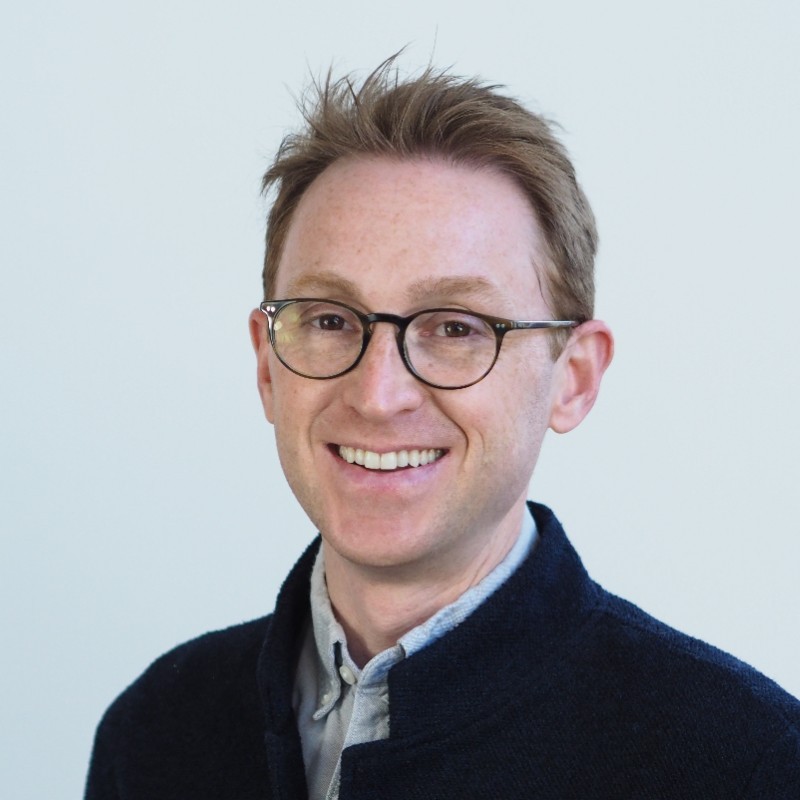
Profile
The Diplomat Who Decided to Grow Fish Instead
When Justin Kolbeck was 29, he was embedded with U.S. military forces in Paktika Province, Afghanistan, serving as Civilian Team Leader and working directly with a full-bird colonel on a $100 million food security development budget. He was advising a provincial governor on how to feed a population caught in the crossfire of war. Not many startup founders have that on their resume.
Most people who pass through the U.S. Foreign Service go on to State Department careers or policy think tanks. Kolbeck looked at the global food crisis up close - in Pakistan, in Afghanistan, in Washington briefing rooms - and decided the problem needed a different kind of answer. Not a policy paper. A product.
He co-founded Wildtype in 2016 with Aryé Elfenbein, a cardiologist and microbiologist he met at a Yale dinner after finishing his MBA. They started with Saturday morning brainstorming sessions, both holding down full-time jobs - Elfenbein as a cardiac critical care physician by night, researcher at the Gladstone Institutes by day; Kolbeck as an engagement manager at Strategy& consulting firm. They funded the early work from their own salaries.
The spark was Elfenbein's lab. He was using stem cell technology to grow human cardiac tissue. Kolbeck looked around and asked the obvious question no one had quite asked that way before: if you can grow a heart, why can't you grow a fish fillet?
Nine years later, in May 2025, Wildtype received the FDA's "no questions" letter - regulatory clearance that made it the first cultivated seafood company legally authorized to sell cell-grown fish in the United States. Wildtype Salmon Saku landed that same month on the menu at Kann, a James Beard award-winning Haitian restaurant in Portland, Oregon, created by chef Gregory Gourdet. TIME Magazine named it one of the Best Inventions of 2025.
"I was (and remain) deeply motivated to do something about the food security crisis facing our planet."
- Justin Kolbeck, Co-Founder & CEO, Wildtype
The Company
Fish Without Fishing
Wildtype's facility sits in the Dogpatch neighborhood of San Francisco, in a building that used to be the Magnolia Brewery. The company repurposed old brewery tanks for its bioreactors. It turns out growing salmon cells is not entirely unlike fermenting beer - temperature-controlled vessels, careful biology, patience. Kolbeck has noted the parallel more than once.
The process starts with a small number of salmon cells extracted from fish. Those cells go into stainless steel bioreactors and, over four to six weeks, multiply into the tissue that becomes sushi-grade coho salmon - the same omega-3 rich, melt-in-your-mouth product you'd find on a high-end omakase menu. No ocean required. No bycatch. No antibiotics, no mercury, no parasites. Zero waste: 100% of what comes out of the bioreactor is edible.
The company calls it "cultivated seafood." The category is sometimes called lab-grown meat, or cell-based protein. Whatever you call it, Wildtype's salmon is coho salmon - grown from coho cells, containing the same nutritional profile, with the same texture and flavor. The company has said that tasters ranging from world-class chefs to everyday sushi eaters have struggled to distinguish it from wild-caught or farmed fish.
The Scale Question
Kolbeck has always been direct about the cost reality. Wildtype salmon today is priced where you'd expect to pay for premium sushi. That's the starting point, not the ceiling. The company's bet is that bioreactor economics follow a similar curve to other biotechnology manufacturing: as scale increases, unit costs fall. The long-term target is price parity with conventionally produced fish - which would mean cultivated salmon becomes a genuine mass-market option, not a high-end novelty.
The initial restaurant rollout - starting with Kann in Portland, with San Francisco, Seattle, and Aspen to follow - is a deliberate strategy. Position the product at the premium end, build brand credibility with celebrated chefs, then move into broader distribution. Partnerships with Snowfox (which operates sushi bars in over 1,230 grocery store locations) and Pokéworks (60+ locations) are already in place for the next phase.
Growth Cycle
4-6 wks
From salmon cells to sushi-grade fish in bioreactors
Waste Rate
0%
Every gram that grows is edible. No bycatch, no offcuts.
Series B Record
$100M
Largest ever raise in cell-cultivated seafood history
Retail Reach
1,230+
Grocery locations via Snowfox partnership
The Funding Story
The Hollywood Investor List
In 2022, Wildtype closed a $100 million Series B - the largest fundraise in the history of cell-cultivated seafood. The round was led by L Catterton, the consumer-focused private equity firm backed by LVMH. The investor list that came with it read less like a VC term sheet and more like a guest list for an environmental gala:
Leonardo DiCaprio. Jeff Bezos, through Bezos Expeditions. Robert Downey Jr., through his FootPrint Coalition. Temasek, the Singapore sovereign wealth fund. Cargill, one of the world's largest agricultural companies. S2G Ventures' Oceans and Seafood Fund. Spark Capital and CRV returned from the seed round.
The combination of Hollywood names, institutional capital, and agricultural incumbents in the same cap table was striking. It suggested Wildtype wasn't just a bet on a technology - it was a bet on a category that would matter across entertainment, finance, and industrial food systems simultaneously.
Total funding across all rounds has reached over $123 million. For a company of 78 people working in a converted brewery, that's a substantial vote of confidence from people who are very selective about where they place votes.
Wildtype Funding Milestones
Latest Raise (2022-Q4)
$7.5M
Notable Investors
Leonardo DiCaprio
Jeff Bezos (Bezos Expeditions)
Robert Downey Jr. (FootPrint Coalition)
L Catterton
Temasek
Cargill
S2G Ventures
Spark Capital
CRV
The Man Behind the Mission
Diplomat, Consultant, Salmon Farmer
Kolbeck studied Political Science and International Relations at UC Berkeley, then worked his way through the U.S. Foreign Service - Pakistan, Afghanistan, Australia, Washington D.C. Each posting deepened his understanding of the intersection between food, conflict, and geopolitics. In Afghanistan's Paktika Province, food security wasn't an abstract concept. It was the daily operational reality of a province where agriculture had been devastated by decades of conflict.
After leaving the Foreign Service, he enrolled at Yale School of Management, earned an MBA, and pivoted into management consulting at Strategy&. His focus there was new market development and international growth - the analytical toolkit he would later apply to scaling a nascent biotech food company. He represented over 1,100 peers on Strategy&'s national staff council, a detail that speaks to the collegial instincts that would later shape how he built Wildtype's team.
Outside the office, Kolbeck holds certifications as a Strength and Conditioning Coach and Personal Trainer - an Instagram account under @coachkolbeck42 shows a parallel life of fitness coaching running alongside the startup work. It's a detail that fits: the discipline required to build strength over time is not unlike the patience required to build a biotech company from Saturday morning brainstorms to FDA approval.
The Saturday Morning Company
The origin story of Wildtype is worth dwelling on. When Kolbeck and Elfenbein started their brainstorming sessions in 2016, they weren't flush with VC funding or prestige accelerator support. They were two people with demanding day jobs, meeting on weekends, funding early R&D from their own paychecks. Elfenbein was pulling shifts in cardiac critical care and doing research at the Gladstone Institutes. Kolbeck was flying around the country as a strategy consultant.
The idea crystallized when Kolbeck visited Elfenbein's lab and saw stem cell research being used to grow cardiac tissue. The leap from "growing a heart" to "growing a fish" required intellectual courage - the willingness to apply established biotechnology to an entirely different problem domain. Cellular agriculture was still a fringe concept. Clean meat startups were few and mostly theoretical. Yet both men bet their careers on it.
That bet has taken nine years to pay its first major dividend: FDA clearance in May 2025. The letter is dry regulatory language, but what it represents is a decade of biology, manufacturing, food safety testing, and regulatory dialogue compressed into a moment of institutional validation. Wildtype is now the only cultivated seafood company that can legally sell its product in the United States.
"Today, our costs would be commensurate with what you'd find on a pricey sushi menu. As we continue to scale, those costs will fall even further. Very soon, you'll be able to buy Wildtype salmon at costs comparable to - or even lower than - conventionally produced fish."
- Justin Kolbeck
The Bigger Picture
Why Salmon? Why Now?
The global seafood industry is under pressure from multiple directions. Wild fish stocks are declining due to overfishing and climate change. Aquaculture - farm-raised fish - solves some problems but creates others: concentrated waste, disease spread, antibiotic use, and habitat disruption from fish farms. Demand for protein continues to grow as global populations rise and middle classes expand in Asia and elsewhere.
Wildtype's answer is not to replace wild fishing entirely - Kolbeck has been clear that cultivated seafood will be one option on future menus, not the only option. The goal is to relieve pressure. To give oceans breathing room. To offer consumers a choice that doesn't require trawling, bycatch, or antibiotic treatment.
The choice of coho salmon specifically is strategic. Salmon is one of the most consumed fish in the United States - beloved in sushi, in poke bowls, in grocery stores. It's also a fish with well-understood biology, significant health benefits (omega-3s, protein), and a consumer base that already pays premium prices for "wild-caught" quality. Wildtype's salmon can compete on quality with the best wild-caught product while removing the contaminants - mercury, microplastics, parasites - that come with ocean-sourced fish.
The facility in Dogpatch is designed as both a production plant and a statement. It includes a tasting room and educational center - a deliberate choice to make the process visible and demystify the technology for consumers, chefs, and journalists who need to understand what they're eating before they can advocate for it.
Recognition
TIME Best Inventions 2025
Wildtype Salmon Saku
First FDA Clearance
Cultivated Seafood - USA, May 2025
Largest Series B
Cell-Cultivated Seafood - $100M, 2022
What's Next
From Portland to the Planet
The restaurant launch at Kann is a beginning, not a summit. Wildtype is expanding to restaurants in San Francisco, Seattle, and Aspen. The Snowfox partnership - sushi bars inside over 1,200 grocery locations - will put Wildtype salmon alongside conventional seafood in the retail aisle. Pokéworks' 60+ poke bowl locations will bring it to a casual dining context. Each channel is a test of a different consumer moment: fine dining, grocery impulse, fast casual.
Kolbeck has also flagged the global dimension. The United States is the first market; it won't be the last. Regulatory regimes elsewhere - in the EU, in Singapore, in Japan - are at different stages of engaging with cultivated protein. Wildtype's FDA clearance gives it a significant first-mover credential in those conversations.
The deeper aspiration is systemic: a world where cultivated seafood is not a curiosity but a standard option, where the ocean's fish populations recover because the pressure on them has lessened, where a dinner of salmon sushi doesn't require a fishing boat and a net somewhere in the Pacific. That's a long arc. Kolbeck has shown he can hold a long arc in mind - it took him from Kabul to a Dogpatch brewery to the FDA's desk, and he hasn't finished yet.
"More than anything else, it's curiosity."
- Justin Kolbeck, on public reaction to cell-based fish
"While the United States is our first port of call - pardon the pun - for Wildtype salmon, there's no question that we will be a global supplier."
- Justin Kolbeck
Career Timeline
From Peshawar to Portland
Pre-2007
UC BerkeleyB.A. in Political Science and International Relations
2007-08
U.S. Foreign Service - Peshawar, PakistanPolitical and Consular Officer in one of the world's most volatile postings
2008-11
Foreign Service - Afghanistan & MelbourneCivilian Team Leader in Paktika Province managing $100M food security budget; Economic Officer in Melbourne, Australia
2011-13
Yale School of ManagementMBA in Economics - meets Aryé Elfenbein at a Yale dinner
2013-16
Strategy& (Booz & Company)Engagement Manager - international growth, new market development, restructuring
2016
Co-founded WildtypeSaturday morning brainstorms become a company; both founders self-fund early R&D
2018
Seed Round - $3.5MFirst institutional funding secures full-time operations
2021
World's First Cultivated Seafood Pilot PlantOpens in former Magnolia Brewery, Dogpatch, San Francisco
2022
$100M Series BRecord raise for cell-cultivated seafood - DiCaprio, Bezos, Downey Jr., L Catterton, Cargill, Temasek
May 2025
FDA "No Questions" LetterFirst cultivated seafood company to receive U.S. regulatory clearance
2025
Commercial Launch & TIME Best InventionsWildtype salmon on menus at Kann (Portland), Snowfox and Pokéworks partnerships, global expansion planned
Watch & Listen
Justin Kolbeck in Conversation