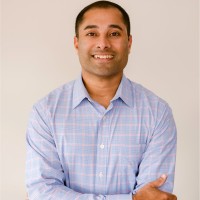
Juan Jaysingh runs Zingtree, a Palo Alto software company built on a deceptively simple idea: most customer-service failures are not people failures, they are process failures. Give an agent - or an AI - a clear next step, and the hard conversations get easier.
As CEO and Board Director since January 2020, Jaysingh has grown Zingtree into a profitable B2B SaaS business serving more than 700 enterprise customers across roughly 50 countries. The platform started as guided decision-tree scripting for support teams. Under Jaysingh it has become an AI customer-experience system aimed squarely at industries where a wrong answer is expensive: healthcare, insurance, and consumer products, where compliance is not optional.
That focus is deliberate. Rather than chase every vertical, Zingtree concentrates on regulated sectors that need structure, guardrails, and an audit trail. The company has also shifted its posture - from selling a self-service tool to working alongside CX leaders, product teams, and digital-transformation strategists as a partner that helps design the workflow itself.
Jaysingh's message to enterprise buyers is unusually blunt for a software CEO in an AI boom. He tells them AI is not magic. "AI isn't plug-and-play," he says. "But if you put in the work - and build it right - the impact is transformational." Automate a broken workflow, in his telling, and all you have done is scale the mess faster.
His framework is methodical: figure out which use cases genuinely need AI versus a human, map the workflows, establish resolution paths, build the knowledge base, and set a clear data-integration strategy before switching anything on. It is the unglamorous part of the work, and he treats it as the whole game.
There is a throughline in how he talks about it. Control, he argues, is what earns trust. "Control builds trust," he says. "It's how you get the benefits of automation without losing confidence in the outcome." And for all the enthusiasm - he calls the potential impact of AI in customer service "vast, huge" - he keeps returning to a limit: "AI will never replace the need for human connection and critical thinking."
The enterprise market has, in his view, finally caught up to that sober read. Buyers who once treated AI as a magic wand now treat it as an engineering discipline: logic, structure, and human accountability first. That shift is good news for a company that has spent years insisting on exactly that.
Jaysingh's path did not start in software. It started on a tennis court in India. At 14 he immigrated to the United States alone, and a chance encounter turned into full tennis scholarships - first at Georgetown Preparatory School, then at American University, where he competed at a high level.
He wanted to be world No. 1. He did not get there. What he took instead was a set of habits that show up in how he runs a company: composure through frequent setbacks, patience with a long build, and a network of mentors the sport put in his path. He draws the parallel openly - business, like tennis, is a game of finishing well after losing plenty of points along the way.
His career after tennis moved through technology consulting and into founding. He built ZeeMee, a social-community platform helping high-school students navigate the leap to college; under his leadership it was named to CNBC's inaugural Upstart 25 in 2017. He later led go-to-market strategy at Universal Tennis, rolling out the UTR community platform - the rating system powered by Oracle - to elite clubs and academies worldwide. He joined Zingtree as a consultant before taking the CEO role.
Ask him what drives the work and the answer is short: passion and integrity. His personal rule is shorter still - "If it's too easy, it's probably not worth it." Hard immigration, hard sport, hard SaaS market. He keeps choosing the hard version, and he keeps finishing. He and his family live in Palo Alto, California.