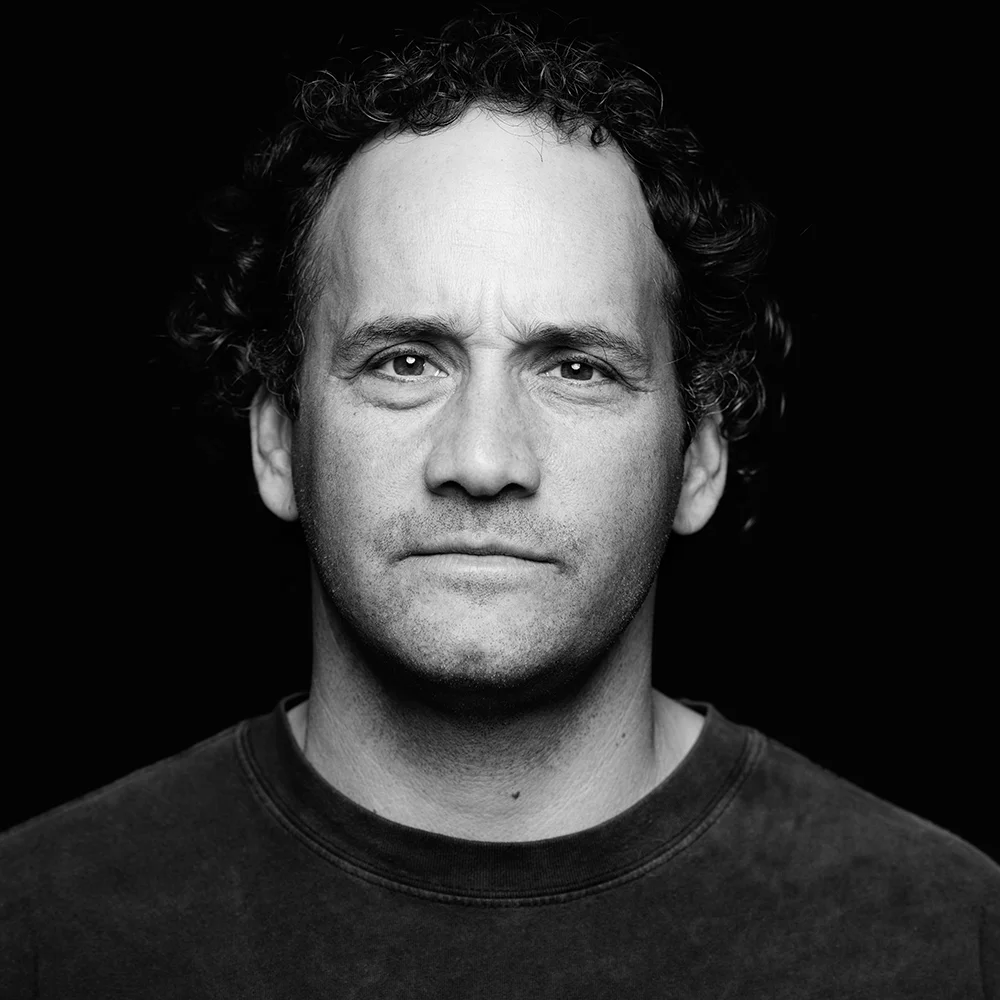
He was six years old when he walked past Washington Square Park and stopped. The hustlers were playing chess. He didn't leave. He barely spoke. He just watched - and something clicked so hard it echoed forward fifty years.
That's Josh Waitzkin. Not the prodigy story you've heard. Not the chess genius with the movie deal. The more interesting version: a man who has looked at three completely different competitive arenas, entered each one as a beginner, and climbed to the absolute top of every single one. Twice he's held world championship titles. Once he put an NBA coach through a barefoot jungle survival course in Costa Rica and watched the team win a championship twelve months later.
He doesn't explain this as talent. He explains it as a method. And the method is the whole point.
Growth comes at the point of resistance. We learn by pushing ourselves and finding what really lies at the outer reaches of our abilities.
- Josh Waitzkin, The Art of LearningBefore the film, before the book, before the consulting empire - there was a boy watching strangers move pieces on concrete tables in lower Manhattan. Bruce Pandolfini, the legendary chess teacher, spotted young Josh within a year and took him under his wing. By age nine, Waitzkin was winning national championships. By eleven, he drew with Garry Kasparov in a simultaneous exhibition where the world champion faced fifty-nine players at once. Two of those players forced a draw. Waitzkin was one of them.
He was also the kid who visited the Soviet Union to watch the first Karpov-Kasparov World Championship match and ended up on Soviet television - doing chess analysis for the cameras with bubble gum on his face.
By sixteen, he was an International Master. The film Searching for Bobby Fischer, based on his father Fred's book about his chess years, was released when he was seventeen. He makes a cameo at 1:21:52, sitting at a board, wearing a black jacket and white hoodie. The film was nominated for an Academy Award. He is the rare person who appears as a subject of a Hollywood biopic as a child, and then shows up as himself as a teenager in that same film.
Then he walked away from chess.
Not because he failed. Because he had stopped loving it. The pressure to win had replaced the joy of exploring the art. He enrolled at Columbia to study philosophy. He was twenty-three, the world's chess establishment expected him to push for Grandmaster - and he went searching for something harder.
He found Tai Chi Chuan. Specifically, Push Hands - the combat application that most practitioners treat as ceremony and Waitzkin decided to treat as war. He trained under Grandmaster William C.C. Chen. He entered competitions. He won. And won again. And kept winning until he had accumulated thirteen U.S. national titles.
In December 2004, he flew to Taiwan for the 7th Chung Hwa Cup International Tai Chi Chuan Championships. He won the Middleweight World Championship in Fixed-Step Push Hands. Then he won the Middleweight World Co-Championship in Moving-Step. Two world titles, one tournament, one trip. The date? December 4th. His birthday.
He also started Brazilian Jiu-Jitsu in 2002, training with John Machado and eventually Marcelo Garcia - widely considered the greatest BJJ competitor in history. In 2011, Garcia awarded Waitzkin his black belt. Not just any black belt. The first black belt Marcelo Garcia had ever given to anyone. Ever.
It is rarely a mysterious technique that drives us to the top, but rather a profound mastery of what may well be a basic skill set.
- Josh WaitzkinIn 2007, Waitzkin published The Art of Learning. It uses his parallel journeys - from Washington Square Park to world chess stages to Taiwanese push hands arenas - as a laboratory for understanding how human beings get genuinely good at things. Not how they accumulate credentials. How they actually master.
The frameworks in the book have a precision that most performance writing lacks. The difference between entity thinking (I am talented) and growth thinking (I can learn) - developed years before Carol Dweck's work reached mainstream culture. The concept of investing in loss: entering training sessions deliberately to be beaten, to explore territory you'd never reach if you were managing your win-loss record. Making smaller circles: the counterintuitive idea that mastery comes from narrowing your focus to one tiny thing until it becomes instinct, then building outward.
The book found readers who weren't looking for it. Athletes. Executives. Surgeons. Parents. It became the kind of book people give away because they need someone else to read it. Tim Ferriss named Waitzkin the second guest he ever had on his podcast and has called him one of the most influential people in his life.
A severe back injury during BJJ sparring ended his competitive days in martial arts. Doctors were direct: continue competing, risk permanent disability. He stopped. He moved his family - wife Desiree, son Jack - to Costa Rica, where the jungle meets the Pacific Ocean. He has been there roughly eight years.
From that jungle compound, he built a performance consultancy - Stoke Ventures - and began working with a client list that includes hedge fund managers, tech founders, and professional sports franchises. His methods don't look like conventional coaching. He spends the first phase of any engagement doing almost nothing but listening. Diagnosing. Then he builds something custom.
In the 2022-23 NBA season, Boston Celtics head coach Joe Mazzulla came looking for him. After Boston lost to Miami in a devastating Game 7 of the Eastern Conference Finals, Mazzulla flew to Costa Rica. He stayed for eight days. Waitzkin took him barefoot through mountainous jungle - genuinely dangerous terrain, wildlife included. He surfed powerful Pacific swells. Zero basketball involved.
The concept is what Waitzkin calls the Cave Process: strip away the role, the identity, the career - get to the actual person underneath. Then rebuild. The Celtics won the 2024 NBA Championship. In May 2025, the franchise officially announced Waitzkin as a performance consultant - a position he'd effectively held for two years by then.