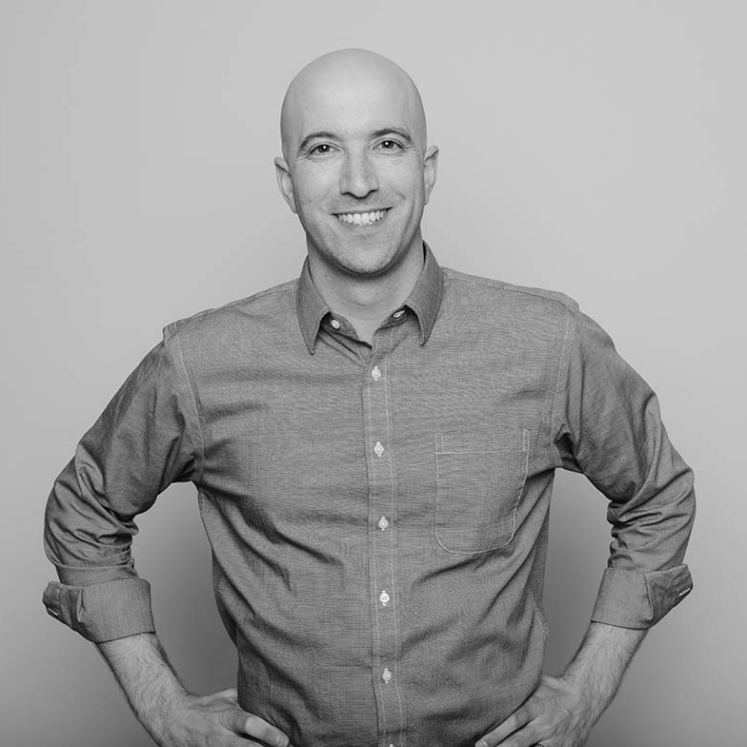
Most drugs chase the protein. He locks the exit.
Inside every cell there is a turnstile called Sec61. Proteins line up, pass through, and head out into the body to do their jobs. Some of those proteins cause disease. Jordi Mata-Fink's bet is that the smartest place to stop them is not out in the bloodstream, where everyone else is fighting, but right there at the turnstile.
Gate Bioscience calls the answer a Molecular Gate. It is a small molecule that parks itself inside the Sec61 channel and reads the protein trying to pass through. If the protein is the harmful one, the gate stops it cold. If it is one of the thousands of others the body needs, the gate waves it on. The selectivity is the whole trick, and for years it was considered close to impossible.
That is the line Mata-Fink walks as co-founder and CEO. He is a chemical engineer by training, not a showman, and the company reflects it. Gate emerged from stealth in late 2023 with $60 million and a claim that sounded almost too clean: stop disease-causing proteins at their source, before they are ever secreted. The trade press summed up the mood with a headline Mata-Fink probably enjoyed more than he let on - "Small molecules are sexy again."
The breakthrough came when we unlocked how to selectively stop one protein from passing through Sec61 without affecting other proteins that use the channel.
More than a thousand extracellular proteins are tied to disease. The conventional approaches go after them once they are already loose - antibodies that mop them up, or drugs that try to block them at a receptor. Gate's insight is that all of these proteins share one chokepoint on the way out. Hit the chokepoint with enough precision and you get a clean, oral small molecule instead of an injected biologic. That is the difference between a drug a patient takes as a pill and one that needs a clinic.
Mata-Fink did not arrive here cold. Before Gate he spent the better part of a decade as a company-builder inside Flagship Pioneering, the Cambridge venture engine that has spun out a long list of biotechs. He was on the founding team at Editas Medicine, founded and directed discovery at Rubius Therapeutics, started Cygnal Therapeutics as its CTO, and was part of the founding team at Generate Biomedicines. By the time he started Gate in 2021, he had done the 0-to-1 of a biotech several times over.
The science has a co-founder story too. Pat Sharp, Gate's scientific co-founder, was the first to show that a small molecule could selectively block protein secretion through Sec61 - the experimental proof that the gate concept was real and not just elegant on a whiteboard. Raman Talwar, a serial technology builder, came in as co-founder and CTO to turn the biology into a repeatable discovery platform. Mata-Fink's job was to make all of it into a company that investors would fund and patients would eventually benefit from.
We are inventing a new class of medicines that can bring hope to patients with devastating diseases that are not treatable, or not well treated, today.
In November 2025 the bet got a vote of confidence. Gate closed an oversubscribed $65 million Series B, led by the European life-sciences investor Forbion and joined by Eli Lilly - the kind of strategic pharma name that tends to show up only when the data is starting to look like a drug. Existing backers Versant Ventures, a16z Bio + Health, GV and ARCH Venture Partners came along. The round pushed total funding to $135 million and pointed the money at one thing: getting Gate's lead programs through IND-enabling studies and into Phase 1 trials in inflammatory and neurological disease.
Ask him what changed between stealth and Series B and the answer is not a slogan. It is the platform. What started as a clever mechanism has, by his telling, hardened into a drug discovery engine - something that can find new molecular gates against new targets on a repeatable schedule rather than as one-off luck. There are roughly 4,000 proteins that could, in principle, be addressed this way. A company that can reliably make gates against any of them is a different kind of company than one with a single good idea.
We're also seeing the fruits of our platform investment, which has matured into a true drug discovery engine.
There is a smaller, more human detail that says something about how he operates. On the company's own about page, between the Stanford-and-MIT credentials and the list of companies he has built, is one line: he coaches youth soccer. It is the kind of thing a person includes because it is true and they care about it, not because it polishes a pitch. Coaching kids is patient, unglamorous, long-horizon work where you do not get to see the payoff for years. So is inventing a new class of medicine.
Consider the alternative he is competing against. The standard way to neutralize a rogue extracellular protein is an antibody - large, injected, expensive to make, and often unable to reach tissues a small molecule can slip into. Gate's pitch is that a molecular gate gets the same protein, earlier, with a pill. For chronic conditions where a patient might be on a drug for years, the difference between an infusion and an oral tablet is not a footnote. It is the difference between a therapy people actually stay on and one they abandon.
The disease focus is deliberate. Gate has steered its lead programs toward inflammatory and neurological conditions - areas where disease-causing proteins are well understood but stubbornly hard to drug, and where reaching tissue matters. The Series B money is earmarked to carry those programs through IND-enabling studies, the rigorous preclinical work the FDA requires before a drug can be tested in humans, and then into Phase 1. It is the moment every preclinical biotech is built to reach and where many quietly stall.
Gate did not assemble its bench by accident either. The board is chaired by Tom Daniel, the former head of global research and early development at Celgene, with Versant's Clare Ozawa and a16z's Vineeta Agarwala alongside. The scientific founders include researchers who first proved that Sec61 could be drugged selectively. Mata-Fink's role in that room is the translator - the engineer who can hold the chemistry, the biology, and the business case in the same sentence and make a partner at Lilly believe all three.
That patience is the through-line. Gate is not promising a miracle next quarter. It is promising a mechanism - a precise, oral, source-level way to silence the proteins that drive disease - and then doing the slow work of proving it in animals, then in people. The market noticed. Lilly noticed. Whether patients notice will take the better part of a decade to find out, which is exactly the timescale Mata-Fink has been working on his whole career.
The case, stated plainly
More than 1,000 extracellular proteins are implicated in a wide range of diseases, yet all of these conditions have one mechanism in common: the secretion of a disease-causing protein through the secretory translocon.
Our molecular gate that's sitting in the channel can discriminate between those amino acid sequences and therefore block, selectively, the ones we would like to prevent the secretion of while allowing others through.
Molecular gates have the potential to be transformative drugs for diseases where current treatments fall short.
For diseases caused by extracellular proteins, our aim is to restore the harmful proteins to normal levels or, in some conditions, to eliminate the disease-causing proteins entirely.