He spent two years listening to hold music before writing a line of code. Now his voice AI answers the phone for thousands of doctors - and has handled 42 million patient calls.
She wasn't an early riser by choice. Suzanne Grinberg just couldn't call the doctor during the hours she was teaching. So she called at 5:30 AM, and something picked up, understood her, and put her on the calendar. That something was Assort Health, and Jon Wang built it precisely so that her call would never go to hold music, voicemail, or a 35-minute queue.
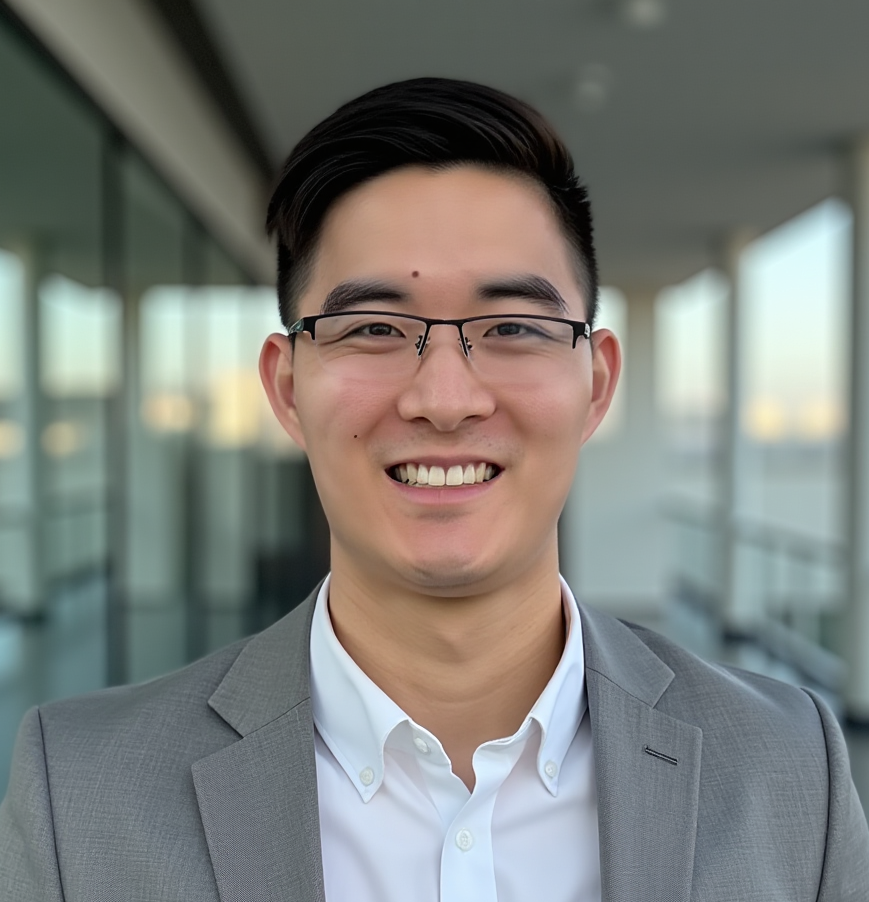
Wang is the co-founder and co-CEO of Assort Health, a San Francisco company making voice AI agents that staff the phones at doctors' offices. The agents schedule, reschedule, cancel, triage, handle prescription refills, send reminders, and do it in multiple languages, around the clock. Since launching in 2023, the platform has processed more than 42 million patient interactions.
The numbers his company publishes are the kind founders like to repeat on stage: a 90%-plus resolution rate, 99% scheduling accuracy, a 4.6 out of 5 patient satisfaction average, and revenue up eightfold since the end of 2024. Investors noticed. In a stretch of roughly four months in 2025, Assort raised $102 million.
What's unusual isn't the trajectory. It's the patience that preceded it. Wang and co-founder Jeff Liu spent close to two years studying the healthcare system before they shipped anything. They wanted to know why 20 million Americans get booked with the wrong doctor every year, and why a patient can wait up to 35 minutes just to make an appointment. The product came after the diagnosis.
We're not just improving the experience, we're setting a new standard - one where every patient, no matter their background or location, receives the timely, reliable healthcare they deserve.
Wang did almost everything a future physician is supposed to do, then chose not to be one.
At Stanford he finished a BS and MS in bioinformatics in the top 3% of his class. He was elected to Phi Beta Kappa as one of 32 juniors, won the President's Award for Excellence in his freshman year, and collected the J.E. Wallace Sterling Award given to the top 25 graduates. He was named a Gates-Cambridge Scholar Elect, a distinction handed to roughly 1% of international applicants, and was offered a place in the NIH Oxford-Cambridge MD-PhD program.
Then he enrolled at UCSF medical school and, partway through, left. He wrote about it openly in an essay titled "Why I Left UCSF Medical School (for now)." For someone who had spent his life accumulating the credentials of medicine, walking out was the loudest decision on the resume.
His research years weren't idle. He built machine learning systems for clinical order recommendations, natural language models for medical exams, and deep learning tools for medical imaging, with peer-reviewed work appearing in JAMIA Open and JMIR. He also did machine learning research connected to the Bill & Melinda Gates Foundation, aimed at global health equity. Before Assort he was Chief of Staff at the startup Elemy and advised the mental health company Shimmer.
The thread running through all of it: he kept choosing the place where AI and patient access overlap. Medical school was a detour from that, not the destination.
You feel sick, you call, you wait six months for a primary care slot. The patient does all the chasing, usually during the exact hours they're stuck at work.
Wang wants the system to reach out first. The AI calls you to book the follow-up after a cortisone injection, before you've remembered you needed one.
Orthopedics, dermatology, pediatrics, behavioral health and dental each have their own triage logic. The agents are tuned per specialty, not one-size-fits-all.
Moving from a reactive system where you as a patient have to schedule a primary care appointment six months out, to a system that's more proactive and preventative.
He took the Assort story to ViVE 2026, the digital-health stage where the room is full of people who run the call centers he's trying to replace.