Profile / Founder & Operator
John Simpson
He helped run the digital machine behind two Obama campaigns. Now he points the same data toolkit at America's hospitals - and asks them to earn their patients back.
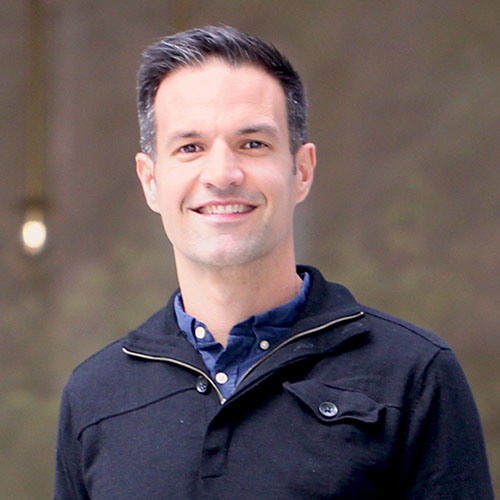
He helped run the digital machine behind two Obama campaigns. Now he points the same data toolkit at America's hospitals - and asks them to earn their patients back.
The propensity model that once predicted whether a voter would knock on a neighbor's door now predicts whether a discharged patient will book a follow-up. Same math, different stakes. John Simpson is Co-CEO and Co-Founder of Digital Health Strategies, the Washington, D.C. company he started in 2014 with Ben Texter, and that single migration - from politics to patient care - is the whole story.
Before DHS, Simpson and Texter worked at Blue State Digital, the engagement and technology agency that built the digital backbone of Barack Obama's 2008 and 2012 presidential runs. That world runs on a simple, ruthless idea: every relationship has a next action, and good data tells you what it is. Donate. Volunteer. Vote. Simpson took that grammar and rewrote it for an industry that, by his read, had barely learned to send a thank-you note.
The product is called Share of Health. The name is a sly inversion of "share of wallet," the metric that consumer brands obsess over, and it carries Simpson's central argument: a health system's most valuable, most squandered asset is the relationship it already has. DHS uses data and propensity modeling to help health systems and health plans close care gaps, connect patients with the services they need, build loyalty, and - the part that makes hospital CFOs lean in - turn satisfied patients into donors through precision fundraising.
It is a strangely literary path to a data company. Simpson read English Literature at McGill and took a master's in Media Theory at the University of Chicago. He spent a decade-plus inside the media machine - Director of Media at Deep Focus, then Vice President Director of Media at Digitas, where his clients included American Express - before the campaign years sharpened the data instinct that now defines his work. He is the kind of operator who can talk about a CRM integration and a Marshall McLuhan footnote in the same breath, and mean both.
The clients are not boutique experiments. DHS works with some of the largest systems in the country - Scripps Health, Providence, Johns Hopkins Medicine, Geisinger, Hackensack Meridian Health. These are sprawling, multi-hospital operations where a single percentage point of patient retention is a budget line, and where most marketing still means billboards and brochures. Simpson's pitch is quieter and more pointed: stop buying attention you already own.
For most of the last decade, DHS grew the unglamorous way - client by client, renewal by renewal, until it landed on the Inc. 5000 list of fastest-growing private companies. Then, in December 2023, the company closed a Series A round. The lead investor was David Schultz, founder and CEO of MediaLogic, a strategic marketing firm with deep roots in healthcare, who joined the DHS board alongside Simpson and Texter. The raise was modest by the standards of the digital-health gold rush, and that restraint is the point: this is a company that grew on revenue before it grew on capital.
What Simpson is really selling is patience in an industry addicted to acquisition. Hospitals spend enormous sums chasing new patients while the ones they have drift off, miss the screening, skip the follow-up, never hear from anyone again. Share of Health treats that drift as a solvable engineering problem - a sequence of well-timed, well-modeled, genuinely personal nudges. The grateful patient who becomes a donor is not a happy accident in his framework. It is the designed end of a long, deliberate conversation.
His industry has noticed. Simpson's work has surfaced in The New York Times and AdAge, and he is a fixture on the conference circuit - SHSMD, the Forum for Healthcare Strategists, HCIC, AHP International - where strategists go to argue about exactly the questions he has spent a career answering. He tends to be the one in the room reminding everyone that a patient is not a funnel, even as he hands them better tools to model one.
Cutting his teeth at a digitally-led creative and content agency.
Running media for blue-chip clients, including American Express.
Inside the agency that powered Obama's 2008 and 2012 digital campaigns.
Partners with Ben Texter to bring campaign-grade data discipline to health systems.
Closes a round led by MediaLogic's David Schultz to scale the Share of Health platform.
Not pilots. Some of the largest health systems in the country run on the DHS playbook.
A famous surname. Simpson is a descendant of Sir Joseph Lister, the pioneer of antiseptic surgery whose name lives on in the brand Listerine. A family tree that runs straight through the history of clean medicine.
An English major's company. He runs on propensity models, but he was trained to read texts closely. The instinct that parses a novel and the one that parses patient data turn out to be the same instinct.
Politics first, patients second. The data grammar behind Share of Health - donate, volunteer, vote - was forged in presidential campaigns before it ever touched a hospital.