Run the trial where the patient already is
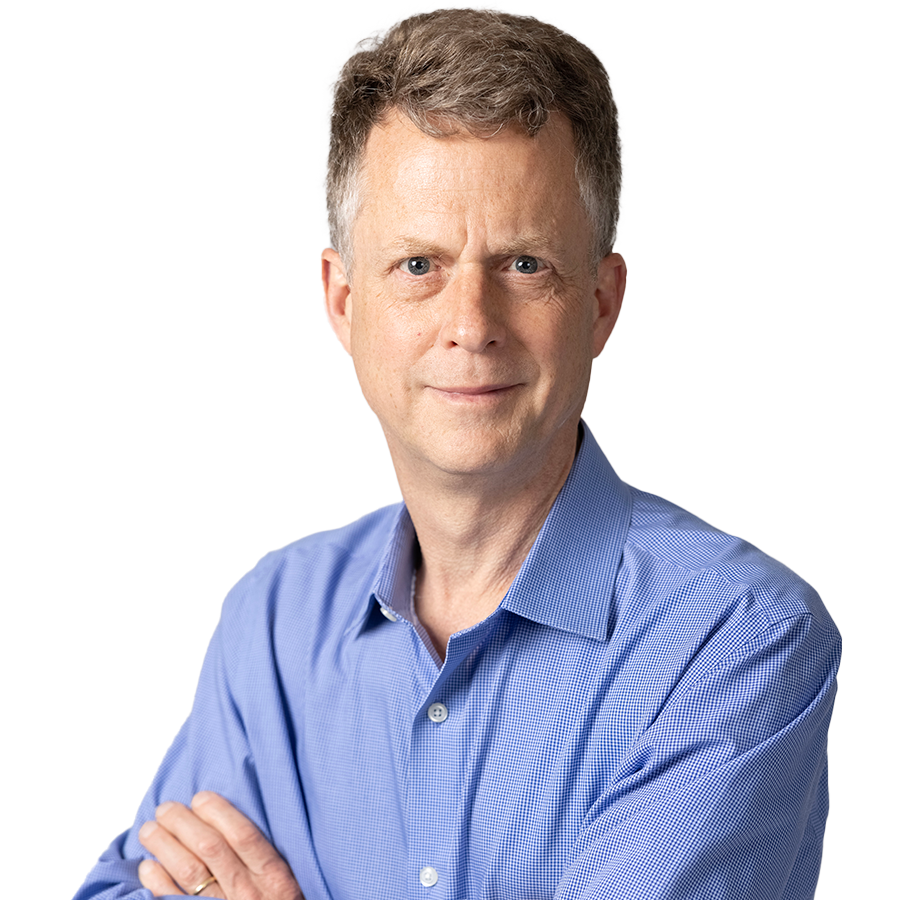
Joel Morse is trying to delete the waiting room. At Curavit Clinical Research, the virtual contract research organization he co-founded in 2020, the bet is simple and slightly heretical: a clinical trial does not need a building, a parking lot, or a patient willing to drive 90 minutes to a site twice a month. It needs a protocol, a phone, a few wearables, and an honest way to capture what happens in real life. Curavit designs and runs decentralized trials for digital therapeutics, devices, and drugs - the kind of studies that meet people in their kitchens instead of summoning them to a clinic.
That is the pitch. The proof point is sharper. Curavit ran a clinical trial for Sana's investigational digital therapeutic aimed at PTSD symptoms entirely online. No physical site. No coordinator clipboard. Recruitment happened through web and social campaigns, data flowed in from patient-reported outcomes and connected devices, and the trial reached people the traditional site model tends to leave out. For an industry that still treats "decentralized" as a buzzword to be survived, Morse's response has been less argument, more receipts.
He talks about real-world evidence the way some founders talk about growth. In a decentralized setup, he argues, you capture signals a clinic visit would never see - the wearable data between appointments, the patient-reported moments that don't fit neatly into a scheduled assessment. "Real-world evidence is becoming increasingly central in clinical trials," he says. "In a decentralized setup, RWE provides insights that might not be captured in traditional settings." It is a worldview that treats the gaps between visits as the interesting part.
An engineer who can't stand a broken system
Before healthcare, there was mechanical engineering. Morse studied it at Tufts, graduating magna cum laude, then earned an MBA at Columbia with high honors in international business and finance. Somewhere between those two degrees is the whole personality: the engineer who wants to know how the machine works, and the operator who wants to know whether it pays for itself. Starting in mechanical engineering may be the cleanest explanation for why he keeps re-engineering the way trials get run - engineers have a low tolerance for systems that obviously could work better.
His first act in healthcare wasn't a startup-stage flourish. In 1993 he co-founded C3i with Dave Hanaman and Diana Kyser - three people and an idea about tech-enabled support for life sciences. Over roughly two decades, C3i Solutions grew into a global leader in tech-enabled clinical trial services, with a client list that reads like a pharma roll call: Medidata, Quintiles, Merck. In June 2014, C3i was acquired by Telerx. Morse stayed on to lead Global Healthcare Operations and Global Process Excellence, and by 2017 he was named president of Telerx and C3i Healthcare Connections. Before any of it, he was a senior manager at American Express - the corporate apprenticeship before the building-things began.
Why he keeps choosing decentralized
Morse's stated advantages of virtual trials (illustrative, from his interviews)
Recruitment is a campaign, data is a plan
Ask Morse how Curavit finds patients and you get a marketer's answer, not a clinician's. "We adopt extensive web-based recruitment strategies, encompassing social media and email campaigns to target diverse demographics nationwide," he says. The ads get tailored by ethnicity, age, and gender, tuned mid-trial to keep enrollment moving while staying inside IRB approval. The old model waited for patients to walk through a door near a site. Morse's model goes and finds them - then keeps adjusting until the funnel fills.
Data, in his telling, is won or lost before the trial starts. "Effective data management in digital therapeutics trials hinges on meticulous planning," he says. "From the outset, it's essential to know what data will be captured." Discovering halfway through a study that you forgot to collect something crucial is the nightmare; the craft is deciding up front what matters and how much to ask of participants without burning them out. It is a very engineering way to think about a very human process.
And he pushes back on the instinct that virtual means riskier. Many digital-therapeutic trials are classed as low-risk by regulators, he notes, and the virtual format can actually tighten oversight: more consistent monitoring, better protocol adherence, stronger engagement, higher-quality data. The clinic, in this framing, was never the safety mechanism people assumed. The data was.
Real-world evidence provides insights that might not be captured in traditional settings.
Safety in digital therapeutics trials is often enhanced compared to traditional trials.
From the outset, it's essential to know what data will be captured.
We leverage digital platforms to reach participants who might have been excluded.
He has founded the same company twice - on purpose
There's a tidy symmetry to Morse's career. He co-founded C3i with Dave Hanaman in 1993; he co-founded Curavit alongside Hanaman again, plus Chief Medical Officer Dr. Pam Diamond. Build a healthcare services business, scale it globally, sell it, and then - instead of retiring to a board seat - start over with the same partner and a harder problem. The first company helped run clinical trials the way they'd always been run. The second exists to question whether they should be run that way at all.
Outside the operating role, he has shown up where governance and finance meet: he served on the board of trustees of the American University in Bulgaria and chaired its finance committee in 2014. He also writes - contributing thought-leadership to outlets like MedCity News and Applied Clinical Trials on the long, twisting path digital therapeutics travel from development to approval to access. For someone who spends his days on operations, he is unusually willing to argue the industry's future in public.
The leadership bench around him reads like a deliberate assembly rather than a roster of hires. Dr. Pam Diamond, a board-certified otolaryngologist with Harvard-affiliated training, anchors the medical side as co-founder and chief medical officer. Dave Hanaman, his C3i co-founder and a former U.S. Navy officer, runs commercial as president. The pattern is consistent with how Morse seems to operate: surround the engineering instinct with clinical credibility and commercial muscle, then point the whole thing at a problem the establishment finds inconvenient. He is the operator who has done the unglamorous work - global operations, process excellence, the parts of a business that don't make headlines - and that operational scar tissue shows up in how Curavit talks about execution over hype.
It also explains his patience with regulators, a posture not every disruptor shares. Rather than framing the FDA as an obstacle, Morse treats regulatory fluency as a feature of the product. Knowing which trials qualify as low-risk, how to keep IRB approval intact while iterating recruitment ads, when virtual oversight satisfies a monitoring requirement - this is the connective tissue between a clever idea and an approvable study. The decentralized-trial movement has no shortage of evangelists. What it has needed is people who can land the plane inside the existing rulebook, and that is the lane Morse has chosen to own.
Patient-centric, or it doesn't count
Curavit's most recent raise - a Series A - closed in November 2022, and the company keeps pressing on the same thesis: trials that reach diverse populations, generate real-world evidence, and treat patient experience as the product rather than a constraint. Morse's aspiration isn't subtle. He wants clinical research that comes to people instead of demanding they come to it, and he wants the data to prove that doing it this way is not a compromise but an upgrade.
It is a long bet against decades of inertia, made by someone who has already watched one of his companies get folded into a larger one. The difference this time is that the target isn't a single business - it's the default. Whether the industry follows is still an open question. Morse, characteristically, is not waiting for permission. He's running the trials and showing the numbers.
If there's a through-line across three decades, it's a refusal to accept that the way things are done is the way they have to be done. The engineer sees friction and wants to remove it. The operator sees a process and wants to make it pay. The founder sees an industry built around buildings and asks why. Curavit is the place where all three instincts collide, and the answer Morse keeps returning to is disarmingly plain: put the patient at the center, capture what actually happens in their lives, and let the data settle the argument.