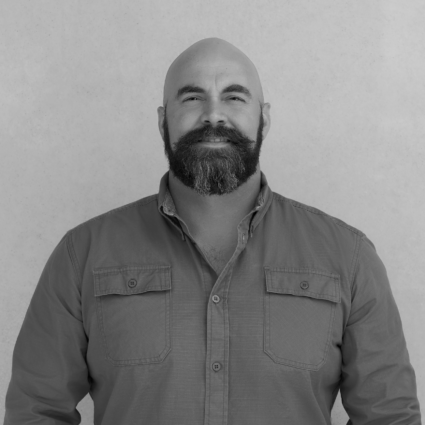
Joe Wolfel runs a company built on a single, almost absurd fact: humanity has explored more of the surface of the Moon than the floor of its own ocean. As co-founder and CEO of Terradepth, he is trying to close that gap - not with one heroic submarine, but with a fleet of autonomous robots and the software to make sense of what they find.
Terradepth, based in Cedar Park just outside Austin, designs and builds ocean-going robots, deploys them, and delivers the resulting data through a cloud platform aimed at commercial and government customers. Wolfel is careful about how he describes it. He resists the label of a robotics company. What he is really building, he argues, is an ecosystem - a way to turn scattered, expensive, one-off surveys into a continuous stream of decision-ready ocean intelligence.
The idea he calls an Ocean Operating System
In recent interviews, Wolfel has framed Terradepth's ambition in terms that sound more like enterprise software than marine survey work. He talks about an "Ocean Operating System" - a layer that stitches together vehicle design, data collection, edge processing, cloud aggregation, and application development into one pipeline. The point is to move the maritime industry away from a familiar transaction (buy the platform, own the hardware, manage the crew) toward something newer: pay for the intelligence the platform generates.
That shift matters because ocean surveying has historically been fragmented and slow. Different vendors handle different links in the chain, ships and crews are costly, and the data that comes back often sits in silos. Wolfel's bet is that vertical integration plus autonomy can collapse that complexity and, eventually, offer subsea data on a subscription or services model.
Where Terradepth wants to sit in the workflow
From the Naval Academy to the deep
Wolfel's route into ocean data ran through the military. He graduated from the U.S. Naval Academy with Honors, a Secretary of the Navy Distinguished Scholar ranked 8th in his class, then served as a Navy SEAL officer with multiple deployments across the Middle East and Africa. It was in that world - operating in and around the water, planning missions where the environment itself was a variable - that he first grasped how little is actually known about the ocean.
He points to a specific, sobering example: in 2005 a U.S. Navy submarine collided with an underwater mountain that existing charts had not accurately recorded. Much of the world's seabed data, Wolfel notes, is extrapolated from surface measurements like wave height rather than measured directly. For someone who had trusted that kind of data with lives, the gap was not academic.
What the SEAL years taught him about running a company
Before Terradepth, Wolfel moved through the space where military discipline meets business. He held leadership roles at McChrystal Group, the consulting firm built around General Stanley McChrystal's ideas on adaptive teams, led special projects at the defense engineering company Synexxus, and served as Managing Partner at Exbellum, a consultancy focused on complex human-capital problems. In 2018 he co-founded Terradepth with fellow SEAL Judson Kauffman.
Ask him about leadership and he draws a sharp line. "Leadership is about inspiration and management, in a lot of cases, is about control," he has said - a distinction that shapes how he thinks about building teams around hard, uncertain technical work. The other lesson he carried over is about people, or rather the goal of needing fewer of them in the loop. "We're trying to drastically reduce human cognitive load with respect to high-resolution seabed data," he explains. The robots are meant to handle the tedium of surveying so that humans can focus on decisions.
Why it matters now
The timing is not accidental. Defense planners are paying renewed attention to the undersea domain - to seabed infrastructure, subsea cables, and the ability to know what is happening in contested waters. Commercial demand is rising too, from offshore energy and construction to environmental monitoring. In mid-2026, Terradepth drew coverage in defense circles for exactly this: a vision of persistent, decision-ready subsea intelligence serving both government and industry from the same platform.
Wolfel is realistic that the ocean does not give up its secrets easily. The environment is punishing, communications are hard, and autonomy underwater is a genuine engineering challenge. But his framing keeps coming back to the same premise. The seabed is the planet's last great blank spot on the map, and the tools to fill it in - cheap sensors, autonomous vehicles, cloud software - finally exist at once. Someone is going to assemble them into a business. He intends for it to be Terradepth.
For all the talk of ecosystems and operating systems, the mission he describes is plain enough to fit on a challenge coin: know the ocean. It is the kind of goal that would sound grandiose from most founders. Coming from a man who spent years being deployed into it, it lands more like unfinished business.
TimelineHe co-founded Terradepth with a fellow Navy SEAL, Judson Kauffman.
Terradepth sits in landlocked Cedar Park, Texas - and Wolfel is a fan of the Austin restaurant scene.
He insists Terradepth is more a data company than a robotics company.
Asked a personal question in one interview, he deflected with a grin: "Maybe in person over a beverage!"