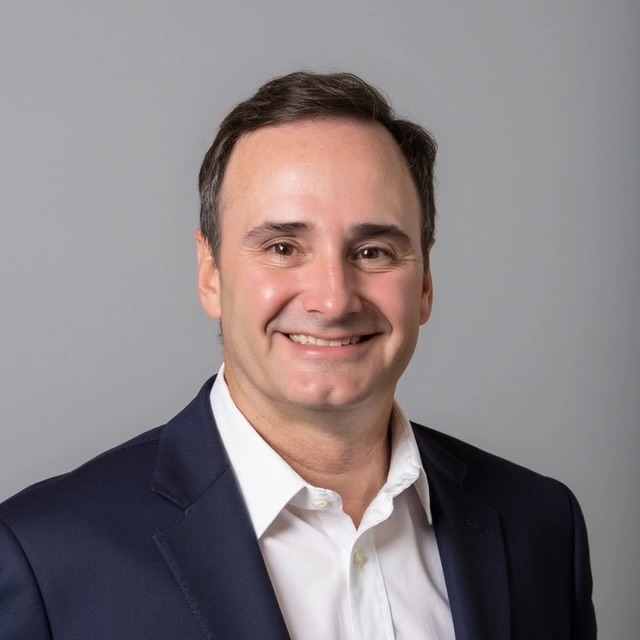
Building a cure where medicine used to only manage
Joe Loy spends his days on one of the hardest problems in oncology: what happens when cancer spreads into bone. As President and CEO of Zetagen Therapeutics, a clinical-stage biopharmaceutical company headquartered in Syracuse, New York, he is steering a small team toward a large ambition - therapies that resolve metastatic and primary cancer lesions in bone and soft tissue while regenerating healthy bone at the same time.
The company's lead candidate, ZetaMet, is a synthetic, small-molecule biologic delivered locally through a proprietary controlled-release carrier. The idea is unusually direct: quiet the tumor, ease the pain, and rebuild the bone the disease has eaten away. In late 2024, Zetagen announced the first patients enrolled in a Phase 2a clinical study of ZetaMet for metastatic breast cancer bone lesions. It is the kind of milestone that takes years of patents, grants, and financing to reach - the slow, unglamorous work of turning a laboratory idea into something a physician can use.
Loy did not invent the science. Zetagen's core technology emerged from research at SUNY Upstate Medical University by co-founders Bryan Margulies, PhD, and Nikhil Thakur, MD, both then assistant professors there. What the discovery needed was someone who knew how to build a company around it. In January 2019, Loy took the CEO seat and set out to do exactly that.
A career spent close to the operating room
Before Zetagen, Loy built a career around first-to-market medical technologies. He held executive positions of increasing responsibility at some of the biggest names in surgical and orthopedic devices - US Surgical, Pfizer/Leibinger, NuVasive, and Stryker. Along the way he became a serial entrepreneur with several successful exits to his credit, and he has served as an advisor and board member for AI-driven and navigational surgical products and musculoskeletal device companies.
That background shows up in how Zetagen is run. This is not a company chasing a trend. It is one organized around a single, difficult problem and a commercial discipline that comes from decades spent watching how devices actually reach patients. Loy earned a Bachelor of Science in Business Administration and Management from Oklahoma State University, and while Zetagen is an upstate New York company, he runs it from Dallas, Texas - a reminder that modern biotech leadership is as much about coordination and capital as it is about proximity to the lab bench.
The pitch, in his own words
Ask Loy what sits at the center of the company and the answer is consistent. "Patients are the center of everything that we do," he has said. "Our goal is to provide breakthrough therapies to all patients that suffer from metastatic and primary cancers, providing relief and hope." It is a line a lot of executives say. What makes it worth noting is that Zetagen's entire pipeline is arranged around it - candidates aimed at breast, lung, prostate, and bone sarcomas, all built on the same underlying platform.
The regulatory record backs the ambition. Zetagen has been issued two FDA Breakthrough Device Designations - for ZetaMet and for ZetaFuse - a signal from regulators that the technology addresses a serious condition with the potential to do it better than what exists today. Behind that sit multiple issued U.S. patents and a body of peer-reviewed work.
Money, momentum, and a global footprint
Capital has followed the clinical progress. In August 2023, Zetagen closed a $9.79 million Series B round to advance ZetaMet and a companion program, ZetaMAST, with backing from New York Ventures, Consolidated Capital Investments, and a group of private investors. The company later closed an oversubscribed Series B1 financing of roughly $12.9 million on the strength of promising Phase 2a data and its pipeline - a notable result at a moment when biotech financing has been tight.
The trial footprint has grown beyond the United States, too. Health Canada approved a study enrolling patients for metastatic breast cancer lesions to the spine, and Zetagen has received clearance in Australia to begin pilot work. For a nine-person company operating out of a biotech accelerator, that reach is a measure of how far Loy has pushed the organization.
One quiet detail captures the whole approach. The small molecule at the heart of ZetaMet has been FDA-approved since 1971. Zetagen's insight was not to discover something brand new, but to repurpose something known into a controlled-release therapy aimed at a problem that has long resisted good options. That is a builder's move more than an inventor's - and it is a fair summary of how Joe Loy works.
The road to the corner office
Momentum, charted
What he has built
Two Breakthrough Designations
Led Zetagen to FDA Breakthrough Device Designations for both ZetaMet and ZetaFuse.
Into Phase 2a
Advanced ZetaMet into Phase 2a clinical trials for metastatic breast cancer bone lesions.
Capital Raised
Closed multiple financing rounds, including an oversubscribed Series B1 of roughly $12.9M.
Global Trials
Expanded clinical approvals internationally, including Health Canada and Australia.
Serial Exits
Built and sold ventures across medical technology before turning to biopharma.
Lab to Company
Turned a SUNY Upstate research discovery into a clinical-stage company with a real pipeline.
A few things that stand out
The molecule at the heart of ZetaMet has been FDA-approved since 1971 - repurposed by Zetagen into a controlled-release biologic.
Loy runs a Syracuse, New York biotech while based more than 1,500 miles away in Dallas, Texas.
His resume reads like a map of orthopedic and surgical devices: US Surgical, NuVasive, and Stryker.
Frequently asked
Who is Joe Loy?
Joe C. Loy is the President and CEO of Zetagen Therapeutics, a clinical-stage biopharmaceutical company in Syracuse, New York. He is a serial entrepreneur with a long career in medical devices and life sciences.
When did he become CEO of Zetagen?
He joined Zetagen Therapeutics as Chief Executive Officer in January 2019.
What companies did he work for before Zetagen?
He held executive positions at US Surgical, Pfizer/Leibinger, NuVasive, and Stryker.
What is Zetagen working on?
Zetagen develops small-molecule, locally delivered therapies such as ZetaMet that aim to resolve metastatic and primary cancer lesions in bone and soft tissue while regenerating healthy bone. Its lead candidate is in Phase 2a trials.
Where did he go to school?
He earned a Bachelor of Science in Business Administration and Management from Oklahoma State University.