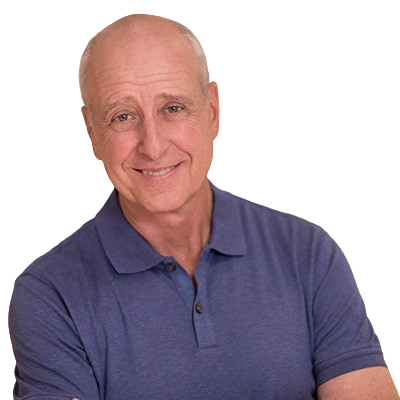
Four Decades In, Still Leading Rounds
Right now, in the spring of 2026, Joe Horowitz is running Icon Ventures out of 505 Hamilton Avenue in Palo Alto - the same firm he founded in 2003, now managing over $1.4 billion in assets. He leads Series B and C financings in enterprise technology, cybersecurity, digital health, and AI. He sits on the board of PLAYSTUDIOS (NASDAQ: MYPS). He shows up at Stanford symposiums. He posts on Twitter as @JoetheVC.
None of that tells you what makes Horowitz worth paying attention to. Here is what does: in 1982, while working at U.S. Venture Partners, his very first deal was the seed financing of Sun Microsystems. Not his tenth deal. His first. He was new to the business, and the company he backed helped define the architecture of modern computing.
The year was 1982. A young investor at U.S. Venture Partners placed his first bet: seed money into a scrappy workstation company co-founded by Andy Bechtolsheim, Bill Joy, Scott McNealy, and Vinod Khosla. That company, Sun Microsystems, would go on to become a $10 billion technology giant whose Java programming language still runs on billions of devices today. Joe Horowitz was on that deal from the start.
From that opening move, Horowitz spent a decade at USVP, then three years doing venture work at Exxon Enterprises, then a stint as Chairman and CEO of Geocast Network Systems - a broadband infrastructure startup backed by Kleiner Perkins, Mayfield, and Institutional Venture Partners. Then, in 2003, he founded Icon Ventures.
What he built at Icon is the interesting part. Most VCs of his generation either scaled into megafunds or faded from relevance. Horowitz chose a third path: stay focused, stay disciplined, keep the fund size proportional to the opportunity. Icon grew from $100 million to $1.4 billion in AUM, not by chasing the biggest possible fund but by compounding wins across sixteen-plus exits.
Venture capital is more about metering in money at different size financings as the company demonstrates the right kind of progress.
- Joe Horowitz, responding to SoftBank's $100B Vision Fund, CNBC 2018He Saw Cybersecurity Before It Was a Category
The cleanest proof of Horowitz's pattern recognition sits in three ticker symbols: FEYE, PANW, PFPT. FireEye. Palo Alto Networks. Proofpoint. Three of the defining names in enterprise cybersecurity - each backed by Icon Ventures, each achieving multibillion-dollar valuations. Horowitz was in them when cybersecurity was still considered a niche IT problem, not the existential business risk that every CEO now loses sleep over.
That is not luck spread across hundreds of small bets. Icon is a concentrated firm. When Horowitz backs a company, it gets real attention - board engagement, operational support, the kind of relationship that only works when you have not spread yourself across 200 portfolio companies.
FireEye (FEYE) + Palo Alto Networks (PANW) + Proofpoint (PFPT) - three cybersecurity giants, all in the Icon Ventures portfolio before the category had a name.
The exits extend well beyond security. Teladoc went public - now the dominant name in telehealth. Opcity was acquired by News Corp. Posterous was acquired by Twitter. Meebo was acquired by Google. True[x]Media was acquired by Fox. Area 1 Security was acquired by Cloudflare. Each deal tells a different story, but the pattern is consistent: Horowitz backs companies at the point where the thesis is clear but the outcome is not yet.
He wrote about it himself: Icon's focus is Series B and Series C. Not seed, not late-stage growth. The moment when a company has proven something real but still needs a partner who will stay through the difficult middle chapters.
The Portfolio Scorecard
When SoftBank Raised $100B, He Said No Thank You
In 2018, SoftBank's Vision Fund was the loudest thing in venture capital. One hundred billion dollars. Masa Son promising to reshape entire industries. Every major VC fund in the Valley was quietly wondering whether to scale up or get left behind.
Horowitz went on CNBC and said what many were thinking but few would say publicly. He acknowledged the pressure: "If we don't adjust to the reality of the implications of what the megafunds mean for us, we're at risk for our business." But he drew a clear line between what venture capital is and what SoftBank was doing.
"I have a lot of respect for Masa Son, but the notion of $100 billion when success in our world is a $20 billion outcome - it's a very different business."
- Joe Horowitz, CNBC, 2018The distinction matters. Venture capital, as Horowitz practices it, is about judgment at the inflection point - backing the right team at the right stage and helping them navigate what comes next. That is not something you do at $100 billion. At that scale, you are not a venture investor anymore. You are a market maker, a sovereign fund, something else entirely.
Icon Ventures expanded its fund size to stay competitive - Horowitz is practical, not dogmatic - but it did so on its own terms, maintaining the concentrated, founder-focused model that had produced the cybersecurity trifecta and all those other exits.
The result: a firm with $1.4 billion in AUM that can still get deeply involved with every company in the portfolio. Icon keeps 27 people on staff. At that ratio, every founder gets real access to the partners, not a junior associate and a quarterly check-in.
Five Rules That Actually Mean Something
Most VC firms have a "values" page. Icon's five guiding principles are notable because one of them sounds like it belongs in a therapy office, not a term sheet.
- 1 Human capital is more precious than financial capital.
- 2 A team connected can accomplish extraordinary things.
- 3 When stressed, we help create space.
- 4 All of our companies matter, regardless of their journey.
- 5 The measure of a venture firm is evident in how they deal with challenging situations.
Number three stands out. "When stressed, we help create space." It is an unusual thing to put in writing in an industry famous for pressure, pivots, and the occasional boardroom implosion. Horowitz put it there deliberately. The fifth principle doubles down: a firm's character shows when things go wrong, not when they go right.
The focus of our firm is to lead Series B and Series C financings, backing world-class entrepreneurs, supporting them regardless of their journey. Our north star is to be a force for good.
- Joe Horowitz, Icon VenturesForty-Three Years, One Through Line
He Has Sat in The Founder's Chair
Most venture investors have never had to figure out payroll, fire a head of sales, or explain a missed quarter to a board they assembled. Horowitz has. His time as Chairman and CEO of Geocast Network Systems - a real company, raising real money from Kleiner Perkins and Mayfield, trying to build broadband infrastructure in the late 1990s - gives him standing that is genuinely rare in the industry.
When Horowitz sits across the table from a founder navigating a difficult board conversation or a team reorganization, he is not theorizing. He has been on that side of the table. The fourth principle - "all of our companies matter, regardless of their journey" - reads differently when you know the person who wrote it has also been the person on the other side of it.
That Columbia engineering background - three years at the School of Engineering & Applied Sciences before pivoting to economics - is another quiet differentiator. His generation of VCs skewed heavily toward pure finance. Horowitz came up with enough technical grounding to evaluate what engineers were actually building, not just what the business plan said they were building.
The Wharton MBA finished the toolkit: the financial modeling, the market analysis, the boardroom fluency. But the engineering years came first, and they left a mark. It shows in the sectors he has consistently backed: infrastructure, security, data architecture, digital health. Hard technical problems with real enterprise value, not consumer plays or social apps.
The Thesis Now: AI as the Next Platform
The keywords in Icon's current positioning tell the story: AI-native companies, enterprise AI, transformative AI, AI adoptions, AI-powered companies, digital health infrastructure, cybersecurity data. Horowitz has been through enough technology waves - from Sun's RISC workstations to the internet to cloud to mobile - to recognize when something is a feature versus when it is a new platform entirely.
His current conviction, evident in Icon's publicly stated focus, is that AI is a platform shift, not a feature. The firms that get into the right AI-native companies at Series B - after the thesis is validated but before the valuations price in certainty - are the ones who will define the next decade of venture returns.
"To be relevant today... you need enough capital."
- Joe Horowitz, CNBC 2018 - still true in 2026, arguably more soThe focus areas have evolved: digital health infrastructure, consumer SaaS, B2B enterprise software, cybersecurity data, and now AI applications alongside foundational AI infrastructure. What has not changed is the stage (Series B/C), the model (concentrated, founder-engaged), or the philosophy (human capital over financial capital).
Forty-three years is a long time to be consistent. The venture business eats people who mistake a bull market for skill. Horowitz has survived multiple cycles - the dot-com implosion, the 2008 financial crisis, the ZIRP-era funding frenzy and its subsequent correction. He is still here, still leading rounds, still showing up at Stanford symposiums, still posting on Twitter.