Curating a Country's Table
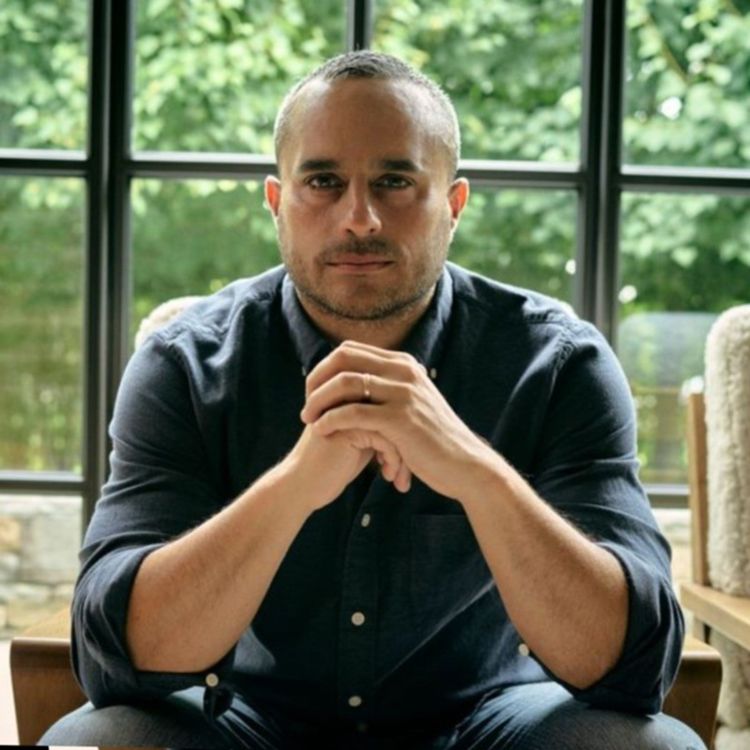
In the spring of 2026, as the United States began counting down to its 250th birthday, the organizers of America250 needed someone to answer a deceptively simple question: which dishes actually tell the story of this country? They did not pick a celebrity chef or a restaurant critic. They picked Joe Ariel, the founder and chief executive of Goldbelly, and named him Official Food Curator of the anniversary.
It was a fitting choice. For more than a decade Ariel has run an e-commerce company built on a single, stubborn observation - that the best food in America almost never leaves the place where it is made. Goldbelly exists to change that. The platform lets more than a thousand restaurants and small food makers ship their signature items nationwide, so a plate of gumbo from New Orleans or a deep-dish pie from Chicago can arrive at a kitchen table two time zones away.
"The best food in America never traveled. It stayed where it was made, for the people who lived there, and everyone else just missed it."
Now that same instinct is being scaled up to a national scale. As curator, Ariel leads a project called "250 Dishes That Made America," a storytelling effort that gathers chefs, writers and cultural voices to assemble what amounts to a canon of American cuisine. Goldbelly, named the official marketplace of the anniversary, handles the commerce side: an America250 storefront, party kits and gift boxes, a state dish registry, and what the company bills as America's Official 250th Birthday Cake, to be unveiled ahead of July 4, 2026.
The Homesick Founder
The origin of all of this is unromantic and very human. Ariel went to college at Vanderbilt in Nashville, where he fell for local specialties like Nashville hot chicken. When he later moved to New York, he found himself missing those southern favorites and wondered whether the restaurants that made them could simply ship the food to him. So he did the obvious thing that almost nobody does. He picked up the phone, called his favorite spots in Nashville, Memphis and Buffalo, and asked if they would put their food in a box and mail it.
Enough of them said yes that a business started to take shape. By 2013 he had founded Goldbelly - originally spelled "Goldbely," with a single L - and won a place in Y Combinator's accelerator. That same year Time magazine named the site one of its 50 Best Websites. The early team was tiny: four people working out of a townhouse in San Francisco's Noe Valley.
"I don't like the term 'foodie.' I prefer 'food explorer.'"
That distinction is more than a preference. Ariel talks about food the way a documentarian talks about subjects - as stories worth preserving, tied to specific people and places. He has described his goal as wanting to "democratize the food industry," and he often reaches for the same comparison: what Etsy did for crafts, Goldbelly could do for regional food, handing small makers a national customer base they could never have reached on their own.
A Long Game, Not a Land Grab
Ariel was not new to building companies when he started Goldbelly. He had already founded and led Eats.com, which was acquired by Delivery.com, and served as CEO of Delivery.com. Earlier still, he had a role with the New York Knicks. Friends and family put in around $200,000 to launch Goldbelly; his first real outside investment was roughly $3 million. He has been candid that his very first business was bootstrapped on just $5,000.
The growth since then has been steady rather than explosive. In 2018 the company rebranded from Goldbely to Goldbelly, raised a $20 million Series B led by Enlightened Hospitality Investments, and added the celebrated restaurateur Danny Meyer to its advisory board. A conversation with chef Jose Andres is widely credited with changing the trajectory of the company. By 2021, Goldbelly had raised a $100 million Series C, bringing total funding to roughly $133 million.
Through all of it, Ariel has kept the company pointed at the makers rather than at himself. When restaurants began closing during hard times, he did not simply post about it. Goldbelly launched the Local Legends Fund in 2021 with an uncapped budget and no fixed timeline, aiming to help restore more than a hundred restaurants forced to shut their doors. Support, in Ariel's words, includes "direct contributions, equipment purchases, rent support, shipping infrastructure investment, and industry expertise." One of the first recipients was Rotier's, the Nashville burger institution he had frequented as a college student.
The Explorer at Work
People who have interviewed Ariel describe a restless energy. He credits regular exercise - tennis, basketball, running, hiking - with keeping him focused, and he has said finding the intersection of passion and skill set is what makes a business worth building. His passion is regional American food; his skill is building marketplaces. Goldbelly is what sits where those two things meet.
He is also a familiar face beyond the company, a regular guest on CNBC, Bloomberg and Fox Business, and has been profiled by Entrepreneur, Zagat, Forbes, Fast Company and Fortune. On Goldbelly's own video channel he plays a character somewhere between host and evangelist - the self-styled chief eating officer, unwrapping a knish or a slab of ribs on camera with genuine delight.
What ties the curator, the CEO and the on-camera explorer together is consistency of purpose. Ariel has spent more than twenty years at the intersection of food, technology and American culture, and the through-line has not changed since that first phone call to a Nashville chicken joint. Find the great thing that is stuck in one place. Figure out how to send it everywhere. Tell people the story of where it came from. In 2026, with a nation's anniversary menu in his hands, that is still exactly the job.