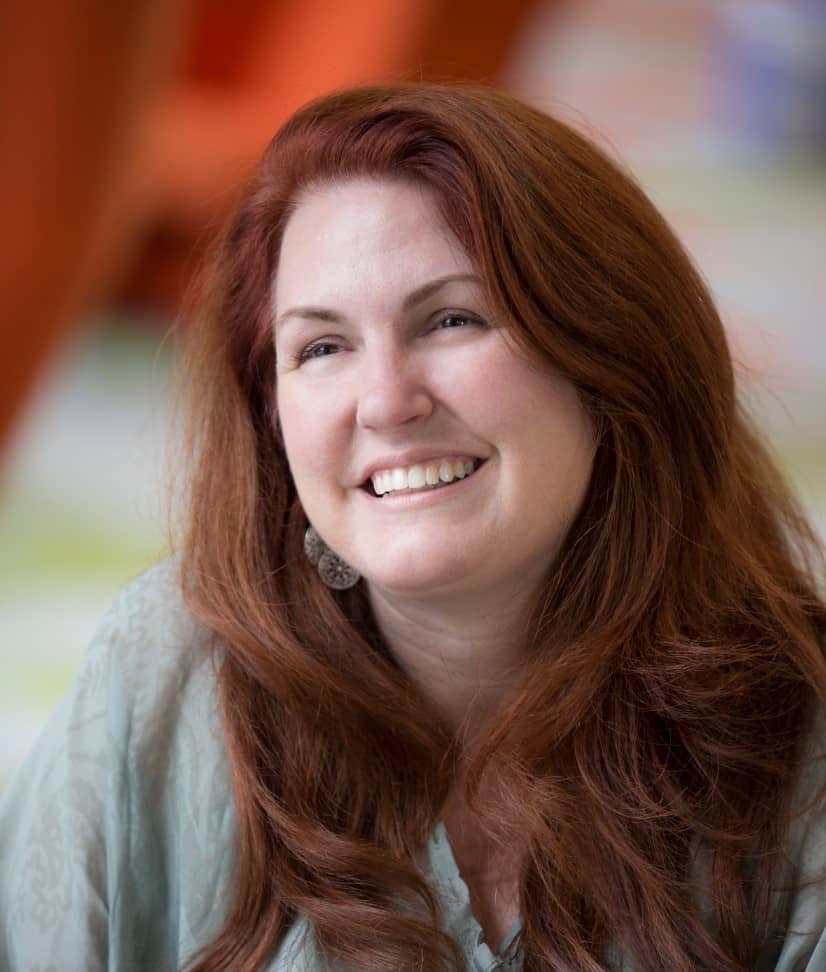
Turning the body into a pharmacy
Walk into Be Biopharma's labs at 1 Kendall Square and the pitch sounds almost impossible: take a B cell, the immune cell that already spends its life churning out antibodies, and reprogram it to manufacture a chosen therapeutic protein - for years, from a single dose, inside the patient. The person betting a company on that idea is Joanne Smith-Farrell, and she came to it by way of physics.
Smith-Farrell has been President and CEO of Be Biopharma since February 2021, joining roughly five months after the company launched out of research from Seattle Children's Research Institute. Her job is to turn a striking piece of biology into medicine. Be Bio calls its approach engineered B cell medicines - BeCMs - and describes B cells as "nature's protein factories." The company has raised more than $350 million to find out whether that description can be turned into treatments.
"Be Bio is pioneering the development of engineered B cell medicines to create a new paradigm for therapeutic proteins," Smith-Farrell has said. The ambition is broad on purpose. Where most cell therapies have been aimed narrowly at blood cancers, Be Bio's thesis is that a durable, in vivo source of protein could reach a long list of conditions - from rare diseases to more common ones - that need a steady supply of a biologic the body cannot make on its own.
“The versatility and durability of B cells is extraordinary - we have the opportunity to develop previously impossible therapeutics and establish a new standard of care for patients.”
Joanne Smith-Farrell
She does not describe the work in small terms. When she joined, she called Be Bio's mission "an inspiring and humbling journey," a phrasing that says something about how she leads: big enough ambition to be daunting, enough humility to admit no one has done it yet. "It has been a great privilege to participate in the birth of the first generation of cell therapies to come to market," she said at the time, "and to witness, first-hand, cell therapy's power to transform the lives of patients."
That first-hand experience is not rhetorical. Before Be Bio, Smith-Farrell was Chief Operating Officer and Business Unit Head of Oncology at bluebird bio, where she built an oncology cell therapy business that grew to around 400 people. The unit's signature achievement was Abecma, a first-in-class CAR-T therapy for multiple myeloma - one of the medicines that helped prove living cells could be turned into approved products. Having helped bring one generation of cell therapy to patients, she left to chase the next.
The NumbersA career that refused the straight line
Smith-Farrell trained as a physicist. She earned a B.S. in physics and mathematics from Vanderbilt University and a Ph.D. in physics from The Catholic University of America, then did postdoctoral research in biomedical engineering in Robert Langer's lab at the Harvard-MIT Division for Health Sciences and Technology - one of the most influential bioengineering labs in the world, and the training ground for a generation of biotech founders.
From there she zig-zagged in a way that now looks deliberate. She started in management consulting at The Boston Consulting Group, then moved into industry, taking on roles at Gene Logic, Vice President of Business Development at Pfizer, and Vice President of Transactions at Merck. Each stop added a different muscle: the analytical rigor of physics, the strategic framing of consulting, the deal-making of business development, and finally the operating discipline of building and running a real therapeutic business at bluebird.
How an engineered B cell medicine works
Start with a B cell
B cells are the immune system's natural protein factories, built to secrete large amounts of antibody proteins reliably over time.
Engineer it
Using precision genome editing, the cell is reprogrammed to produce a specific therapeutic protein chosen to treat a disease.
Deliver durable medicine
Once given to a patient, the engineered cells aim to serve as a long-lasting, in vivo source of that protein - medicine that keeps making itself.
The move to Be Bio was, on paper, a step down in size: from a 400-person business unit to a startup with a few dozen employees. It was a step up in risk and in scope. That trade - comfort for mission - runs through her whole record. "For over 25 years," the company notes, she has led teams "committed to conquering cancer and rare diseases."
“Be Bio's mission - to unleash the power of B cells, nature's protein factories, on many of humanity's most challenging diseases - is an inspiring and humbling journey to be joining.”
On joining Be Biopharma as CEO
Building the unglamorous parts
A platform is only as real as its manufacturing. Making a brand-new class of cellular medicine at quality and scale is one of the hardest problems in the field, and Smith-Farrell has treated it as a first-order priority rather than an afterthought. Be Bio built non-GMP manufacturing capabilities at its Cambridge facility and struck a collaboration to move toward GMP production with an outside partner. "Manufacturing is critical to rapidly progress our BeCMs to the clinic," she said, framing the deal as a way to scale "in a capital efficient manner" - the kind of pragmatic, capital-aware language you would expect from a former head of transactions.
It is a useful window into how she operates. The scientific vision is expansive - reimagine how proteins are delivered to the body - but the execution is grounded in the specifics of money, manufacturing, and milestones. She recruited alongside Chief Scientific Officer Rick Morgan, a genome-engineering veteran from Editas Medicine and, earlier, bluebird and the NIH, pairing her operating and commercial background with deep scientific horsepower.
Achievements- Built and led a ~400-person oncology cell therapy business unit at bluebird bio
- Helped bring Abecma to market, a first-in-class CAR-T therapy for multiple myeloma
- Leads Be Biopharma in pioneering engineered B cell medicines, a new class of in vivo biologics
- Steered Be Biopharma through more than $350 million in cumulative financing, including a Series C
- Bridged physics, biomedical engineering, business development and executive leadership across a 25-year career
What she is building will take years to judge. Engineered B cell medicines are early, and the history of cell therapy is a history of hard, slow science. But the shape of the bet is clear, and so is the person making it: an executive who has watched cell therapy grow from an idea into approved products, and who now wants to widen what the technology can reach. If B cells really can be turned into durable factories for the proteins patients need, Joanne Smith-Farrell will be one of the people who made it ordinary.